

Welcome to Lynn’s Design Blog


Author Tips Published Every Monday
Read by Topic
Cozy Fiction's Prescription for Publishing Success
We'll Prescribe You A Cat—a gentle story about healing, mysterious prescriptions, and the transformative power of caring for something beyond yourself—was a worldwide success. Readers across cultures, languages, and continents have embraced Syou Ishida's tender tale of emotional restoration. But why?

Finding Your Author Rhythm: The Healing Power of a Daily Writing Routine
When I read about the patients who receive cat prescriptions from the mysterious Kokoro Clinic in Syou Ishida’s We’ll Prescribe You A Cat, here’s what stuck with me:
The transformation doesn't happen in a single dramatic moment when they first meet their assigned cat. The healing unfolds slowly, through daily interactions, consistent care, and small moments of connection accumulated over time.
In the same way, building a sustainable writing career requires daily attention to your creative practice.
Overcoming Imposter Syndrome with Emotional Awareness: How to Stop Questioning Your Right to Call Yourself a Writer
Imposter syndrome affects 90% of authors—including those with multiple bestsellers, literary awards, and historical achievements. Maya Angelou, one of the most celebrated authors of our time, once admitted: "I have written 11 books, but each time I think, 'uh oh, they're going to find out now. I've run a game on everybody, and they're going to find me out.”

Author Website Design Through the Lens of Robert Louis Stevenson: How to Turn Your Location Into Your Brand
You've identified that place matters to your brand. You've found your through-line. You've done the internal work.
Now what?
Over this series, we've covered RLS's brand foundations, his craft mastery, place as identity, and multi-genre cohesion.
We've talked about theory, strategy, and big-picture thinking.
This is where it gets practical.

The Magic of Subtle Worldbuilding: Why Less is More in Magical Realism
If you’ve read We’ll Prescribe You A Cat, then you’re familiar with the mysterious clinic in Kyoto where a doctor prescribes cats as medication for every emotional ailment.
Your logical mind should be asking dozens of questions—but you're not. You're completely absorbed in the story, accepting this impossible premise as naturally as you'd accept a character ordering coffee.

How to Use Animal Symbolism in Your Fiction (5 Proven Techniques)
Master animal symbolism in fiction with 5 proven techniques from folklore. Learn to layer cultural meaning, create depth, and build symbolic systems that resonate.
Near vs Far Enemies in Author Life: Why 'Positive' Emotions Might Be Sabotaging Your Success
Sarah landed her first book deal after five years of querying. The validation felt incredible—finally, proof that she was a real writer. Six months later, her editor suggested significant revisions to strengthen the opening chapters. Sarah's response? "I think you're missing the point of my artistic vision."
How to Build an Author Brand When You Write Multiple Genres: Robert Louis Stevenson
Here's what haunts multi-genre authors: the fear that writing across genres will confuse readers, dilute your brand, or make you look unfocused.
But Robert Louis Stevenson wrote Gothic horror, swashbuckling adventure, children's poetry, essays, and travel writing.
His brand didn't just survive this diversity—it thrived because of it.

How This Author Sells Books, Tours, and Services Simultaneously
We've explored how Jan-Andrew Henderson built unshakeable authenticity and created a brilliant business ecosystem around his expertise.
But here's where the rubber meets the road: How does all that strategic thinking translate into a website that actually converts visitors into readers, customers, and advocates?
Henderson's website isn't just showcasing his books—it's the central hub of his entire business empire.
Visualization for Authors: From Daydream to Bestseller Success
You've learned the fundamentals of visualization. You understand the science. You know that mental rehearsal creates real neural pathways.
But here's where most authors get stuck: they visualize "being successful" without defining what success actually looks like for them specifically.
This deeper dive into visualization as part of your Miracle Morning routine will help you move from passive hoping to active mental training that targets your exact writing goals and transforms them into achievable realities.
The Complete Guide to Emotional Intelligence for Authors: How to Build Mental Resilience in a Rejection-Heavy Industry
Picture this: You've just received your fifteenth rejection letter this month. Your critique partner loves your manuscript, your beta readers are raving, but agents keep passing.
The familiar wave hits. Self-doubt creeps in.
Maybe you're not cut out for this. Maybe your writing isn't good enough. Maybe you should just give up.

Using Location in Your Author Brand: Lessons from Robert Louis Stevenson's Edinburgh
Medieval wynds twisting downward into shadow. Underground vaults. Closes so narrow you can touch both walls at once. This is the Edinburgh where Burke and Hare murdered people for their corpses.
The same city. Two faces.
This duality wasn't just Robert Louis Stevenson's setting. It WAS his Gothic tradition.

Why Authors Should Study Folklore: 7 Lessons from Cat's Tales
Discover 7 writing craft lessons from Charlie Creed's Cat's Tales. Learn how folklore teaches symbolism, structure, and world-building for fiction writers.

The Cat Prescription Method: Why One-Size-Fits-All Websites Fail Authors
Back at the Kokoro Clinic, Dr. Kokoro never reaches for the same solution twice. As we explored in our previous post about author branding, your healing power is unique—and your website should be too.

Visualization for Authors: See It, Write It, Achieve It
Olympic athletes do it before every competition. Surgeons do it before complex procedures. Musicians do it before performances.
They visualize success in vivid, sensory detail—seeing, feeling, and experiencing their desired outcome before it happens in reality.
The result? Their brains create neural pathways that make the real performance feel familiar, practiced, and achievable.
Yet most authors never harness this scientifically-proven tool for their writing careers. We daydream about success, sure. We have vague fantasies about seeing our books in stores or getting that agent phone call.

Mastering Atmosphere: Writing Lessons from Robert Louis Stevenson's "The Body Snatcher"
Picture this: Two men on a dark road, driving a horse-drawn gig. Between them, wrapped in coarse sacking, sits a body they've just stolen from a grave.
Then one of them recognizes the corpse.
This is the heart of Robert Louis Stevenson's "The Body Snatcher"—and the moment that showcases his mastery of atmospheric writing.

Author Business Model: How to Create Multiple Revenue Streams Like Jan-Andrew Henderson
The genius lies in how Henderson transformed that authenticity into a brilliant business model that most authors only dream of achieving.
While most writers struggle to make a living from book sales alone, Henderson created something extraordinary: a business ecosystem where each element feeds and strengthens the others.
How to Be Generous Without Burning Out: Boundaries for Authors in a Gift Economy
I used to say yes to everything. I thought this was what generosity looked like. After all, hadn't I just embraced gift economy principles? Wasn't I supposed to give freely, trust in reciprocity, and build community through abundance thinking?
Then I hit a wall. Not a metaphorical wall—an actual, can't-get-out-of-bed, creative-energy-completely-depleted wall. I'd given so much that I had nothing left. Not for my clients who were actually paying me. Not for my own creative projects. Definitely not for myself.
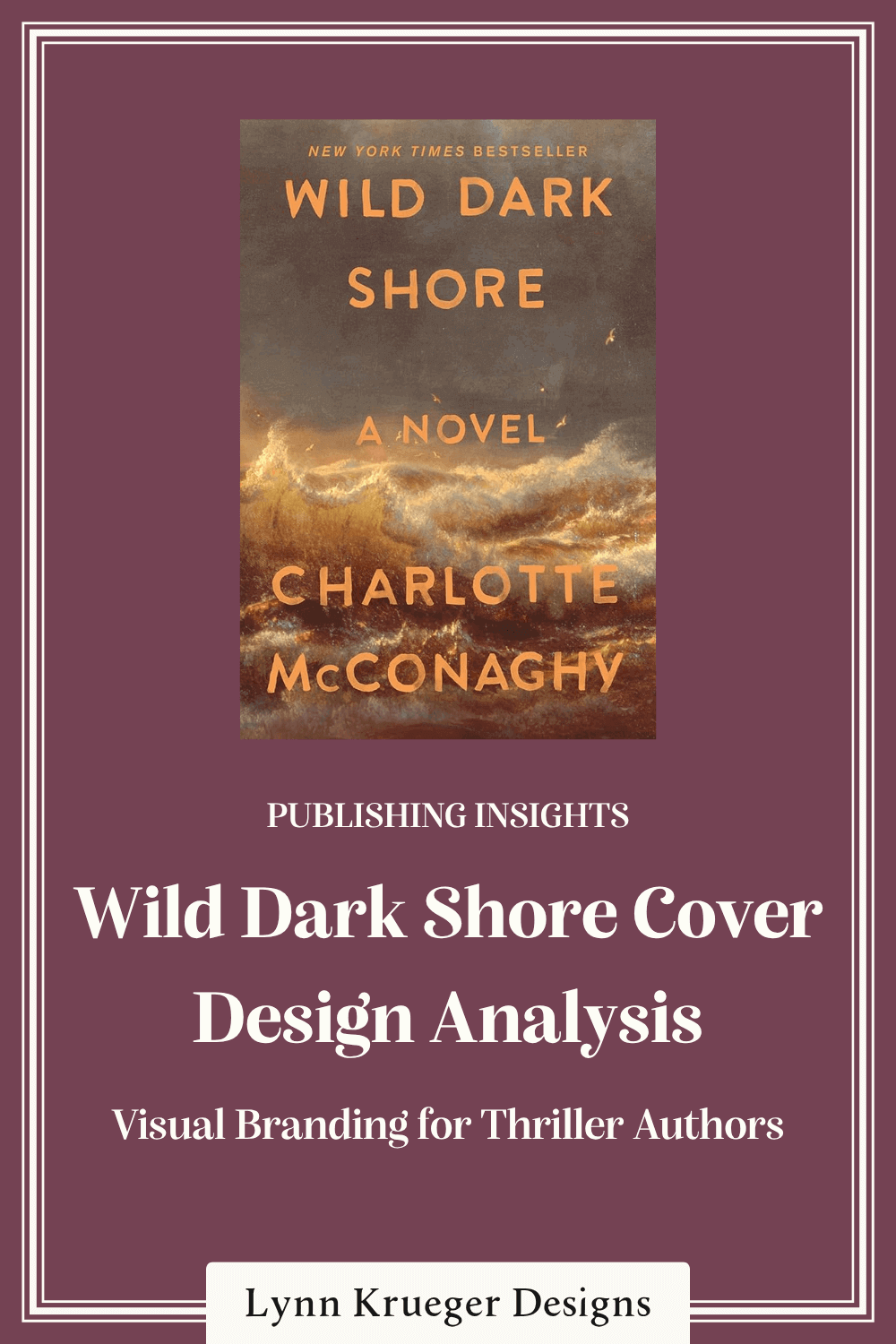
Wild Dark Shore Cover Design Analysis: Visual Branding for Thriller Authors
Your book cover has approximately three seconds to convince a browser to stop scrolling. That's it. Three seconds to communicate genre, tone, quality, and whether this book is "for them." Charlotte McConaghy's Wild Dark Shore cover nails those three seconds. The design is sophisticated, atmospheric, and immediately communicates "literary thriller with nature elements" without a single word.

Let Them Judge Your Genre
You probably make more than any of us, right? It must be nice to write something so commercial."
Suddenly, you're trapped between two equally frustrating responses.
The first treats your genre as inferior fluff that serious writers should outgrow. The second reduces it to a purely commercial calculation, as if the emotional complexity and craft skill that romance requires don't matter.
Not finding the article you’re looking for? Let’s search it up.
