Mastering Atmosphere: Writing Lessons from Robert Louis Stevenson's "The Body Snatcher"

Part 2 of Dark Edinburgh: A Robert Louis Stevenson Masterclass
Picture this: Two men on a dark road, driving a horse-drawn gig. Between them, wrapped in coarse sacking, sits a body they've just stolen from a grave.
Then one of them recognizes the corpse.
This is the heart of Robert Louis Stevenson's "The Body Snatcher"—and the moment that showcases his mastery of atmospheric writing.
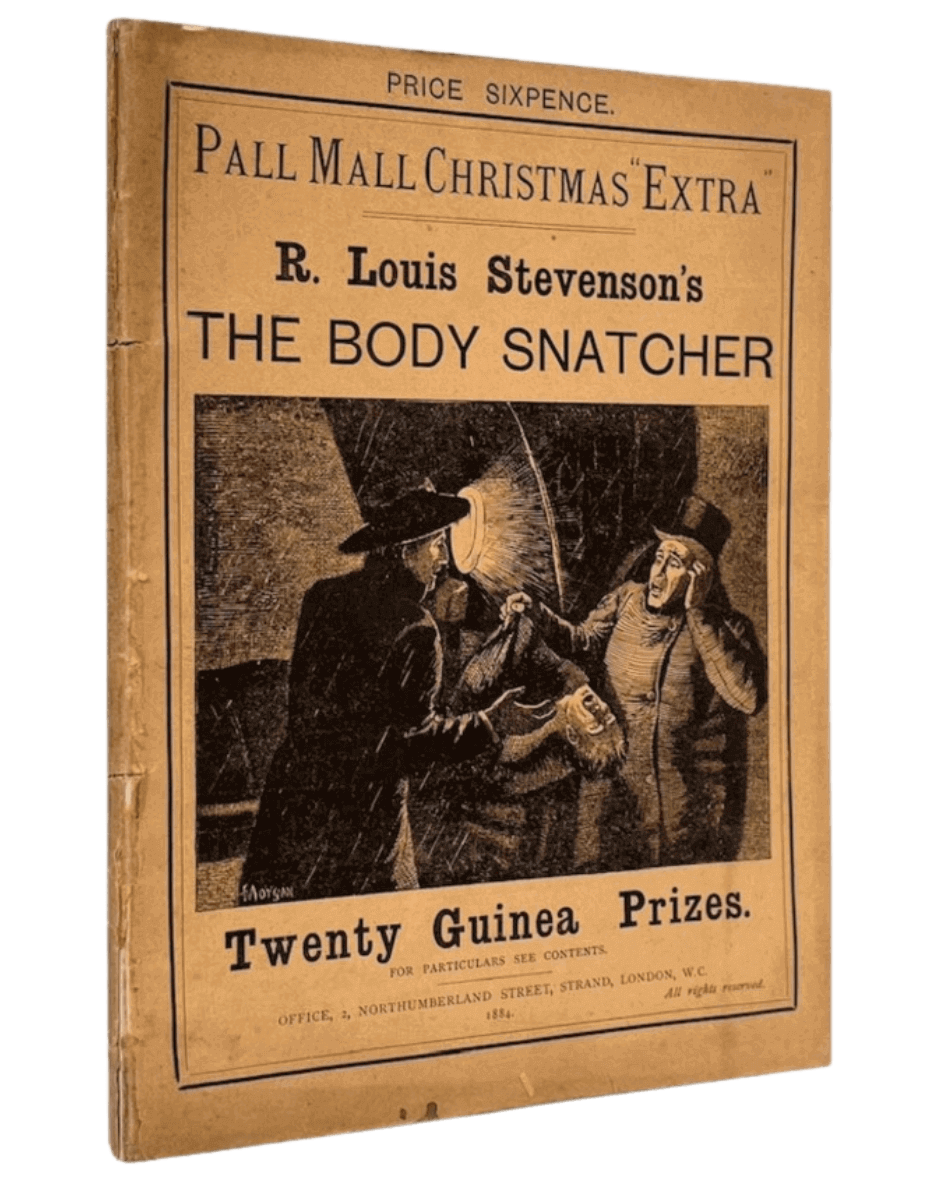
The horror isn't in the body snatching itself. It's in the recognition, the guilt, the slow realization of just how far these men have fallen.
Any writer can describe scary events. Jump scares are easy.
What's hard is making readers feel the creeping dread before anything terrible happens.
That's atmosphere. And RLS was a master at it.
Today, we're doing a craft deep-dive into "The Body Snatcher" to understand exactly how Stevenson created that signature Gothic tension.
By the end, you'll have four specific techniques you can apply to your own writing—regardless of whether you write horror, romance, fantasy, or literary fiction.
Quick context: "The Body Snatcher" was published in 1884, based on the real Burke and Hare murders in Edinburgh. In the 1820s, these men killed people to sell their corpses to anatomists.
It's a true story that haunted Edinburgh—and RLS turned it into literature.
Let's break down how he did it.
→ New to this series? Start with Part 1: Robert Louis Stevenson's Author Brand: 5 Lessons for Modern Writers to understand how RLS's Gothic mastery became the foundation of his enduring brand—then come back here for the craft deep-dive.
Technique 1: Open with Normalcy (Then Shatter It)
Here's what most writers get wrong about atmospheric writing: they think you need to start with tension.
RLS does the opposite.

"The Body Snatcher" opens with a group of men drinking at an inn, telling stories, laughing.
It's completely ordinary. Comfortable, even.
Then someone mentions the name "Macfarlane."
And Fettes—one of the men in the group—goes deathly pale.
That's it. That's the moment.
No thunder crack. No ominous music. Just a man hearing a name and the blood draining from his face.
Why This Works:
We feel the atmospheric shift through Fettes's physical reaction, not through the narrator explaining that something scary is about to happen.
RLS trusts us to understand: something is very wrong here.
The contrast between the convivial drinking scene and Fettes's sudden terror creates instant tension.
We go from relaxed to alert in a single sentence.
The Craft Lesson:
Your opening doesn't need to promise horror or tension immediately. Sometimes the most effective atmospheric writing starts calmly, specifically so you can shatter that calm.
Think about it like music. A crescendo only works if you start quiet.
How to Use This in Your Writing:

Start with normalcy.
Even just a paragraph. Show us ordinary life, comfortable routines, people feeling safe.
Then disrupt it.
A phone call. A name. A knock at the door.
Something small that your character recognizes as significant—even if the reader doesn't fully understand yet.
Show the disruption through physical reaction.
Hands shaking. Going pale. A sharp intake of breath.
Let the body betray the emotion before any dialogue happens.
Works Beyond Horror:
This technique is powerful in any genre where you want emotional impact.
In romance, think of the moment your protagonist sees their ex at a party.
The scene was fine, even fun, until that person walked in.
Now everything's charged.
In thriller, it's the detective noticing a detail that doesn't fit.
In literary fiction, it's the adult child seeing their parent's handwriting has changed—the first sign of decline.
Normalcy, then disruption. The contrast creates atmosphere.
Technique 2: Layer Moral Ambiguity into Character
When we first meet Fettes, Stevenson describes him as having "some vague Radical opinions and some fleeting infidelities."
Read that again.
"Fleeting infidelities."
RLS doesn't give us a hero.
He gives us a man who's already compromised, already morally flexible. This is crucial to the story's atmosphere.
The Scene That Matters:

As the story unfolds through flashback, we learn that Fettes and Macfarlane were medical students in Edinburgh who bought bodies from grave robbers for dissection.
This was illegal but common—anatomists needed corpses for medical education, and the only legal source was executed criminals.
These are educated men. Future doctors. Respectable.
And they're complicit in grave robbery.
But RLS doesn't stop there. He slowly reveals that Macfarlane and Fettes don’t just buy bodies from grave robbers—they buy from criminals who murder people to create "fresh" corpses to sell.
The horror is in watching how Fettes rationalizes his involvement.
How he tells himself he didn't know for sure. How an implied threat from a criminal “makes” him pay the murderers for their victim. How, once he was complicit, he rationalizes there is no escape.
In for a penny, in for a pound.
The real Gothic horror: ordinary people making monstrous choices and then living with them.
Why This Works:
Moral complexity creates atmosphere because readers can't relax into "good guy vs. bad guy." We're watching someone we partly sympathize with do things we find reprehensible.
That tension—wanting Fettes to be better while watching him fail—creates psychological dread that's more unsettling than any monster.
The Craft Lesson:

Give your protagonists uncomfortable flaws or past choices.
Not quirky flaws ("I'm clumsy!") but real moral complexity.
Make your antagonists understandable.
Macfarlane isn't a cackling villain. He's ambitious, practical, and willing to do whatever it takes to advance his career.
That's... actually pretty relatable, which is what makes him terrifying.
Show characters rationalizing questionable decisions.
Watching Fettes convinced himself that he has no choice, and then convince himself that this is just the way the world works…he goes from being horrified at the woman who’s been murdered, to being fully on the side of the “lions.”
How to Use This in Your Writing:
Think about your protagonist's past.
What have they done that they're not proud of?
What choice did they make that seemed reasonable at the time but haunts them now?
Give your reader a reason to feel conflicted about your main character. We should be rooting for them while also being a little uncomfortable with their choices.
This is about building psychological tension, not just plot tension.
Works Beyond Horror:

In contemporary romance, this could be a protagonist who cheated in a past relationship and is now terrified they'll do it again.
In fantasy, think morally gray magic systems where power always costs something—and your protagonist keeps paying the price.
In literary fiction, this is your bread and butter: flawed people making imperfect choices and dealing with the consequences.
Moral ambiguity creates atmosphere because it makes readers uncertain. And uncertainty is tension.
Technique 3: Use Setting as Character
Edinburgh isn't just the backdrop for "The Body Snatcher."
The city is an active participant in the horror.
RLS describes the anatomy theaters, the dark lanes, the graveyards…the entire geography of Edinburgh enables the story.
Why Edinburgh Specifically:

Because of the city's actual history.
Burke and Hare really did murder people and sell their bodies to Dr. Robert Knox, a real Edinburgh anatomist.
This happened. In this city.
When RLS sets his story in Edinburgh, he's layering fictional horror onto historical horror. The reader—especially the Scottish reader—knows the real story lurking beneath the fiction.
The respectable medical buildings, the prestigious university, the enlightened city of learning—all hiding this dark trade.
That's the essence of Gothic: respectability as a façade for darkness.
The Craft Lesson:
When your setting reinforces your theme, atmosphere deepens automatically.
RLS's theme is moral corruption hiding beneath respectability. So he sets the story in a city known for Enlightenment thinking and medical advancement—where the progress came at a literally murderous cost.
The setting embodies the theme.
How to Use This in Your Writing:
Choose settings that embody your theme.
If you're writing about isolation, maybe your character lives in a sprawling house with too many empty rooms.
If you're writing about claustrophobia in a relationship, maybe they live in a studio apartment.
Use weather and time of day to amplify mood.
Notice how much of "The Body Snatcher" happens at night, in darkness, or else in torrential rain. The darkness isn't just atmospheric—it's necessary for the crimes. It's functional and symbolic.
Let setting influence character choices.
Fettes and Macfarlane do things in darkness they'd never do in daylight. The setting enables the moral compromise.
Works Beyond Horror:

In romance: Think about settings that facilitate intimacy (a snowed-in cabin) or create barriers (a small town where everyone knows everyone's business).
In fantasy: How do your magical landscapes affect the plot? Does magic work differently in forests vs. cities? Does that matter to your story?
In any genre: Setting can reinforce theme. A decaying mansion for a family in decline. A sterile office building for a story about corporate dehumanization. A garden for a story about growth and healing.
When setting becomes character, you're not just describing a place—you're building atmosphere.
Technique 4: Build Toward Inevitable Horror
The structure of "The Body Snatcher" is brilliant in how RLS reveals the horror in layers.
First layer:
They bought bodies from grave robbers.
Illegal, but understandable given the need for anatomical subjects.
Second layer:
The grave robbers were careless, and Fettes recognized one of the bodies.
This is the moment Fettes knows beyond a shadow of a doubt that the “grave robbers” are really murderers. But then one of the murderers gives Fettes a threatening stare, and he folds—paying the man as he always does.
When Macfarlane fails to share Fettes’ horror at the murderers, again, Fettes does what he’s always done—he keeps his mouth shut.
Third layer:
Fettes realizes Macfarlane has murdered someone to create a fresh corpse. This is the line he can't uncross.
Each revelation answers one question while raising another.
We're always slightly ahead of the full horror, dreading what comes next.
The Specific Scene:
The moment Fettes recognizes the murdered woman is devastating precisely because RLS built to it carefully.
We've watched Fettes rationalize, compromise, look away.

We've seen him take money he knew was tainted.
So when he finally confronts the full horror of what he's been part of, we feel it as inevitable.
Of course it came to this. Of course it got worse. We were watching it happen.
Why This Works:
The dread is in the anticipation, not just the reveal.
If RLS had started with "Macfarlane is a murderer," we might be shocked, but we wouldn't feel the creeping horror of watching someone slide into moral compromise step by step.
The escalation makes it feel like a fall that couldn't be stopped.
The Craft Lesson:
Foreshadowing should feel inevitable in retrospect, surprising in the moment.
Each scene should add one more layer of wrongness until the full horror emerges.
You're not hiding information unfairly—you're revealing it in a sequence that maximizes emotional impact.
How to Use This in Your Writing:

Plant small details that only make sense later.
In early scenes, Fettes notices that the bodies are "remarkably fresh." At the time, it seems like an odd detail. Later, it's chilling evidence.
Escalate gradually.
Don't jump straight to the worst thing. Show us how characters get there step by step. Each small compromise makes the next one easier.
Make each revelation answer one question while raising another.
Yes, Macfarlane brought a fresh body. But wait—where did he get it? The reader is always one step behind the full truth, which creates forward momentum.
Works Beyond Horror:
In mystery: Obviously. The whole genre is about revelations building toward the solution.
In romance: Emotional revelations work the same way. First, we learn she's afraid of commitment. Then we learn why. Then we learn the specific incident. Each layer deepens our understanding and raises the emotional stakes.
In any genre with secrets: Whether it's a family mystery in literary fiction or a conspiracy in a thriller, you're building toward inevitable revelation.
The key is making readers feel like they should have seen it coming—even though they didn't.
Atmosphere is Architecture
These four techniques work together to create cumulative dread in Robert Louis Stevenson’s "The Body Snatcher":
Normalcy shattered (the opening scene disrupted)
Moral ambiguity (no heroes, only compromised men)
Setting as character (Edinburgh enabling and embodying the horror)
Inevitable escalation (each revelation building to the next)
Here's what I love about RLS's approach: Atmosphere isn't about purple prose or overwrought description. It's about strategic craft choices.
You build atmosphere through character complexity, through setting that reinforces theme, through structure that creates dread, through contrasts between normalcy and horror.
Your Challenge:
Pick one technique from this post and try it in your current WIP.
Maybe you add a moment of normalcy before your next big scene.
Maybe you give your protagonist a morally ambiguous choice.
Maybe you look at your setting and ask: does this reinforce my theme?
You don't need to write Gothic horror to use these techniques.
You just need to care about atmosphere, about making your emotional beats hit harder, about creating prose that's immersive.
This Gothic mastery—this ability to create atmosphere that lingered long after readers closed the book—is what made RLS's author brand so powerful. (Remember those lessons from Part 1 about mastering your signature before expanding your range? This is what that looks like in practice.)
Whether you write about Scotland or Seattle, Paris or Portland, your relationship to place matters.
And RLS shows us exactly how to leverage it.
→ In Part 3, we'll explore how Edinburgh itself shaped RLS's author identity—and how you can use place strategically in your own branding. We'll dig into what it means to build location into your author DNA, and how that creates differentiation in a crowded marketplace.
Mastered your craft—but is your website holding you back?
You've learned how RLS built atmosphere through strategic technique. Now make sure your online presence matches the caliber of your work.
Take my free Author Website Platform Quiz to discover which platform (Squarespace, Wix, or WordPress) actually fits your career goals and technical comfort level.