How This Author Sells Books, Tours, and Services Simultaneously

Part 3 of the Jan-Andrew Henderson Case Study
Your website isn't just a digital business card—it's the gateway to your entire author universe. Here's how to design a site that doesn't just inform visitors, but transforms them into lifelong fans and customers.
A Strategic Author Business
We've explored how Jan-Andrew Henderson built unshakeable authenticity while simultaneously creating a brilliant business ecosystem around his expertise.
But here's where the rubber meets the road: How does all that strategic thinking translate into a website that actually converts visitors into readers, customers, and advocates?
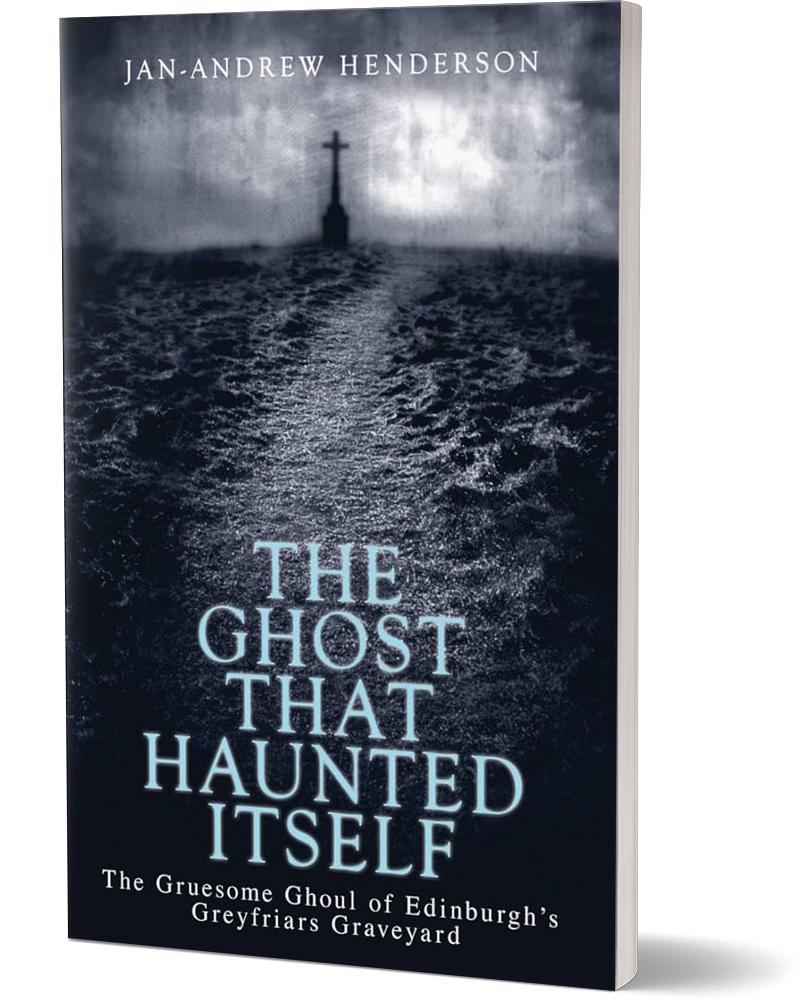
Henderson's website isn't just showcasing his books—it's the central hub of his entire business empire.
Visitors can learn about his supernatural expertise, purchase his books, and get drawn into the atmospheric world of Edinburgh's dark history. His site doesn't just inform; it immerses visitors in an experience that mirrors the mysterious, compelling nature of his brand.
On top of that, Henderson’s ghost tour company has its own website, which matches the brand of his author website. Both websites link to each other, making it easy for folks to schedule a tour and then buy a book, or vice versa.
This is what happens when an author thinks beyond "here are my books and contact info" and starts designing their website as a conversion machine for their entire business ecosystem.
The Fatal Flaw in Most Author Websites
Walk through the average author website and you'll see the same pattern repeated endlessly:
A generic header with the author's name.
A brief bio.
Book covers arranged in a grid.
Maybe a blog that hasn't been updated in six months.
A contact form buried somewhere in the footer.
These websites treat visitors like they're already fans who just need to know which book to buy next.

But here's the reality: most of your website visitors have never heard of you before. They're not ready to buy—they're deciding whether you're worth their attention.
The problem isn't that these websites are broken. The problem is that they're thinking about the wrong goal.
They're designed to display information, not to create an experience that converts strangers into fans.
Henderson's website succeeds because it doesn't just tell visitors about his expertise—it makes them feel the atmosphere of Edinburgh's supernatural world from the moment they arrive.
Before visitors even decide which book to buy, they're already drawn into his brand universe.
What Makes a Website "Haunting" (In the Best Way)
When I say your author website should "haunt" readers, I don't mean it should be spooky (unless that fits your genre).
I mean it should create an experience so immersive and memorable that visitors can't stop thinking about it.
A haunting website has three essential qualities:
1. Atmospheric Immersion
The moment visitors arrive, they should feel transported into your story world or expertise area.

This isn't just about pretty pictures—it's about creating a cohesive sensory experience through design, color, typography, and content that reflects your brand essence.
Henderson's brand demands dark, mysterious, atmospheric design.
A romance author might create warmth and elegance.
A thriller writer might use bold, high-contrast design that creates tension.
A children's author might use playful, colorful elements that spark imagination.
2. Strategic User Journey
Every element on your site should guide visitors toward specific actions that align with your business goals.
Henderson's site likely guides visitors from curiosity about Edinburgh's supernatural history → learning about his expertise → buying books AND booking tours.
Your user journey might guide visitors from discovering your genre → sampling your writing style → joining your email list → purchasing your latest book → exploring your additional services.
3. Multi-Conversion Optimization

Unlike a simple book promotion site, a strategic author website creates multiple paths to conversion.
Henderson can convert visitors into tour customers, book readers, media interview contacts, or speaking engagement clients all from the same site.
Your website should be optimized to convert visitors into readers, subscribers, course students, coaching clients, speaking engagement bookers, or whatever revenue streams support your author business ecosystem.
Designing Your Genre-Specific Haunting Experience
Henderson's dark, mysterious brand is perfect for his supernatural niche, but the principles apply across all genres. Here's how to create immersive experiences for different types of author brands:
Historical Fiction: Time Travel Web Design
Atmospheric elements:
Period-appropriate color palettes and typography
Subtle historical imagery that doesn't overwhelm
Navigation that feels like exploring historical documents
Content organization that mirrors historical timelines
User journey strategy:
Hook visitors with fascinating historical details
Demonstrate your research depth and authenticity
Convert into email subscribers interested in historical insights
Upsell to historical tours, workshops, or educational content
Example homepage approach: Instead of "Historical fiction author," position yourself as "Your guide to [specific time period]'s hidden stories."
Romance: Creating Emotional Connection
Atmospheric elements:
Color palettes that evoke the emotional tone of your romance subgenre
Typography that feels warm and inviting
Imagery that captures relationship dynamics without being cliché
Layout that feels intimate and personal
User journey strategy:
Create immediate emotional connection through relatable relationship insights
Offer free content that demonstrates your expertise in relationships
Convert visitors into subscribers eager for romantic escapism
Upsell to relationship coaching, workshops, or premium content
Example homepage approach: "Romance that understands how love really works"
Thriller/Mystery: Building Suspense Through Design

Atmospheric elements:
High-contrast design that creates visual tension
Strategic use of white space to build suspense
Typography that feels urgent and immediate
Navigation that creates mystery about what visitors will discover
User journey strategy:
Hook visitors with intriguing questions or unsolved mysteries
Demonstrate your knowledge of crime, investigation, or psychology
Convert into subscribers who love intellectual puzzles
Upsell to security consulting, investigation workshops, or premium mystery content
Example homepage approach: "The psychology behind the crime”
Science Fiction/Fantasy: World-Building on the Web
Atmospheric elements:
Futuristic or fantastical design elements that reflect your story worlds
Color palettes that evoke your genre's mood
Typography that feels otherworldly without being unreadable
Interactive elements that mirror technology or magic from your stories

User journey strategy:
Immerse visitors in your world-building expertise
Demonstrate your knowledge of science, technology, or mythology
Offer free world-building content or insights
Convert into subscribers fascinated by your universe creation
Upsell to world-building workshops, gaming consultation, or expanded universe content
Example homepage approach: "Science fiction grounded in actual science" or "Fantasy worlds with mythological depth"
The Technical Elements of Immersive Design
Creating an atmospheric, converting website requires attention to specific technical and design elements:
Color Psychology for Author Brands
Dark, moody palettes (like Henderson's): Create mystery, depth, and sophistication. Perfect for supernatural, thriller, or dark fantasy brands.
Warm, inviting palettes: Create comfort, trust, and emotional connection. Ideal for romance, women's fiction, or self-help brands.
Bold, high-contrast palettes: Create energy, urgency, and excitement. Great for thrillers, action, or motivational brands.
Soft, muted palettes: Create calm, elegance, and literary sophistication. Perfect for literary fiction, poetry, or contemplative non-fiction.
Typography That Tells a Story

Your font choices should reinforce your brand atmosphere:
Serif fonts: Traditional, authoritative, literary. Great for historical fiction, literary works, or expert non-fiction.
Sans-serif fonts: Modern, clean, accessible. Perfect for contemporary fiction, business books, or science-focused content.
Script fonts (used sparingly): Elegant, personal, romantic. Ideal for romance, poetry, or memoir brands.
Display fonts (for headers only): Unique, branded, atmospheric. Should directly reflect your genre and mood.
Strategic Use of White Space
Generous white space: Creates sophistication, focus, and literary elegance
Minimal white space: Creates urgency, density, and immediate impact
Strategic white space: Guides the eye toward conversion elements and important information
The Multi-Revenue Stream Website Structure
Henderson's business model requires a structure that supports multiple conversion paths. If you want to do the same, here's how to organize your site when you have multiple revenue streams:

Homepage: The Central Hub
Clear value proposition that encompasses your entire expertise area
Multiple entry points for different visitor types
Prominent features for your primary revenue streams
Social proof that spans all your business areas
Clear navigation to specialized sections
Service-Specific Landing Pages
Create dedicated pages for each major revenue stream:
Books page: Organized by series or theme, with sample chapters and purchase links
Services page: Detailed descriptions of coaching, consulting, or workshop offerings
Speaking page: Information for event planners, with topics and testimonials
Courses/Education page: Online learning offerings with clear value propositions
Content Hub (Blog)
Strategic content that:
Demonstrates your expertise across all business areas
Provides value that attracts your ideal customers
Includes clear CTAs toward your various revenue streams
Gets shared and linked to, improving your SEO

Conversion Optimization Elements
Email capture: Multiple opportunities with different lead magnets for different interests
Social proof: Testimonials and reviews for books, services, and experiences
Clear CTAs: Obvious next steps for every type of visitor
Contact options: Easy ways for different types of opportunities to reach you
Your Website Conversion Audit
Ready to transform your author website into a converting machine? Start with this comprehensive audit:
Atmospheric Assessment
Does your website immediately communicate your genre and brand personality?
Do visitors feel transported into your world within 5 seconds of arriving?
Is your visual design cohesive across all pages?
Does your copy match the atmosphere your design creates?
Multi-Revenue Stream Integration
Are all your revenue streams clearly represented on your homepage?
Does each revenue stream have a dedicated landing page?
Are there natural cross-selling opportunities between different offerings?
Can visitors easily understand how your different services relate to each other?
Conversion Optimization Check

Do you have multiple email capture opportunities?
Are your CTAs clear and compelling?
Do you use social proof throughout your site?
Are there easy ways for different types of opportunities to contact you?
The Henderson Website Lesson
Jan-Andrew Henderson's website success comes from understanding that his site isn't just promoting his books—it's the central hub of his entire business ecosystem.
Every element works together to reinforce his authority, convert visitors into customers across multiple revenue streams, and create an immersive experience that matches his brand atmosphere.
This is what happens when an author thinks strategically about their website as a business tool, not just a digital brochure.
The Transformation Promise
When you approach your author website with Henderson-level strategic thinking, several powerful things happen:

Visitors stay longer because they're immersed in an experience, not just reading information.
Conversion rates improve because you're guiding visitors through strategic journeys.
Your authority increases because your site demonstrates expertise, not just lists accomplishments.
Revenue diversifies because you're converting visitors into multiple types of customers.
Your brand strengthens because every element reinforces your unique position in the market
Henderson’s websites work together to convert visitors into tour participants, book readers, and advocates for his brand.
Your website should be working just as hard for your author business.
The question isn't whether you have a website—it's whether you have a website that converts strangers into lifelong fans and customers across all your revenue streams.
The ghost tour ends when visitors go home. But the website haunting? That lasts forever.
Ready to Build Your Strategic Author Website?
Understanding what makes Henderson's website work is one thing—designing your own conversion-optimized site that supports multiple revenue streams is another. I specialize in creating atmospheric author websites that guide visitors toward becoming lifelong fans.