
4 Things Tom Felton Didn't Do (And Why Authors Should Pay Attention)

Part 2 of Beyond the Icon: Author Authenticity in Public Life
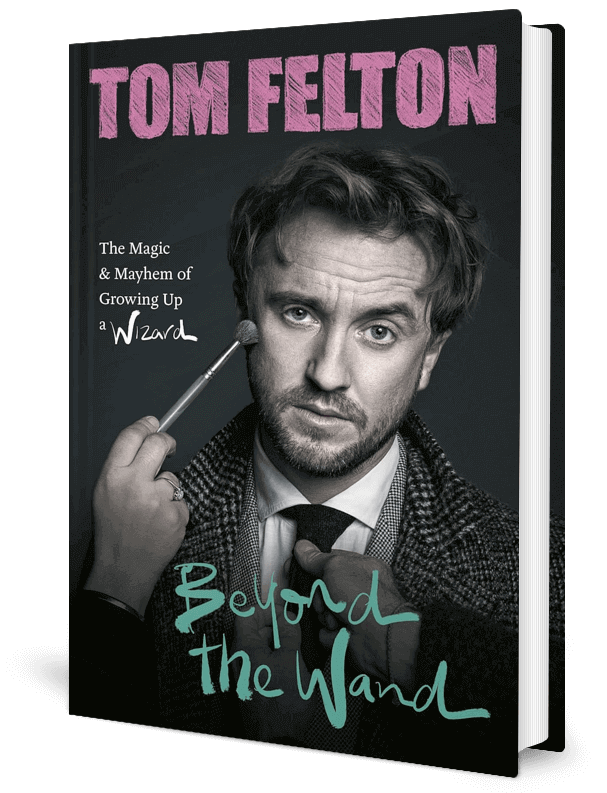
When Tom Felton wrote about his struggles with alcohol and depression in Beyond the Wand, he could have easily slipped into the kind of confessional writing that makes readers uncomfortable.
He could have positioned himself as a victim of fame. He could have made it dramatic, attention-seeking, or apologetic.
He did none of those things.
Instead, he shared difficult truths in a way that strengthened his brand rather than undermining it.
The result was a memoir that feels honest without feeling desperate, vulnerable without feeling performative.
How did he pull that off?
By avoiding four specific pitfalls that destroy author credibility when sharing personal struggles.
In this article, you'll learn exactly what Felton didn't do—and how to apply the same framework to your author brand.
→ New to the series? See the complete framework in “What Tom Felton's Beyond the Wand Teaches About Author Vulnerability.”

What Made Felton's Approach Work
Most celebrity memoirs about struggle fall into predictable patterns.
They're either redemption arcs that feel too polished, trauma dumps that feel exploitative, or carefully managed PR exercises that feel hollow.
Felton's memoir avoids all of these traps.
He writes about alcoholism and mental health struggles with the same straightforward clarity he uses to describe his Harry Potter audition.
No dramatics. No apologies. No performance.
The framework behind this approach comes down to four specific things he didn't do—and one crucial thing he did instead.
Each element builds on the others to create vulnerability that strengthens rather than weakens professional credibility.
This framework isn't just for celebrities. It's for any author who wants to share personal struggles without sabotaging their brand.
1. He Wasn't Asking for Sympathy

Felton describes his drinking problem clearly and directly. He doesn't downplay it. He doesn't excuse it.
But he also doesn't ask readers to feel sorry for him.
There's no victim narrative. No framing of himself as someone things happened to.
He made choices, those choices had consequences, and he takes full ownership of both.
This matters because sympathy-seeking signals emotional immaturity.
When authors frame their struggles as things that happened to them rather than experiences they're navigating, it creates distance instead of connection.
Readers don't want to pity you—they want to respect you.
What This Looks Like in Author Brands
Matt Haig writes extensively about depression and anxiety.
But his books aren't asking readers to feel sorry for him. They're offering tools and perspective based on what he learned surviving those experiences. The energy is "I've been there, here's what helped" not "poor me."
Roxane Gay writes about trauma, weight, and sexual assault.
She doesn't ask for sympathy. She documents her experience and analyzes the cultural forces that shaped it. She's not positioning herself as a victim seeking rescue—she's offering readers her hard-won understanding.
The distinction: Sharing difficult experiences ≠ asking for sympathy.
You can be completely honest about struggles while maintaining the energy of someone who owns their story rather than being owned by it.
The Test for Authors

Before you share something difficult, ask yourself:
Am I sharing this to help readers understand something, or am I sharing it because I need them to feel sorry for me?
If the answer is the latter, you're not ready yet. Process it privately first. Come back when you can share from a position of strength rather than need.
Sympathy-seeking weakens your brand. Honest ownership strengthens it.
2. He Wasn't Seeking Attention
Felton's chapters about alcohol and depression are measured. He gives readers enough detail to understand what he went through without sensationalizing it.
He doesn't milk the drama. He doesn't make it the centerpiece of his story.
The struggles are part of his narrative, not the whole point of his memoir. This restraint makes the disclosure more powerful, not less.
Attention-seeking vulnerability always backfires.
When authors share personal struggles in ways that feel calculated to get clicks, comments, or sympathy—when they weaponize vulnerability for engagement—readers can smell it.
And once they smell it, they stop trusting you.
What This Looks Like in Author Brands

Think about the difference between these two approaches:
Attention-seeking:
"I haven't slept in three days and I'm having a breakdown but here's my new book cover! Also my marriage is falling apart. Anyway, preorder link in bio!"
Measured sharing:
"Publishing a book while managing depression has taught me that deadlines and mental health don't always align. I'm learning to work with my capacity instead of against it."
The first weaponizes vulnerability for attention. The second shares honestly without making the struggle performative.
Elizabeth Gilbert navigated this brilliantly when her marriage ended.
She didn't hide the divorce, but she also didn't turn it into a spectacle. She acknowledged it, shared what she learned, and moved forward.
The Test for Authors
Before you share something publicly, ask yourself:
Would I share this if it got zero engagement? Or am I sharing it specifically to get a reaction?
If you're chasing engagement, it's not vulnerability—it's performance. And readers can tell the difference.
Strategic vulnerability serves your audience. Attention-seeking serves you.
3. He Wasn't Apologizing

This might be the most important element of Felton's approach.
He never apologizes for having struggled. He doesn't frame his alcoholism or depression as character flaws he's sorry for. He just owns that they were part of his story.
There's no self-flagellation. No "I'm so sorry I let you all down." No performative shame.
He simply says: This happened. This is what I learned. This is how I moved forward.
Apologizing for your struggles signals that you think they make you less worthy.
When authors over-apologize for mental health issues, personal challenges, or career setbacks, they're reinforcing the idea that these things are shameful.
That undermines the entire point of sharing.
What This Looks Like in Author Brands
Authors who apologize excessively:
"I'm so sorry I haven't posted—I've been dealing with anxiety."
"I feel terrible that I missed my deadline. I know that's unprofessional."
"I apologize for being a mess. You all deserve better."
This positions struggles as failures rather than as human experiences. It makes readers uncomfortable because you're forcing them to either validate your shame or challenge it.

Authors who own without apologizing:
"I took time off for my mental health. I'm back now."
"I extended my deadline to write something I'm proud of rather than something rushed."
"Publishing while managing depression means working differently, not working less."
See the difference? The second group isn't apologizing for being human. They're just stating facts and moving forward.
You can acknowledge impact without apologizing for your existence.
If your struggle affected commitments (you missed a deadline, canceled an event), you can acknowledge that impact professionally. But you don't need to apologize for the struggle itself.
The Test for Authors
Before you share, ask yourself:
Am I apologizing for having this experience, or am I acknowledging its impact?
One is shame. The other is responsibility. Know which one you're doing.
Own what you've been through. Don't apologize for it.
4. He WAS Owning It
This is what ties everything together. Felton doesn't hide, doesn't perform, doesn't weaponize.
He just owns his story.
The energy throughout Beyond the Wand is "this is me"—not "please validate me," not "feel sorry for me," not "look how brave I am for sharing this."
Just: This is my story. These are the parts that were hard. This is what I learned.
Ownership is what makes vulnerability strategic instead of damaging.
When you've done the private work of processing, when you're sharing from a place of strength rather than desperation, when you're offering readers insight rather than asking them to fix you—that's when vulnerability builds trust instead of eroding it.
What This Looks Like in Author Brands

Owning your story means:
You've processed it privately before sharing publicly
You're not looking for validation or rescue
You're sharing because the insight might help others, not because you need them to make you feel better
You're comfortable with this becoming part of your permanent professional identity
Matt Haig owns his mental health story so completely that he's built an entire brand around it. He's not apologizing for it, not hiding it, not asking readers to fix him. He's sharing what helped him survive and offering that wisdom to others.
Glennon Doyle owns her story about alcohol, marriage, sexuality—all of it. She's not performing vulnerability for sympathy. She's owning every part of her journey and building a brand on radical honesty.
These authors aren't victims of their stories. They're not defined by their struggles. They've integrated those experiences into their identity and used them as the foundation for their work.
The Test for Authors
Before you share, ask yourself:
Am I comfortable with this being part of how people know me professionally? Or am I sharing it impulsively and might regret it later?
If you're not ready for it to be permanent, don't share it yet. Process it more. Get clearer on what it means to you.
Once you own your story completely, sharing it becomes powerful instead of risky.
How to Apply This Framework

Here's how to use Felton's four-point approach in your author brand:
1. Process privately first.
Go to therapy. Journal. Talk it through with trusted friends. Do the internal work before you go public. You can't own something you haven't processed.
2. Find the meaning.
What did you learn? How did you grow? What wisdom came from this experience? If you can't answer these questions, you're not ready to share yet.
3. Share from strength, not desperation.
Wait until you're on the other side. Don't share from the middle of a crisis. Share when you can offer perspective, not when you're seeking rescue.
4. Make it useful.
Your story should serve your audience, not just you. What can readers learn from your experience? How does this help them?
The framework in action:

Not ready to share:
Still in the middle of the struggle
Looking for validation or sympathy
Haven't found the meaning yet
Sharing feels performative even to you
Ready to share:
You've processed it privately
You know what you learned
You're sharing from strength
The insight serves your audience
You're comfortable with this becoming part of your brand
The difference between strategic vulnerability and oversharing is timing and intention.
→ Get the full self-assessment framework in “5 Questions to Ask Before Sharing Your Author Story” (Coming Soon!)
Bottom Line
Tom Felton didn't ask for sympathy. He didn't seek attention. He didn't apologize. He just owned his story.
That's the framework. Four things to avoid, one thing to do instead.

The power of this approach:
It lets you be completely honest about struggles without undermining your professional credibility. You can share difficult truths and strengthen your brand rather than sabotaging it.
This isn't about hiding or performing. It's about sharing from a place of ownership rather than need.
When you've processed something privately, found the meaning, and can share from strength—that's when vulnerability becomes strategic. That's when honesty builds trust instead of creating distance.
You don't have to be perfect. You just have to own your story.
The question isn't "Should I share this?"
The question is "Have I processed this enough to own it?"
If the answer is yes, share it. If the answer is no, do the private work first.
Then, when you're ready, tell your story the way Felton did—with honesty, clarity, and complete ownership.
Ready to own your full author story—not just your current book?
You've learned how to share struggles without undermining your brand, but here's what most authors miss: your vulnerability IS part of your brand DNA. This free guide shows you how to build a brand foundation that can hold your entire story—the polished parts and the messy ones—without requiring you to rebrand every time you evolve.
If You Liked This Article, You’ll Also Love…
What Tamora Pierce's 30-Year Career Teaches Us About Author Brand Evolution
Why Author Branding Isn't Vanity—It's Survival: Professional Design in the Age of Digital Censorship
Building Your Author Brand Like Charlotte McConaghy: From YA to Literary Thriller
Robert Louis Stevenson's Author Brand: 5 Lessons for Modern Writers
