
Your Author Brand Isn't Your Genre—It's Your Healing Power
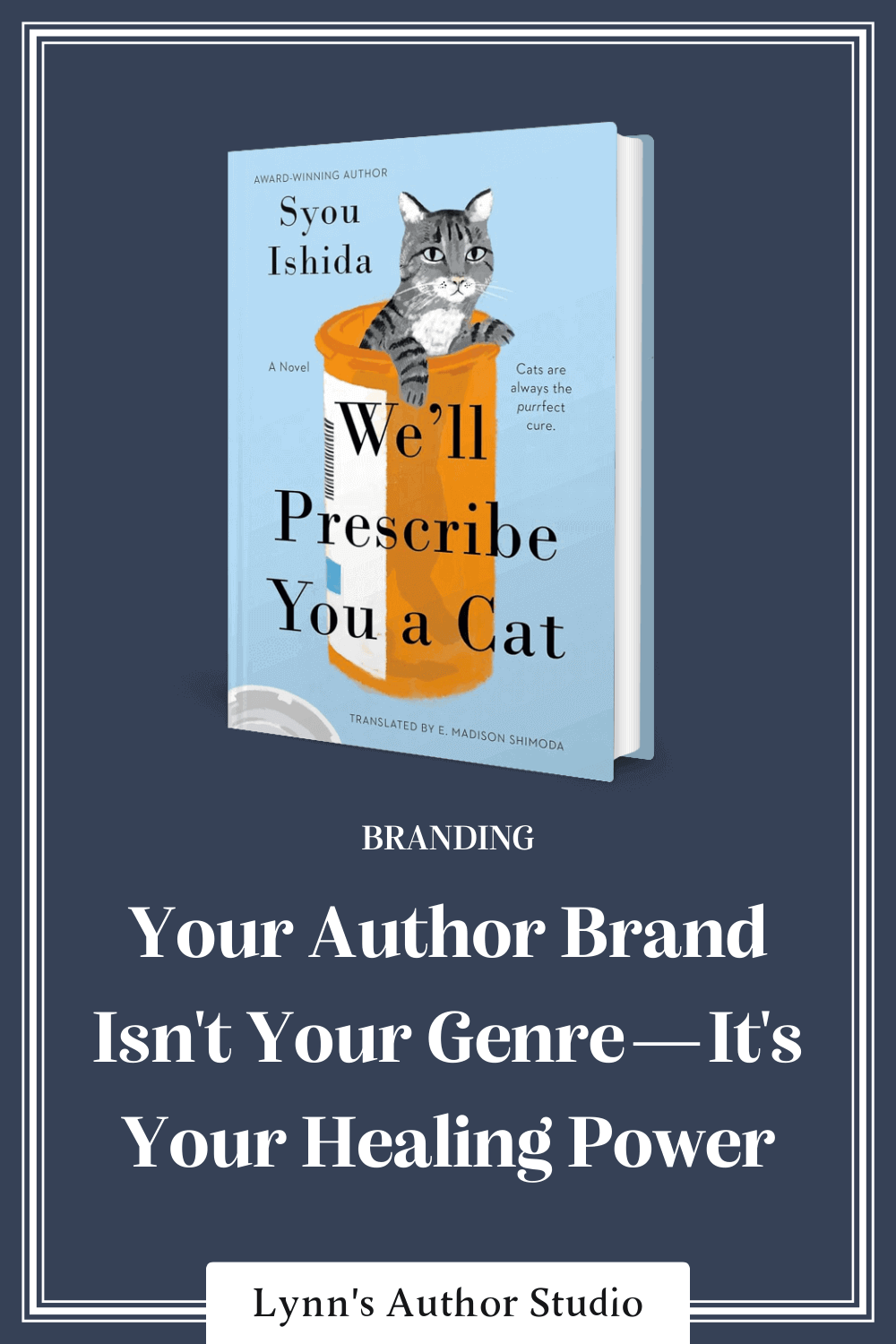
Article 1 of The Cat Prescription Series
The Brand of Syou Ishida
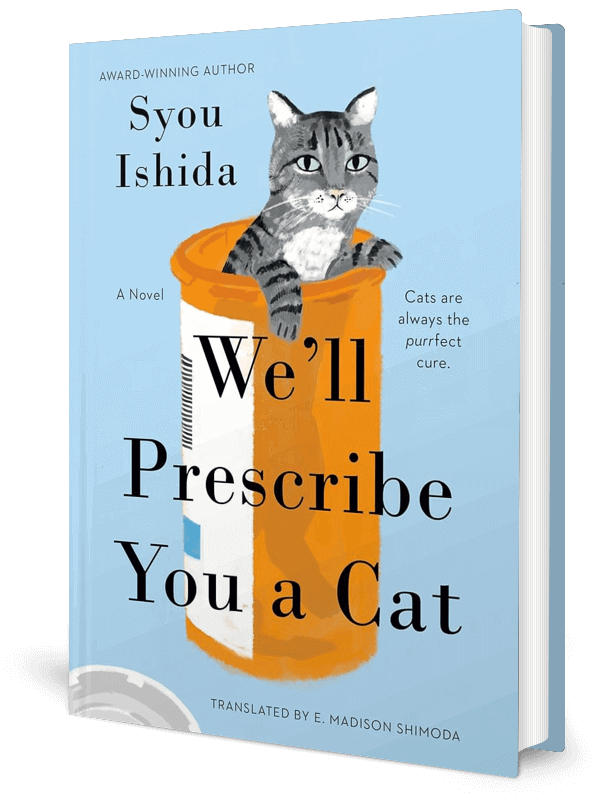
Picture this: You're wandering through the narrow alleys of Kyoto when you stumble upon a peculiar clinic. The Kokoro Clinic for the Soul has no street address, can't be found on GPS, and operates by the strangest medical principle you've ever heard.
No matter what brings patients to Dr. Kokoro's door—job burnout, relationship troubles, creative blocks, existential dread—he prescribes the same thing. Cats.
Always cats.
But here's what makes the clinic's approach brilliant:
The clinic's brand isn't "cats"—it's "healing through unexpected solutions."
Every patient receives a different cat with a unique personality, perfectly matched to their specific needs. The prescription isn't generic; it's precisely tailored to create the exact transformation each person requires.
This is the secret that most authors miss completely when building their brand.
“We’ll Prescribe You A Cat” is a masterclass in both branding and magical realism. To learn more about Syou Ishida’s worldbuilding, read “The Magic of Subtle Worldbuilding: Why Less is More in Magical Realism.” (Coming Soon!)

The Biggest Author Branding Mistake That's Sabotaging Your Career
Walk into any bookstore and you'll see the evidence everywhere. Author after author making the same critical error in their branding strategy.
They think their genre equals their brand.
Romance writers brand themselves around hearts and pink fonts.
Fantasy authors default to swords and mystical imagery.
Literary fiction writers choose stark, minimalist designs.
Most authors intend to have a long career, yet they build their entire brand around the genre of their first book.
This approach feels logical at first. Your published work is your most obvious asset, so why wouldn't you center your brand around it?
But consider what happens when your career evolves.
You write a second book that's slightly different in tone. Your third book explores new themes. Maybe you eventually want to try a different genre entirely.
Suddenly, that genre-specific brand becomes a prison instead of a platform.
Remember Ally Carter's experience? Her first novel, Cheating at Solitaire, was an adult contemporary romance novel about cards, so she built a cute card-themed website with graphics and branding to match.

Then her next book, I'd Tell You I Love You, But Then I'd Have to Kill You, launched a Young Adult series about a school for girl spies.
New age range. New genre. Zero connection to cards.
Ally Carter’s entire website had to be scrapped and rebuilt from scratch. All that time, effort, and brand recognition—gone.
The most important pillars of effective branding are trust and consistency, but constantly changing your brand undermines both.
When authors rebrand with every new release, readers start wondering: "Who is this author, really?"
They thought they knew who you were, but then you pivoted. And pivoted again.
Eventually, the audience stops trying to follow along.
Enjoying this article about your genre not equaling your author brand? You may also enjoy “Why Your Book is Not Your Author Brand,” with examples like Steven King and Rebecca Yarros.

What the Kokoro Clinic Teaches Us About Consistent Branding
Let's return to Syou Ishida’s mysterious clinic in Kyoto. Despite serving patients with wildly different problems, the Kokoro Clinic maintains perfect brand consistency.
How?
They never confuse their delivery method with their core promise.
The clinic's brand rests on three unwavering pillars:
Mysterious: You can only find it when you truly need help.
Effective: Every prescription works, even if it seems unconventional.
Compassionate: They understand your pain and provide exactly what you need.
The clinic's patients change, their problems vary, but the core promise remains the same.
A businessman suffering from job burnout gets a playful cat that leads him to discover joy in manual labor.
A young girl dealing with school cliques receives a gentle cat that teaches her about authentic friendship.
A geisha mourning a lost pet finds healing through caring for a cat that mirrors her beloved companion.

Different cats, different people, different surface-level solutions—but the same underlying brand promise: healing through the right intervention at the right moment.
This is not only the brand of the Kokoro Clinic; it also alludes to Syou Ishida’s brand. While her first book (and sequel, We’ll Prescribe You Another Cat) falls into the adult magical realism category and is—clearly—about cats, that’s not her brand.
Think about it.
If cat-related adult magical realism is Ishida’s brand, that leaves no room to grow as an author. The moment she steps outside of any of those categories (for example, writes a YA dog-related contemporary romance), she would have to completely rebuild her author brand from scratch.
If instead, she realizes her author brand is “healing through unexpected solutions” with a mysterious, effective, and compassionate atmosphere—that stays true to who Ishida is as a writer while opening up unlimited room for growth.
This is how smart author branding works.
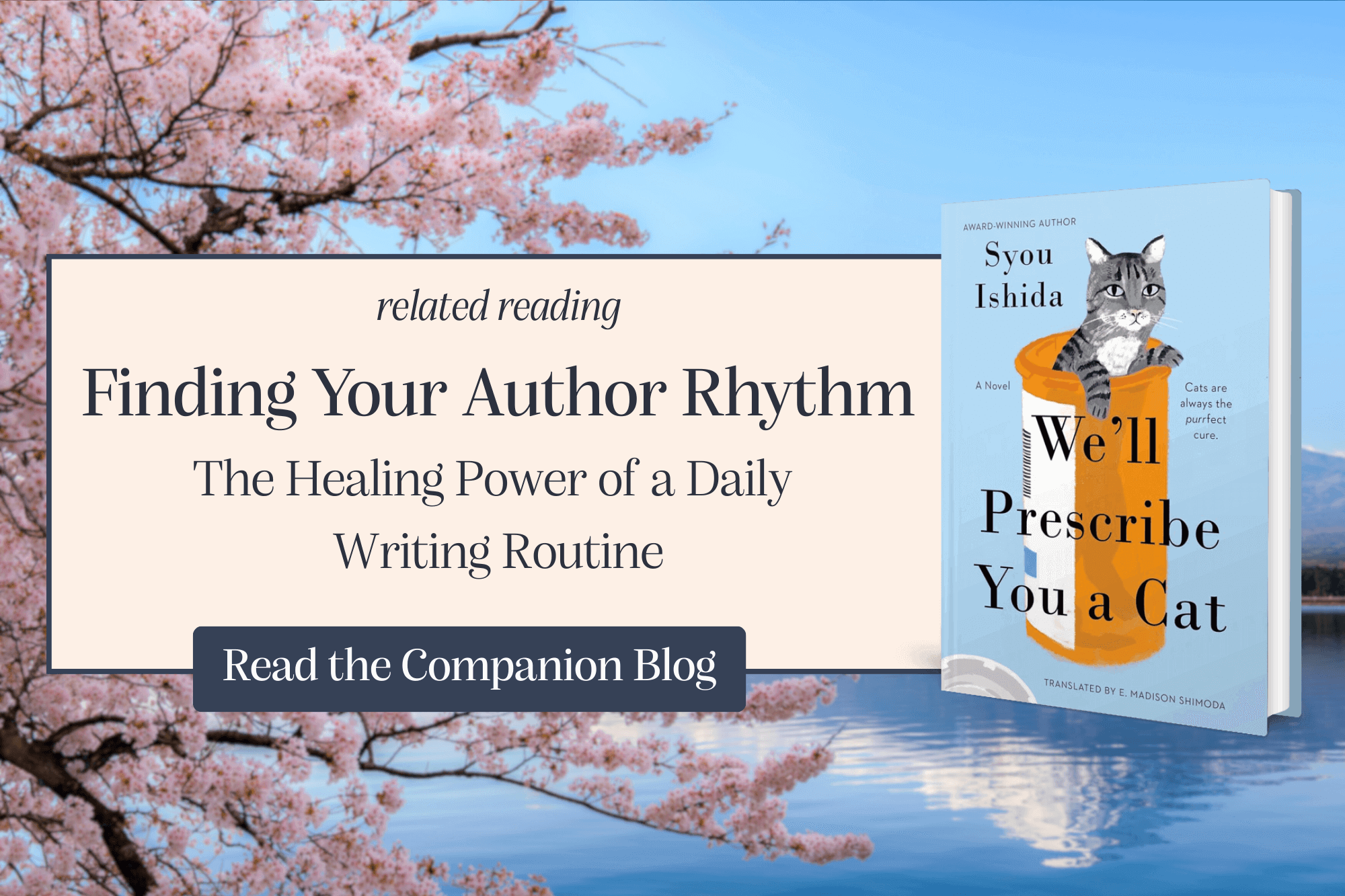
Successful authors also know the importance of a daily writing routine. “Find Your Author Rhythm” contains tips for creating yours. (Coming Soon!)
Case Study: Tamora Pierce's 30-Year Brand Evolution
Want to see this principle in action? Look at Tamora Pierce's remarkable career.
Pierce has been publishing fantasy novels for over three decades. She's created multiple worlds, written for different age groups, and evolved her themes and complexity significantly.
Yet there's something unmistakably "Pierce" about every single book she's written.
Pierce made dramatic changes throughout her 30+ year career—new worlds, different magic systems, evolving complexity, even new target age groups.
Yet readers never questioned whether they were reading a "Pierce book."
Why? Because while everything on the surface changed, her core healing power remained rock-solid consistent.

Pierce always writes about young people discovering their power and fighting injustice.
Her protagonists consistently face coming-of-age challenges while standing up to bullies and protecting the vulnerable.
Her worlds always feel real because she thinks through the consequences of magic and power.
These three elements—character growth, justice themes, and realistic world-building—became her brand signature across every genre shift and creative risk.
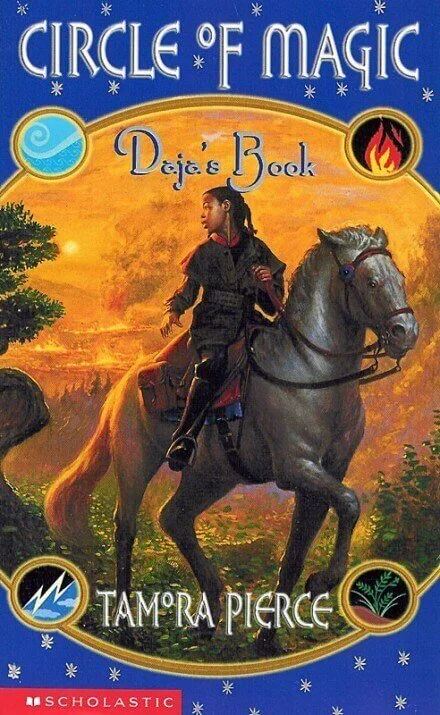
When she moved from Alanna's world to the Circle of Magic universe, readers didn't feel abandoned or confused. They felt excited to see how Pierce would explore familiar themes in a fresh setting.
Despite all these surface changes, three core elements never wavered:
1. Character Types: Coming-of-Age Power Discovery
Whether it's Alanna learning knighthood, Daine discovering wild magic, or Arram developing academic magic, Pierce's protagonists are always young people discovering their power and place in the world.
2. Themes: Justice, Mentorship, Fighting Abuse of Power
From the beginning, Pierce's work has centered on characters who protect the vulnerable and question unjust systems. This thematic consistency makes her brand feel authentic rather than calculated.
3. World-Building Philosophy: Detailed, Lived-In Worlds
Pierce's fantasy worlds feel real because she thinks through the consequences of magic, politics, and social systems. This commitment became a hallmark of her author brand.
Pierce never chased trends or completely reinvented herself—she evolved while staying true to her core healing power.

Discovering Your Author Healing Power
So how do you identify your unique healing power? It starts with shifting your perspective from what you write to why you write it.
Your brand is the transformation you provide readers, not the vehicle you use to provide it.
The genre, the age range, the topic…those are surface aspects. Underneath it all, is the transformation and your core promise as an author.
Here's a framework to uncover your healing power:

Step 1: Identify Your Core Transformation
What change do you consistently create in your readers? Do you help them:
Process grief and loss through beautiful, cathartic storytelling?
Escape daily stress through immersive, comforting adventures?
Feel less alone by showing characters who understand their struggles?
Find courage to face their own challenges through brave protagonists?
Laugh and find joy during difficult seasons of life?
Step 2: Extract the Emotional Essence
How do readers feel during and after your stories? Look for patterns in your reviews and reader feedback:
"Your books always make me feel hopeful"
"I turn to your stories when I need to feel brave"
"Your characters help me process my own family dynamics"
"Your books are my comfort reads when life gets overwhelming"
Step 3: Find Your Unique Delivery Method

What's distinctive about how you provide this transformation? Maybe you:
Use humor to make difficult topics approachable
Create found family dynamics that heal readers' loneliness
Write flawed characters who grow in realistic, inspiring ways
Build intricate plots that satisfy readers who love puzzles
Craft beautiful prose that provides aesthetic pleasure alongside story
Still stuck for ideas? Consider a few examples across different genres:
A mystery writer's healing power might be "helping readers feel smart and capable" through puzzles they can solve alongside the detective.
A romance author's healing power could be "showing readers they deserve love and respect" through relationships that model healthy communication.
A literary fiction writer might offer "helping readers feel less alone in their complex emotions" through deeply introspective character studies.
A fantasy author's healing power could be "empowering readers to believe in their own hidden strength" through ordinary characters who discover extraordinary abilities.
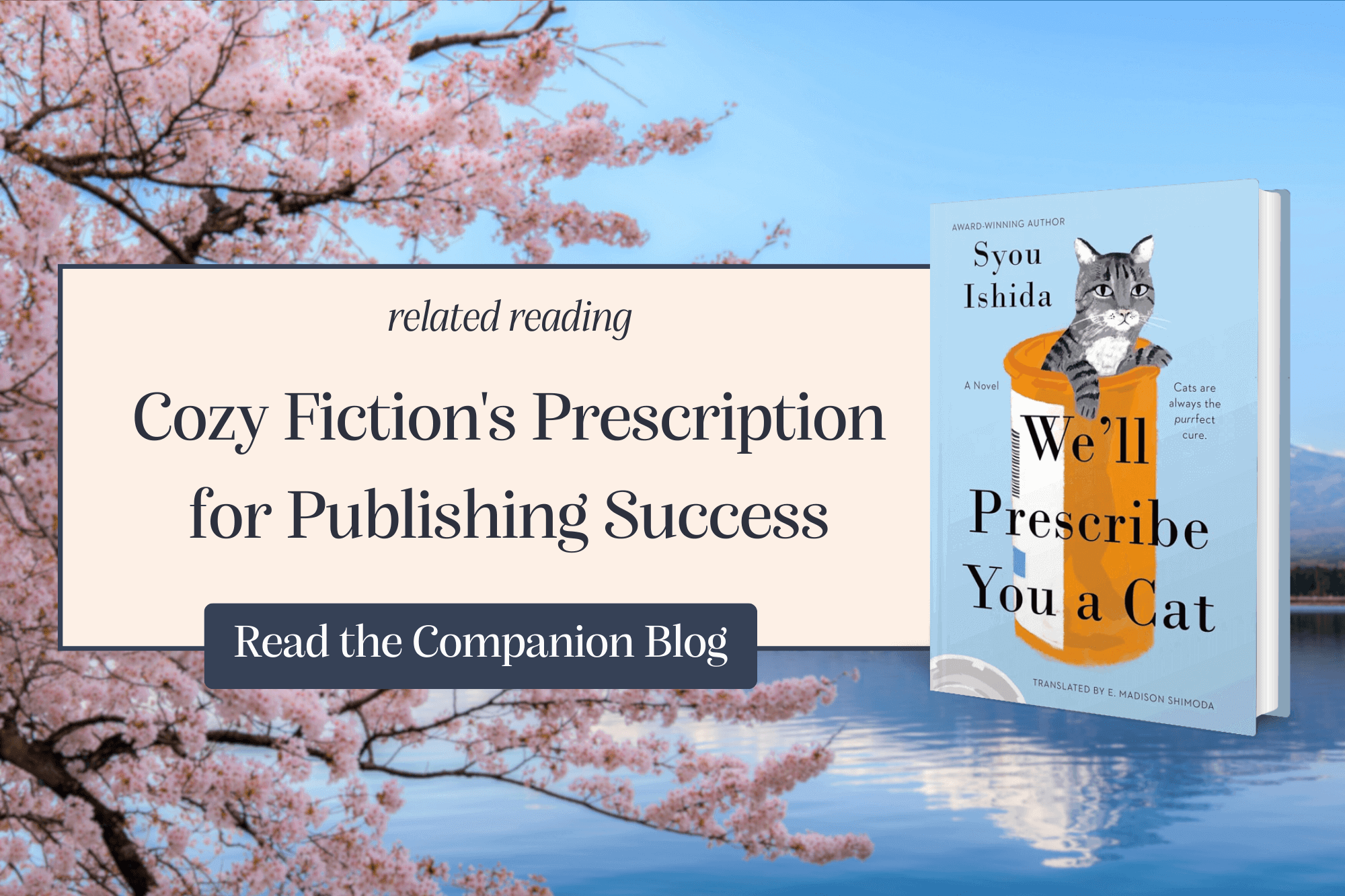
Think your book might be cozy fiction like “We’ll Prescribe You A Cat”? Explore, “Cozy Fiction's Prescription for Publishing Success.” (Coming Soon!)
Future-Proofing Your Author Brand
Once you understand your healing power, you can build a brand strategy that grows with your career instead of limiting it.
Because once you identify the themes and emotional experiences likely to grow with your career, your brand becomes a foundation rather than a limitation.

Take color palettes, for example. Instead of choosing colors based only on your current book's genre conventions, choose colors that also reflect your healing power:
If you help readers feel hopeful, you might choose a palette that includes both grounding earth tones and uplifting brighter accents
If you help readers process complex emotions, you might select sophisticated colors that can convey both depth and warmth
If you empower readers to feel brave, you might choose bold colors that feel strong without being harsh
Your visual brand elements should support your healing power and fit your current genre.
The same principle applies to your website design, author photos, and marketing messaging.
Ask yourself: "Does this communicate my healing power effectively, regardless of which specific book someone discovers first?"
Or: “Will this limit me if my next book is a different genre, a new topic, or written for a different age range?”
This approach allows your brand to evolve naturally while maintaining the consistency that builds reader trust.
When you eventually write in a new genre or explore different themes, you won't need to rebuild your brand from scratch.
You'll simply be offering your unique healing power through a new delivery method.
Your Author Brand Strategy Action Plan

Ready to put these ideas into action?
Step 1: Audit Your Current Brand
Look at your website. Does it communicate a healing power, or just a genre? What would a reader understand about the experience you provide from your brand alone? If you changed genres for your next book, would your branding still be relevant?
Step 2: Identify Your Healing Power
Use the framework above to articulate the transformation you consistently provide readers. Write it down in one clear sentence: "I help readers [specific transformation] through [your unique approach]."
Step 3: Align Your Brand Elements
Evaluate how your website can support your healing power. What aspects need to evolve to better communicate your true brand promise? Try starting with your color palette. Can you refine your current colors to better align with your true brand promise, or do you need a brand overhaul to establish a strong foundation for future growth?

Step 4: Plan for Growth
Once you have an idea of what your brand is now, consider where your writing career might go in the next 5-10 years. Do you have ideas for writing in a different genre, or an urge to write for a new age group? How might your brand accommodate that growth while maintaining consistency?
Remember, you're not just marketing your current book—you're building the foundation for an entire writing career.
The Long-Term Perspective
Just like the Kokoro Clinic has been countless patients with the same core approach, your author brand should be built to last.
Your author brand isn't just about your current book or series—it's about building a foundation that will serve your entire writing career.
When you understand that your brand is your healing power rather than your genre, everything changes.
You stop seeing each new project as a potential brand crisis and start seeing it as another way to deliver the transformation your readers crave.
That's the kind of author brand worth building. One that can grow with you as you discover new aspects of your voice, explore different themes, and maybe even venture into new genres.
The most successful author brands aren't rigid—they're authentic and flexible.

Your healing power is uniquely yours. No other author provides exactly the same transformation in exactly the same way.
That's your competitive advantage, your brand foundation, and your long-term career strategy all rolled into one.
Now that you understand your true healing power, the next question becomes: how do you translate that into a website that actually works?
Most authors make the critical mistake of choosing cookie-cutter website templates that dilute their unique prescription.
Discover why one-size-fits-all websites fail authors and how to create your perfect digital clinic in the Author Prescription Series’ next article, “The Cat Prescription Method: Why One-Size-Fits-All Websites Fail Authors.” (Coming Soon!)
Ready to discover your Author DNA before you build your brand?
You've learned that your healing power—not your genre—should drive your brand strategy. This free guide reveals the fatal mistake authors make when they build their brand around their current book. Instead, discover what a DNA-based brand looks like through real author case studies.

If You Liked This Article, You’ll Also Love…
Robert Louis Stevenson's Author Brand: 5 Lessons for Modern Writers
Why Author Branding Isn't Vanity—It's Survival: Professional Design in the Age of Digital Censorship
Find Your Author DNA: The Secret to Building an Unforgettable Author Brand
Building Your Author Brand Like Charlotte McConaghy: From YA to Literary Thriller
