
Robert Louis Stevenson's Author Brand: 5 Lessons for Modern Writers
Part 1 of Dark Edinburgh: A Robert Louis Stevenson Masterclass
The cobblestone closes of Edinburgh's Old Town twist through shadow even at midday.
Walking these streets, you can almost hear the footsteps of grave robbers, the whispers of body snatchers doing their grim work under the cover of darkness.
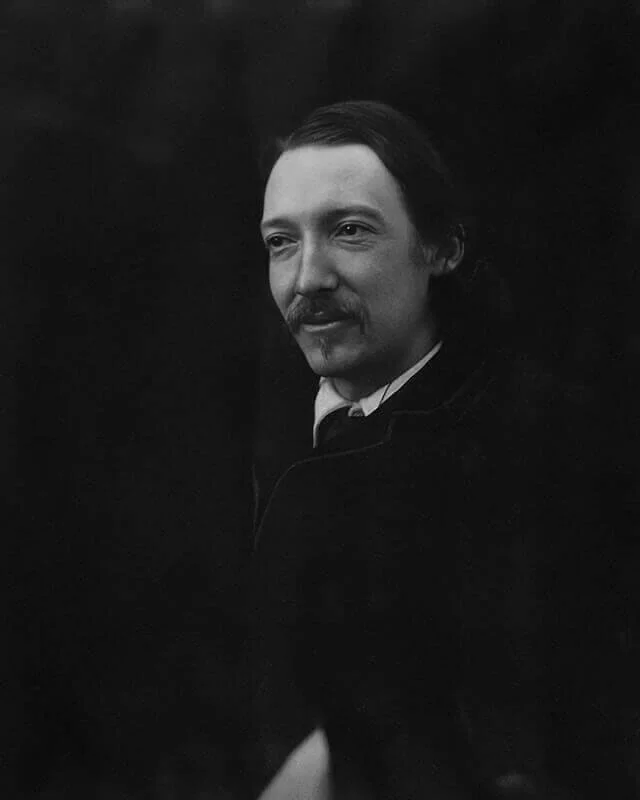
This is the Edinburgh that shaped Robert Louis Stevenson—and this is the Edinburgh that became inseparable from his author brand.
RLS died in 1894, yet his brand is so strong that he's currently ranked as the 26th most-translated author in the world.
That puts him ahead of Oscar Wilde and Edgar Allan Poe. His name still sells books 130 years after his death.
So what did Stevenson understand about author branding that we can apply today?
Because here's the thing—most modern authors struggle with branding.
We're told to "be authentic" but also "market strategically."
We're advised to "find our niche" while also "writing what we love."
We create websites around our debut novels, only to realize we've painted ourselves into a corner when book two is completely different.
Stevenson didn't have social media, email lists, or Squarespace. But he built a brand so cohesive and powerful that it's lasted longer than most publishing houses.
Let's break down exactly how he did it—and what you can learn from his approach.
Lesson 1: Make Place Integral to Your Brand
RLS didn't just write about Edinburgh. He became Edinburgh Gothic.
Think about the authors you know who are synonymous with a place.
Stephen King is Maine. Annie Prouloux is Wyoming. Tana French is Dublin.
When place becomes part of your brand, you're not just another writer—you're THE writer of that world.
Stevenson understood this instinctively. Yes, he traveled extensively (Samoa, France, California), but Edinburgh—dark, historical, morally complex Edinburgh—became the foundation of his literary identity.
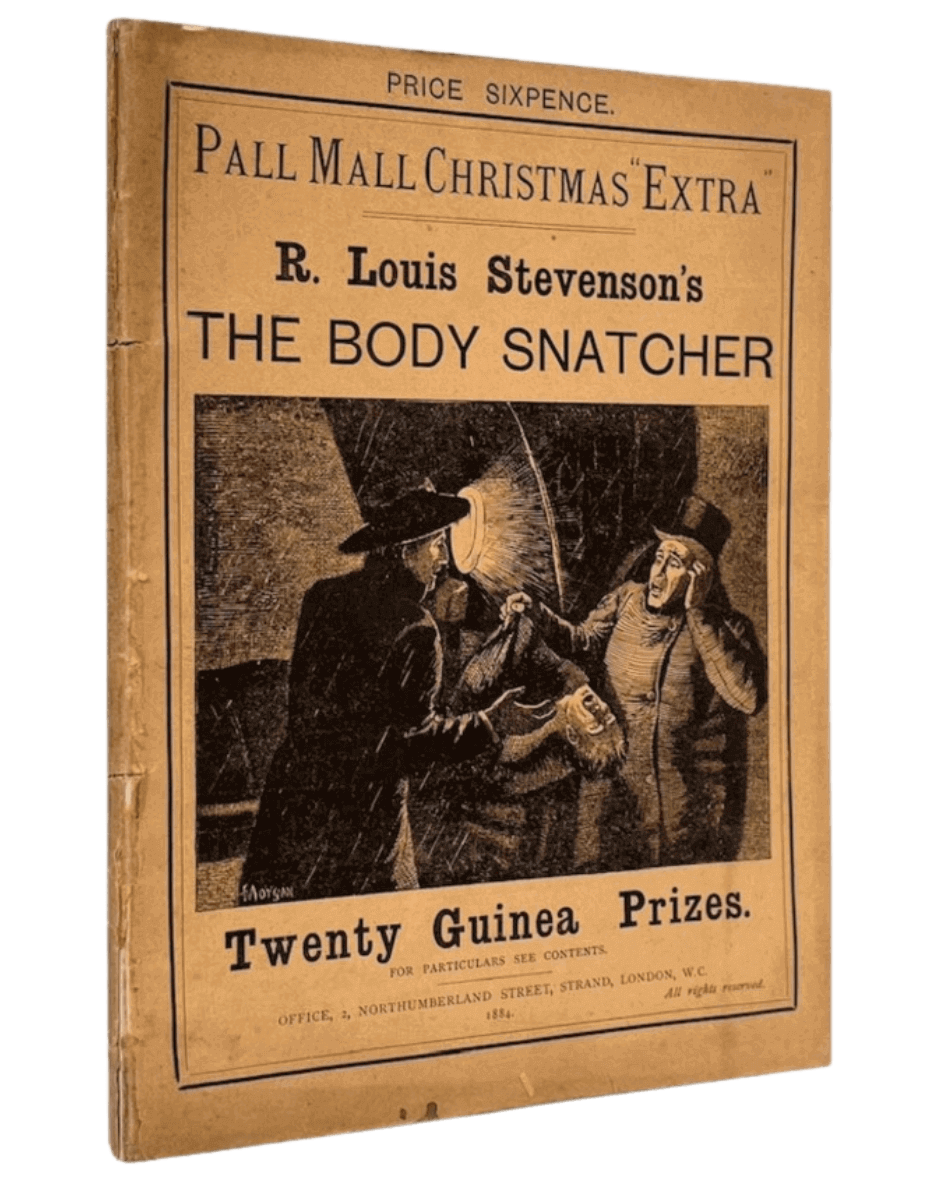
Consider "The Body Snatcher." This story doesn't just happen to be set in Edinburgh.
The city's actual history of Burke and Hare, the real grave-robbing scandal, the anatomists buying corpses—this is woven into the fabric of the narrative itself.
When readers think of Stevenson's Gothic work, they think of Edinburgh's wynds and closes, the city's respectable façade hiding dark secrets. The place and the author became inseparable.
Here's what this looks like in practice:
Even when Stevenson wrote about pirates (Treasure Island) or the South Seas (his later work), his Scottish identity remained central to his brand.
He was "the Scottish writer"—distinct from his English contemporaries, carrying that heritage with him regardless of setting.
Modern Application:
You don't have to write local fiction to brand with place.
Place in your author brand can mean:
Your literal location (especially if it's distinctive or literary)
Your cultural heritage (the traditions and landscape that shaped you)
The worlds you create repeatedly (think Faulkner's Yoknapatawpha County)
I'm in Edinburgh right now, and I'm being very intentional about incorporating this into my own author brand. Not because all my stories are set here, but because this literary landscape shapes how I think about storytelling, Gothic tradition, and the intersection of history and fiction.
Ask yourself: What's your Edinburgh? What place or landscape could become part of your brand identity?
We'll dive much deeper into this concept in Part 3 of this RLS Masterclass, where we'll explore exactly how Edinburgh shaped RLS's author identity and how you can use location strategically in your own branding.

Lesson 2: Master Your Atmosphere Before Expanding Your Range
Here's something most authors get wrong: they try to be too many things too quickly.
Stevenson didn't make that mistake.
His Gothic craft became his signature first.
Only after he'd mastered that distinctive atmosphere—the dread, the moral ambiguity, the creeping horror—did he expand into adventure stories and other genres.
"The Body Snatcher" is a masterclass in atmospheric writing.
Let me show you what I mean:

The story opens with a group of men drinking late at night. We meet Fettes, described as a man with "some vague Radical opinions and some fleeting infidelities." Already, Stevenson is layering moral complexity. This isn't a hero's tale.
Then comes the reveal:
Fettes recognizes a name—Macfarlane—and goes pale. The narrator notes his "ghastly" transformation. We don't know why yet, but Stevenson has created immediate tension through reaction rather than exposition.
The actual horror of the story (the body snatching, the murder, the supernatural suggestion at the end) is almost secondary to the atmosphere of moral decay.
These are educated men—medical students, anatomists—doing monstrous things. The respectability is what makes it Gothic.
This was Stevenson's signature: He built tension through moral ambiguity and unreliable narration, not just through scary events.
Why This Matters for Your Brand:
When readers picked up a Stevenson Gothic tale, they knew what kind of experience to expect. Not jump scares—something more sophisticated.
A slow burn.
Questions about morality.
The suggestion that respectable people might be monsters.

That consistency is what allowed him to build an audience.
They trusted him to deliver a specific flavor of storytelling.
Only after establishing this signature did Stevenson successfully pivot to Treasure Island and other adventure tales.
And even then, his brand remained consistent—there's still moral complexity, still that psychological depth beneath the adventure.
Modern Application:
What's your signature atmosphere? What do readers get when they pick up YOUR work?
Maybe it's found family and cozy fantasy.
Maybe it's sharp wit in contemporary romance.
Maybe it's lyrical prose in historical fiction.
Master that first. Let your readers learn what to expect from you. Build that trust.
Then you can expand.
But you need that foundation—that recognizable flavor that makes you YOU.
In Part 2 of this series, we'll do a full craft deep-dive into Stevenson's Gothic techniques, breaking down exactly how he created atmosphere and what modern writers can learn from his approach.
Lesson 3: Genre Flexibility Requires Strategic Branding
Okay, so here's where it gets tricky.
Stevenson wrote Gothic horror. Adventure novels. Essays. Poetry. Children's books. Travel writing.
How did he maintain a cohesive brand across such different genres?
The answer: He found the through-line.
Look at his major works:
Strange Case of Dr. Jekyll and Mr. Hyde — Duality, morality, hidden darkness
Treasure Island — Coming of age, moral choices, adventure with consequences
Kidnapped — Identity, loyalty, navigating a morally complex world

See the pattern?
Regardless of genre, Stevenson's work always grappled with questions of morality, duality, and identity.
The Gothic tales made it literal (Jekyll actually becomes Hyde). The adventure stories made it situational (should Jim trust Long John Silver?). But the core themes remained constant.
This is what allowed him to write for different audiences—children with Treasure Island, adults with Jekyll and Hyde—without confusing his brand.
Here's What He Did Right:
He didn't try to make each book appeal to everyone.
Treasure Island was clearly for young readers. Jekyll and Hyde was adult fiction.
But both felt like Stevenson because they explored the same fundamental questions through different lenses.
His brand wasn't "I write Gothic horror" or "I write adventure."
His brand was "I explore moral complexity and human duality through compelling narratives."
That's a brand that can stretch across genres.
Struggling to Find Your Through-Line?
You're not alone. Most authors know they need a cohesive brand, but identifying what connects your diverse work is genuinely hard.
I created a free workbook specifically for this challenge: the Author Brand DNA Workbook. It walks you through discovering your unique perspective—the core DNA that makes your work unmistakably YOURS, regardless of genre.

Modern Application:
If you write in multiple genres, you need to identify your through-line.
What connects your contemporary romance to your fantasy trilogy?
What makes your thriller and your memoir both distinctly YOURS?
It might be:
Themes you return to (found family, redemption, justice)
Your narrative voice (lyrical, darkly funny, spare and direct)
The emotional experience you create (hope, catharsis, adventure)
Your values showing through the work
Rebecca Yarros is actually a great example of this.
Her adult romance and Fourth Wing are very different genres, but they share intensity and emotional stakes. That's her through-line.
We'll explore multi-genre branding strategies much more in Part 4, including specific tactics for authors who write across age categories or in vastly different subgenres.

Lesson 4: Personal Story Enhances Professional Credibility
Stevenson's personal life wasn't separate from his brand—it was integral to it.
He was sickly as a child, attended by his nurse Alison Cunningham, who told him ghost stories and morbid tales.
He rebelled against his family's lighthouse engineering dynasty to become a writer.
He traveled constantly seeking warm climates for his failing health.
He married an American divorcée, which was scandalous for the time.

All of this made him more compelling as an author, not less.
His readers knew he was writing from a place of genuine experience.
The Gothic darkness wasn't just aesthetic—it came from someone who'd spent his childhood in a sickbed being told terrifying bedtime stories.
The adventure wasn't escapism from an armchair—it came from someone who'd actually traveled to Samoa, who knew what it meant to seek unknown horizons.
This is what I love about RLS's approach: He was vulnerable and authentic without making his work autobiographical.
His stories weren't about him. But readers could sense his genuine engagement with the themes—mortality, adventure, moral complexity—because he'd lived with these questions.
Modern Application:
Your "About the Author" page isn't just a formality.
It's a chance to show readers why YOU are the right person to write YOUR books.
This doesn't mean oversharing or making everything about your trauma. It means being thoughtful about what aspects of your story enhance your credibility and deepen reader connection.
For me, mentioning that I'm both a professional designer AND an agented author with a forthcoming novel matters.
It shows I understand the author experience from the inside. I'm not designing for authors from the outside looking in—I am one.

Think about your own story:
What life experiences inform your writing?
What makes you uniquely qualified to tell these stories?
What aspects of your personality or background would help readers understand your work?
You don't need to perform vulnerability, but you can share the genuine experiences that shape your perspective.
Lesson 5: Build for Legacy, Not Just Launch
Here's the final lesson, and it's the one that requires the most patience:
Stevenson didn't chase trends. He built a body of work.
Yes, he achieved success with Treasure Island. But he didn't then frantically try to recreate that success by writing twelve more pirate novels.
Instead, he continued developing his craft, exploring new themes, and building a catalog that showcased his range within his brand.
Each book strengthened the overall perception of "Robert Louis Stevenson" as an author.
Even his lesser-known works contributed to the edifice of his reputation.
This is the long game of author branding.
Modern Application:

Your author website isn't just for your debut novel.
(In fact, if you've read my other posts, you know I'm passionate about why your book should NOT be your brand!)
You're building something that will grow with your career. Every book release should strengthen your overall brand, not require you to rebrand from scratch.
This means:
Choosing website colors and fonts that can flex with new releases
Writing an author bio that's about YOU, not just your current book
Creating a brand identity rooted in your themes/values, not plot specifics
Building your email list around your author identity, not a single title
Think about your backlist as equity.
Every book you publish should make readers want to explore your other work. But that only happens if there's a cohesive brand tying them together.
Stevenson published Treasure Island in 1883 and Jekyll and Hyde in 1886.
Very different books, but readers who loved one were likely to try the other because they trusted Stevenson's ability to deliver quality storytelling, regardless of genre.
That's the power of brand consistency over time.
In Part 5 of this series, we'll look specifically at how to design author websites that grow with your career—how to incorporate new releases while maintaining brand cohesion, and how to use place and literary heritage in your web design strategy.

Your Dark Edinburgh Awaits
So what do these five lessons add up to?
An author brand that transcends time.
Stevenson's brand worked because it was:
Place-based (Edinburgh Gothic became his signature)
Craft-focused (he mastered atmosphere before diversifying)
Thematically consistent (moral complexity ran through all his work)
Personally authentic (his life experiences informed his credibility)
Built for longevity (each work strengthened the whole)
The beauty of RLS's approach is that it wasn't manufactured. He didn't hire a brand strategist (they didn't exist yet!).
He simply understood, instinctively, that authenticity + consistency + craft excellence = enduring brand.

Your Turn:
Ask yourself these questions:
What's your Edinburgh? What place or landscape could define your brand?
What's your signature atmosphere that readers can rely on?
What themes or values run through all your work, regardless of genre?
What parts of your personal story enhance your author credibility?
Are you building for just this book, or for your entire career?
These aren't easy questions.
They require some soul-searching. But they're worth answering, because a strong author brand is what separates authors who have one successful book from authors who build lasting careers.
In the next part of this series, we're going deep on craft. We'll analyze "The Body Snatcher" scene by scene to understand exactly how Stevenson created that signature Gothic atmosphere—and how you can apply those techniques to your own writing, regardless of genre.
Stay tuned for Part 2: Mastering Atmosphere: Writing Lessons from 'The Body Snatcher.'
Ready to build an author brand that lasts?
Download my free Debut Author Website Audit to discover the 5 critical mistakes that might be undermining your brand—and exactly how to fix them.

