
Beyond the Wand: 5 Memoir Techniques for Writing Dark Material

Part 5 of Beyond the Icon: Author Authenticity in Public Life
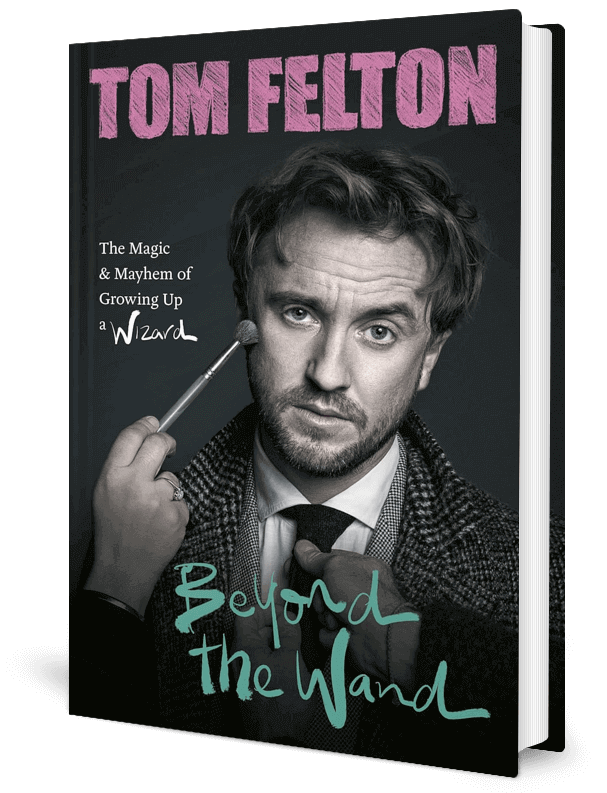
Tom Felton writes about alcoholism with the same simple, straightforwardness that he uses to describe his Harry Potter audition.
No dramatics. No self-pity. No weaponizing his struggle for sympathy or shock value.
He describes drinking alone in hotel rooms, missing work, using alcohol to numb loneliness.
It's honest. It's uncomfortable. But it never feels gratuitous or manipulative.
That's craft, not just courage.
Writing about dark material—addiction, mental health, trauma, failure—requires specific techniques to avoid melodrama, self-indulgence, or exploitation. Felton uses all of them in Beyond the Wand.
In this article, you'll learn the five specific memoir techniques Felton uses to write about difficult subjects with honesty and grace. These work whether you're writing memoir or incorporating autobiographical elements into fiction.
→ New to the series? See the complete vulnerability framework in “What Tom Felton's Beyond the Wand Teaches About Author Vulnerability.”

Why Craft Matters When Writing Dark Material
Anyone can share pain. Dumping your trauma onto the page takes no skill—just willingness to expose yourself.
But writing about pain in a way that's honest without being exploitative, vulnerable without being self-pitying, specific without being gratuitous? That requires craft.
The difference between good and bad writing about dark material isn't courage. It's technique.
Felton doesn't pull punches. He tells the truth about his drinking, his depression, the isolation that came with fame. But he does it in a way that feels measured and intentional, not desperate or attention-seeking.
That measured quality comes from specific choices he makes as a writer. You can learn those choices. You can apply them to your own work.
Technique 1: Lead with Action, Not Emotion
Felton describes what he did before he explains how he felt about it.
He shows the behavior—drinking alone, missing appointments, withdrawing from friends—before analyzing the emotions driving it.
This grounds the reader in concrete reality rather than abstract suffering.

Action first, emotion second.
When you lead with emotion ("I felt so alone, so desperate, so broken"), readers have nothing to anchor to. They're swimming in your feelings without context.
When you lead with action ("I drank a bottle of wine alone in my hotel room and didn't answer my phone for three days"), readers can see what happened. The emotion becomes evident through the behavior.
You don't have to tell them you were lonely—they can feel it.
How to Apply This
Instead of: "The depression was crushing. I felt worthless and hopeless. Every day was agony."
Try: "I stopped answering emails. I missed two deadlines. I spent entire afternoons staring at the wall, unable to write a single sentence."
The second version shows depression through behavior.
The reader understands the emotional state without you naming it explicitly.
The principle: Trust your readers to infer emotion from action. Show the evidence, not just the verdict.
Technique 2: Use Restraint, Not Censorship

Felton doesn't hide or sanitize his struggles. But he also doesn't give us every graphic detail.
He provides enough information to be truthful without being exploitative.
There's a difference between honesty and gratuitousness.
Honesty tells the truth. Gratuitousness uses pain for shock value or dramatic effect.
Honesty serves the reader. Gratuitousness serves the writer's need for attention or catharsis.
Restraint means knowing when to pull back and when to go deeper.
Felton tells us he drank too much. He describes the loneliness and the patterns. He doesn't give us blow-by-blow accounts of every blackout or humiliating moment.
He shares enough for us to understand the severity without wallowing in the details.
Finding the Line
Ask yourself:
Does this detail serve the story or just shock the reader?
Am I including this because it's necessary or because I want a reaction?
Would the meaning change if I said less?
Is this the minimum information needed to convey the truth?
If you can communicate the same truth with less detail, use less detail. Restraint makes dark material more powerful, not less.
Over-sharing every detail diminishes impact. Strategic restraint amplifies it.
Technique 3: Maintain Narrative Distance

This is the hardest technique and the most important. Felton writes about himself as a character, not as himself.
There's a subtle but crucial difference.
When you write about yourself as yourself, you're inside your own head, justifying, explaining, defending.
When you write about yourself as a character, you can observe more objectively.
Narrative distance prevents self-pity and allows readers to draw their own conclusions.
Felton doesn't plead his case. He doesn't ask for sympathy or understanding.
He presents the facts—his choices, his behaviors, his consequences—and lets readers make up their own minds about him.
This creates trust. Readers respect writers who don't tell them how to feel.
How to Create Distance
Write in third person first, even if you plan to switch to first person later. This forces you to see yourself as a character.
Ask yourself: If this were happening to someone else, how would I describe it? What would I notice? What would I judge or sympathize with?
Remove defensive language. Cut phrases like "but you have to understand" or "anyone would have done the same thing." Just describe what happened.
The goal: Make yourself a character the reader can see clearly, not a narrator pleading for sympathy.
Technique 4: Balance Darkness with Context

Felton never shares darkness in isolation.
He always provides context—what led to it, what came after it, how it fit into the larger story.
This prevents his memoir from becoming trauma porn. The darkness isn't there for shock value. It's part of a complete picture.
Context transforms pain from spectacle to narrative.
When you only share the darkest moments without showing what surrounded them, readers can't make sense of it. It feels gratuitous.
But when you show how you got there and what happened next, the dark moments become meaningful rather than exploitative.
Felton tells us about his drinking, but he also tells us about his friendships, his work, his family, his recovery. The drinking exists in context, not in isolation.
Building Context
Before the darkness:
What was happening in your life? What pressures or circumstances contributed? Not to excuse it, but to help readers understand how you got there.
During the darkness:
What else was happening simultaneously? Were you still functioning in some areas? Were there moments of relief or connection?
After the darkness:
What changed? What stayed the same? How did this experience reshape you?
The darkness becomes one part of a larger story, not the entire story.
Technique 5: Write from the Other Side

This might be the most important technique of all.
Felton didn't write Beyond the Wand while he was still drinking. He wrote it years later, after therapy, after sobriety, after processing.
The distance changes everything about the voice.
When you write about trauma while you're still in it, the writing feels desperate. There's no perspective, no clarity, no wisdom—just pain seeking witness.
When you write from the other side—after you've processed, healed, or at least found stability—the voice has authority.
You're not asking readers to rescue you. You're offering them insight from someone who survived.
→ Learn when you're ready to share in “5 Questions to Ask Before Sharing Your Author Story.”
The Craft of Hindsight
Writing from the other side gives you:
Perspective: You can see patterns you couldn't see in the moment.
Clarity: You know how the story ends (or at least how this chapter ends).
Authority: You're speaking from experience, not seeking validation.
Generosity: You're offering wisdom, not asking for rescue.
This doesn't mean you wait until everything is perfect. It means you wait until you have enough distance to write with some objectivity.
The test: Can you write about this experience without becoming emotionally flooded? If yes, you probably have enough distance. If no, you need more time.
Applying These Techniques to Your Own Writing
These five techniques work for memoir, but they also work for fiction with autobiographical elements. Any time you're drawing on personal pain, these principles apply.

The process:
1. Write the first draft without these techniques.
Get everything out. Be messy. Be emotional. Don't censor yourself. This draft is for you, not for readers.
2. Let it sit.
Give yourself time away from the material. Days, weeks, months—whatever you need to create some distance.
3. Revise with these techniques in mind.
Lead with action: Where am I telling emotion that I could show through behavior?
Use restraint: What details are gratuitous rather than necessary?
Maintain distance: Where am I pleading my case instead of presenting the facts?
Balance darkness: What context is missing? What else was happening?
Write from the other side: Do I have enough distance, or should I wait longer?
4. Get outside feedback.
Someone who doesn't know the story intimately can tell you where it feels manipulative, gratuitous, or unclear.
The goal isn't to soften the darkness. It's to present it with craft.
When to Use These Techniques

These techniques apply whenever you're writing about:
Mental health struggles
Addiction or substance abuse
Trauma or abuse
Failure or humiliation
Grief or loss
Any painful personal experience
Whether you're writing memoir, personal essay, or incorporating these experiences into fiction—the principles are the same.
Dark material requires more craft, not less.
The stakes are higher. The potential for exploitation or self-indulgence is greater. You need technique to navigate it well.
Bottom Line
Tom Felton writes about alcoholism and depression without melodrama because he uses specific craft techniques.
He leads with action. He uses restraint. He maintains narrative distance. He balances darkness with context. He writes from the other side.

These aren't rules. They're tools.
Use them when you're writing about difficult personal material. They'll help you avoid the pitfalls that make writing about pain feel exploitative, self-indulgent, or manipulative.
The courage to write about dark material is important. But courage without craft produces writing that's painful to read for the wrong reasons.
Craft transforms pain into narrative. It creates space for readers to engage with difficult material without feeling manipulated or overwhelmed.
You can be completely honest about your struggles and still write with restraint, distance, and intentionality.
That's what makes the difference between writing that feels cathartic for the writer but exhausting for the reader, and writing that feels generous—offering readers insight earned through pain without drowning them in it.
Felton proves it's possible. And now you have the techniques to do it yourself.
Write the truth. But write it with craft. Your readers—and your reputation—will thank you for it.
Ready to build a brand that can hold your darkest chapters?
You've learned how to write about difficult material with craft and restraint. But here's what most authors miss: your brand needs the same intentionality—a foundation flexible enough to accommodate your full story, including the parts you haven't shared yet. This free guide shows you how to build an author brand that grows with you, so when you're ready to be vulnerable, your platform is ready too.

If You Liked This Article, You’ll Also Love…
When Water Whispers Danger: Create Authentic Fantasy Creatures by Studying Scottish Water Mythology
How to Write Setting as Character: Lessons from Eowyn Ivey's Alaskan Wilderness
The Magic of Subtle Worldbuilding: Why Less is More in Magical Realism
What Authors Can Learn from Charlotte McConaghy's Atmospheric Writing in Wild Dark Shore
