Why Remarkably Bright Creatures Became a Bestselling Debut Novel (Hint: It Wasn't the Octopus)
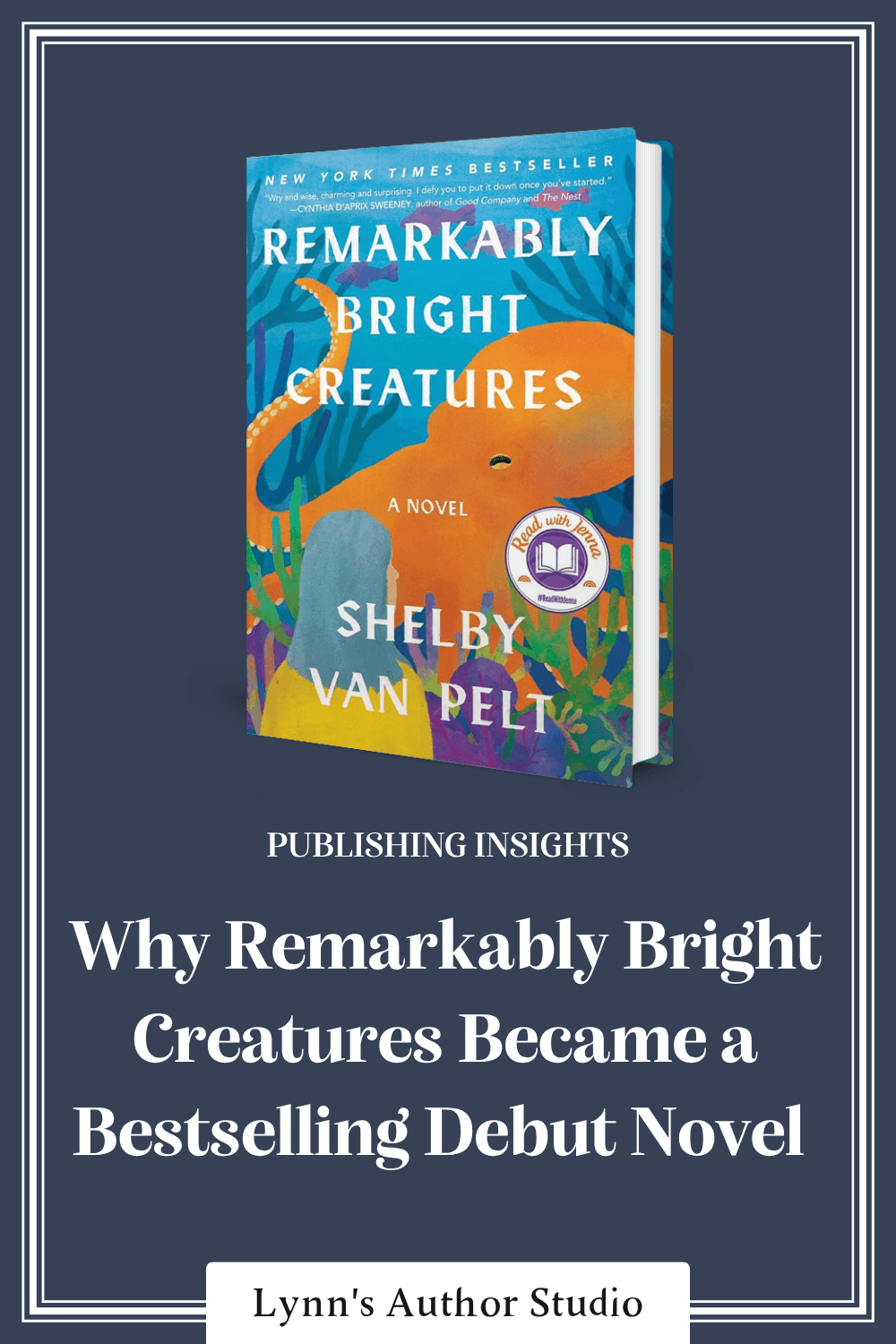
Part 1 of Beyond the Octopus: A Remarkably Bright Creatures Masterclass
Every author has a dream debut. The kind that lands on the New York Times bestseller list, sells millions of copies, gets adapted by Netflix, and becomes the book everyone is pressing into everyone else's hands.
Remarkably Bright Creatures by Shelby Van Pelt is that debut.
And if you've spent any time in author spaces since 2022, you've probably heard the same explanation for why it broke through: the octopus. The clever, curmudgeonly, first-person octopus narrator who steals every scene he's in. The unconventional POV that made the book impossible to ignore.
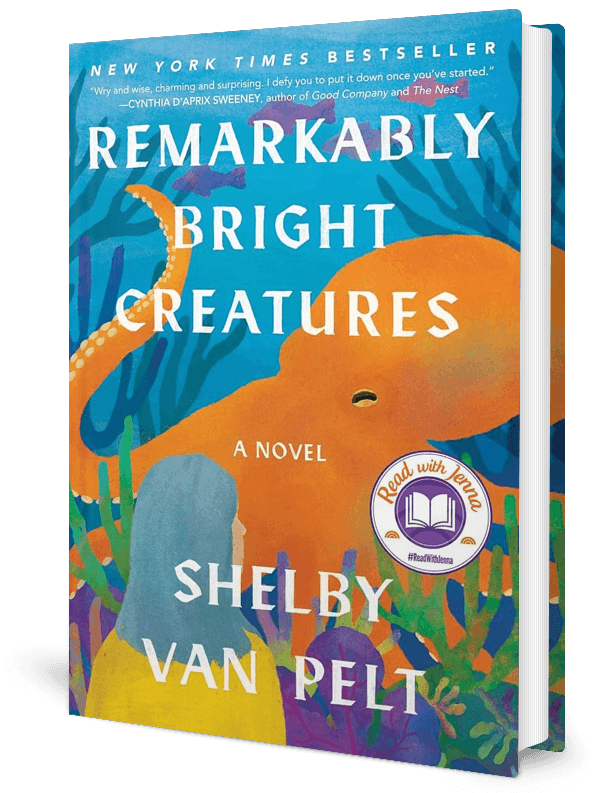
But here's what nobody tells you:
The octopus wasn't the engine.
He was the vehicle.
The breakout success of Remarkably Bright Creatures came from a combination of craft, packaging, timing, and platform — and understanding what actually drove it is one of the most useful things a debut author can do.
Not because you can replicate it.But because when we understand what really makes a debut break through, we stop chasing gimmicks and start building things that actually matter.
What the Book Actually Is About
If you haven't read it, here's what you need to know.
Remarkably Bright Creatures follows Tova Sullivan, a 70-year-old widow who takes the night shift cleaning at her local aquarium after the death of her husband — and the decades-old disappearance of her teenage son. She strikes up an unlikely friendship with Marcellus, a giant Pacific octopus living in one of the tanks, who narrates portions of the novel in his own dry, observant first-person voice. A third storyline follows Cameron, a directionless young man searching for his biological father.
It's quietly a mystery. It's also a grief novel. It's also, somehow, very funny.
That tension — warm and heavy at once, propulsive but literary — is exactly what we need to talk about.
7 Things That Actually Made Remarkably Bright Creatures Break Through
The octopus POV is absolutely the hook — the thing that gets the book into someone's hands.
But hooks don't sustain two million copies sold and 30 reprintings.
Here are the real engines — and what each one means for you as a debut author.
Number #1. The emotional core was universal and immediately felt.
Tova's grief isn't complicated to access. It doesn't require context or backstory. You feel it from the first page. And Marcellus's POV works precisely because it creates just enough distance to make that grief safe to sit with.
Without the emotional core, the octopus is a gimmick. With it, he's a masterclass in earned whimsy.
→ We go deep on this in “Why Grief Is the True Engine of Remarkably Bright Creatures”
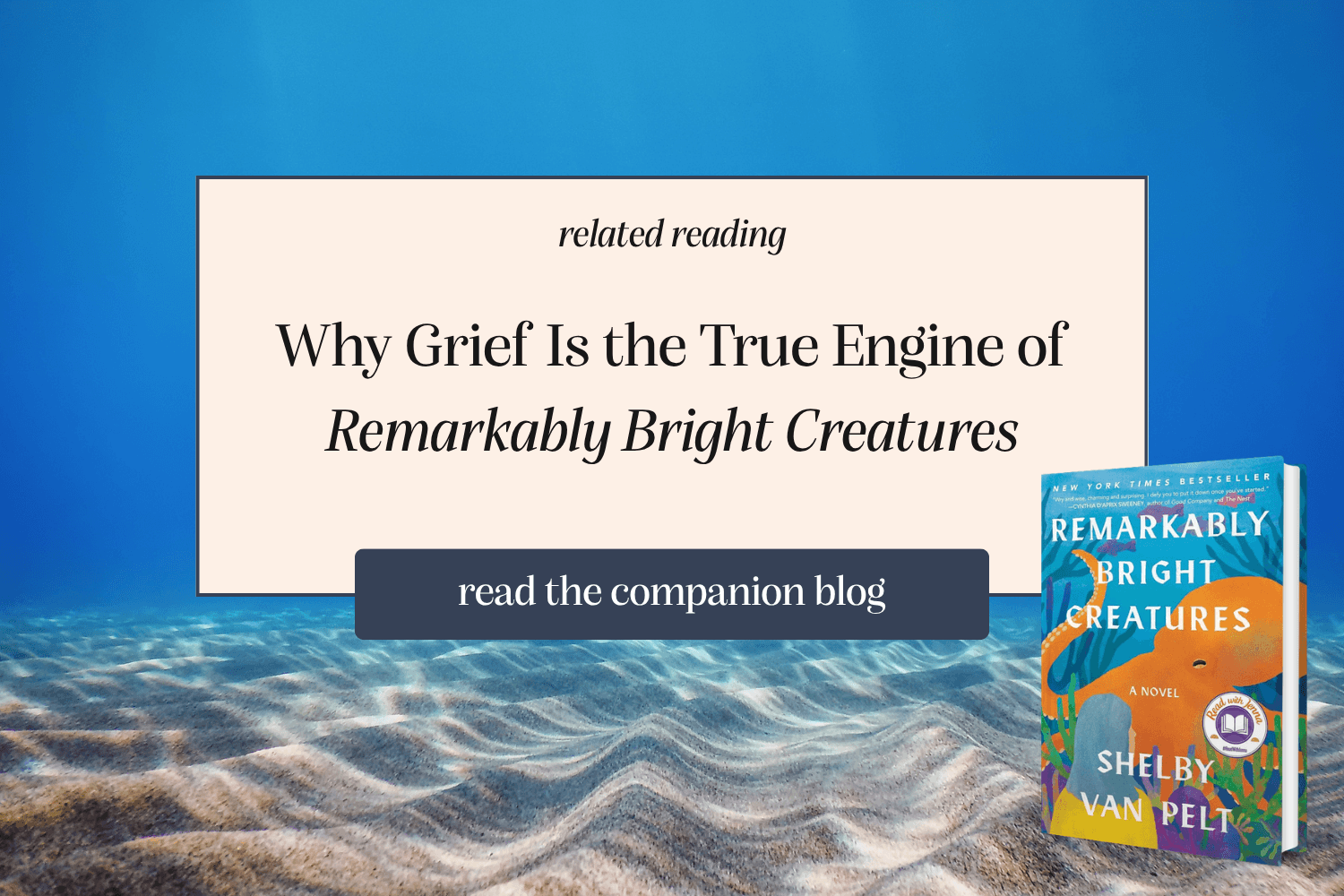
Number #2. The cover and positioning signaled exactly who the book was for.
Before a single reader opened to page one, the cover was doing heavy work. The illustrated style, the color palette, the scale of Marcellus on the front — all of it communicated a specific kind of reading experience to a specific kind of reader. This wasn't accidental. It was packaging, and it was precise.
→ We break down the cover in detail in “Remarkably Bright Creatures Cover Design: 5 Packaging Lessons for Debut Authors”

Number #3. The comp title did heavy lifting before the book hit shelves.
"For fans of A Man Called Ove." Those six words appeared in nearly every piece of marketing material, every blurb, every review. They told booksellers, librarians, book club leaders, and readers exactly where to shelve this book in their hearts.
A well-chosen comp isn't just a marketing tactic. It's a positioning decision that shapes how an entire industry receives your work.
→ We unpack this in “The Comp Title That Sold Remarkably Bright Creatures Before Anyone Read Page One”

Number #4. BookTok found it at exactly the right moment.
The book published in May 2022, right as BookTok's influence on publishing was hitting its peak. Readers drove its momentum organically — and the producers behind the Netflix adaptation have said as much, crediting the online groundswell as a central force in the book's continued life.
But organic doesn't mean accidental. The book gave BookTok exactly what it needed: an accessible emotional story, a memorable hook, and the kind of reading experience people want to talk about.
→ We dig into what authors can actually learn from this in “How Remarkably Bright Creatures Went Viral on BookTok”

Number #5. The mystery structure kept pages turning inside a literary novel.
This is the craft secret most people miss entirely. Remarkably Bright Creatures reads like literary fiction. But underneath it, architecturally, it's a mystery. There's a question on page one — what happened to Erik? — and Van Pelt never lets you forget it. The propulsive structure is what keeps a grief novel from becoming a meditation. It's why readers describe it as unputdownable despite its quiet tone.
→ We break this down in “How Shelby Van Pelt Hid a Mystery Inside a Literary Novel” (coming soon!)

Number #6. Van Pelt earned the whimsy.
An octopus narrator could have collapsed this book into cuteness. It didn't. Because Van Pelt spent the entire novel earning every moment of lightness against a backdrop of genuine loss. The tonal control is extraordinary — and it's a craft decision, not a personality trait.
→ We look at how she did it in “How Shelby Van Pelt Made Remarkably Bright Creatures Funny AND Devastating” (coming soon!)

Number #7. Marcellus himself was more than a gimmick — when he appeared.
Here's the thing: Marcellus isn't even in the book that much. Readers have noticed. For a novel marketed so heavily on its octopus narrator, Tova and Cameron carry the majority of the pages.
What Marcellus does is provide the most memorable moments — the ones readers quote and screenshot and press into hands. That's a lesson in itself about how unconventional narrators actually function when they're done right.
→ We explore this in “Marcellus the Octopus: 5 Lessons About Writing Unforgettable Narrators” (Coming Soon!)

What You Can Control. What You Can't.
Let's be honest about something.
Van Pelt couldn't control that BookTok was at peak cultural influence in May 2022. She couldn't control that Jenna Bush Hager chose her book for the Today Show book club. She couldn't control that a film manager read the manuscript before publication and fell in love with it, setting a Netflix deal in motion before most readers had ever heard of Marcellus.
Timing, luck, and platform are real. They matter. And they are not in your hands.

What is in your hands: the emotional core, the craft, the packaging decisions, and the positioning.
Those are the things Van Pelt got right before any of the luck arrived. And luck, in publishing, tends to find books that are ready for it.
We don't build careers waiting for a viral moment. We build the book, the brand, and the positioning that make us ready when the moment comes.
What This Means for Your Debut
The octopus is not the lesson.
The lesson is that Remarkably Bright Creatures succeeded because it was emotionally precise, structurally sound, carefully packaged, and positioned for an audience that already existed and already knew what it wanted.
The clever POV was the door. Everything else was what was inside.
Your debut doesn't need a gimmick. It needs a grief — or a joy, or a fear, or a truth — that readers feel before they understand why. It needs a structure that earns its quieter moments. It needs packaging that signals the right thing to the right people.
And it needs an author who understands that a career isn't built on a single book. It's built on what you put into every book. And what you build around yourself while you write them.
Do you have an author presence that’s prepared for a big debut?
Your book is only part of the story. Your brand and website are what tell the publishing world — and your future readers — that you're serious about the long game.