
Why Grief Is the True Engine of Remarkably Bright Creatures
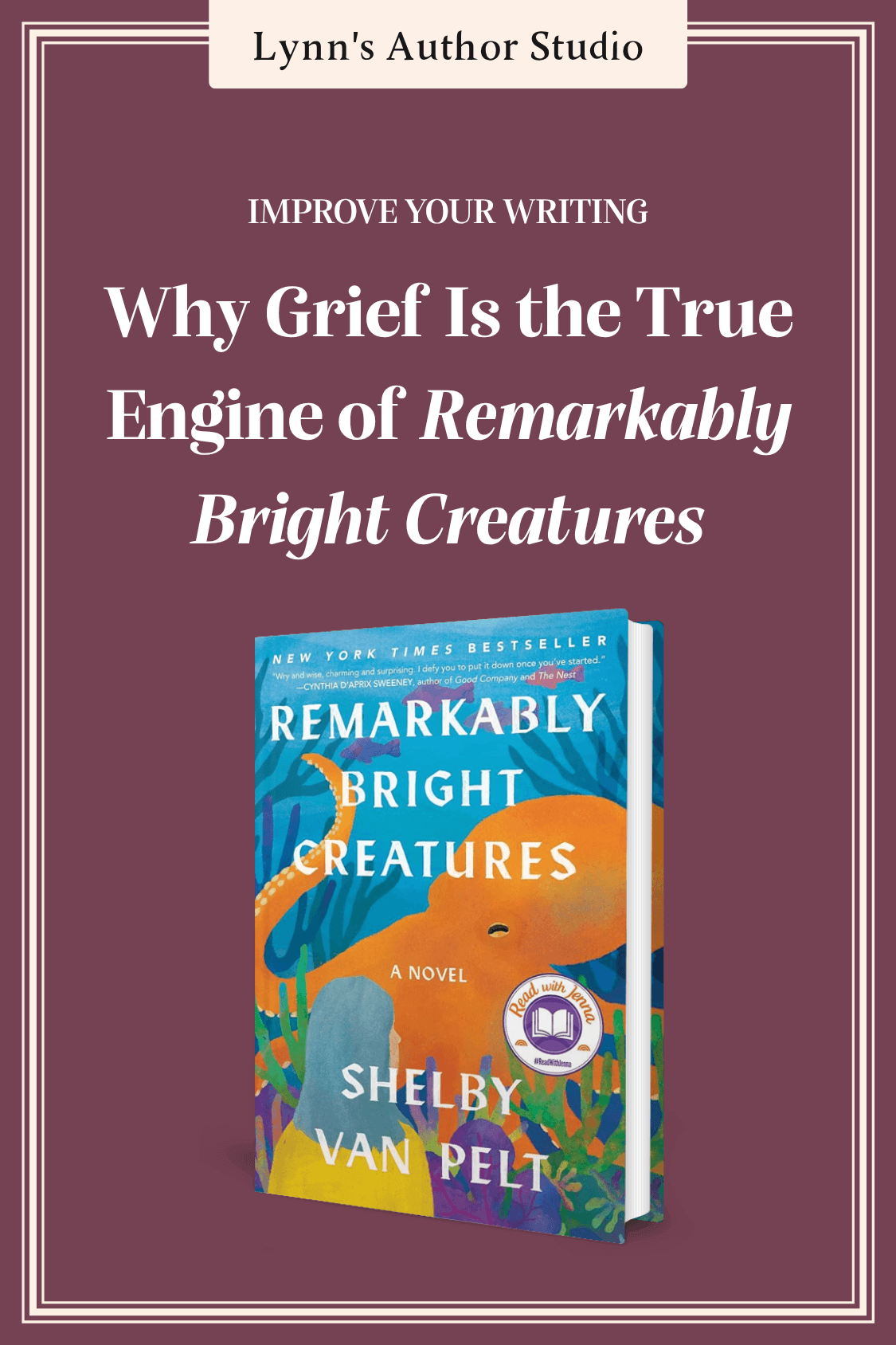
Part 5 of Beyond the Octopus: A Remarkably Bright Creatures Masterclass
Everyone remembers the octopus.
That's the thing about Marcellus. He's memorable in the way a great character always is — specific, strange, impossible to forget. And because he's the most unusual element of the book, he gets credited for everything.

The viral moment.
The BookTok phenomenon.
The two million copies sold.
But here's what the octopus conversation keeps obscuring: Remarkably Bright Creatures is a grief novel. A very specific, very precise grief novel.
And that grief — not Marcellus, not the mystery structure, not the whimsy — is what made readers cry on public transport and press the book into strangers' hands.
The octopus is the hook. The grief is the engine.
And understanding the difference is one of the most useful things we can do as writers.
→ Catch up on the whole story in Why Remarkably Bright Creatures Became a Bestselling Debut Novel (It Wasn't the Octopus).

Not Just Loss. Unresolved Loss.
There’s a crucial distinction Van Pelt makes in the architecture of Tova's grief that most summaries miss entirely.
Tova Sullivan hasn't simply lost her son.
She lost him thirty years ago, without a body, without a confirmed cause, with nothing but a police ruling of probable suicide that she has never fully believed.
For three decades she has carried not just grief but the specific agony of not knowing. The wound has never closed because it has never been allowed to.

That distinction matters enormously as a craft decision.
Ordinary grief — as devastating as it is — has a shape. There's a before, a loss, and an after.
Unresolved grief has no after. It just keeps going, quiet and corrosive, underneath everything.
Tova's grief isn't a backstory detail. It's the condition of her entire existence when we meet her.
We see this in how she lives. She works the night shift at the aquarium, alone, long after she needs the money. She keeps busy because keeping busy has always helped her cope. She maintains routines, keeps the house, stays in Sowell Bay — the town where Erik grew up, where he disappeared, where his absence is woven into everything she touches.
She isn't recovering. She's managing.
And those are not the same thing.
Why Readers Feel It Immediately
One of the most common reader responses to this book is some version of "I don't know why I cried so much."
People finish it on airplanes and have to compose themselves. They describe feeling gutted by a novel that is, on the surface, warm and funny and full of an octopus.
The reason is that Van Pelt makes Tova's grief legible from the first pages — not through explanation, but through specificity.
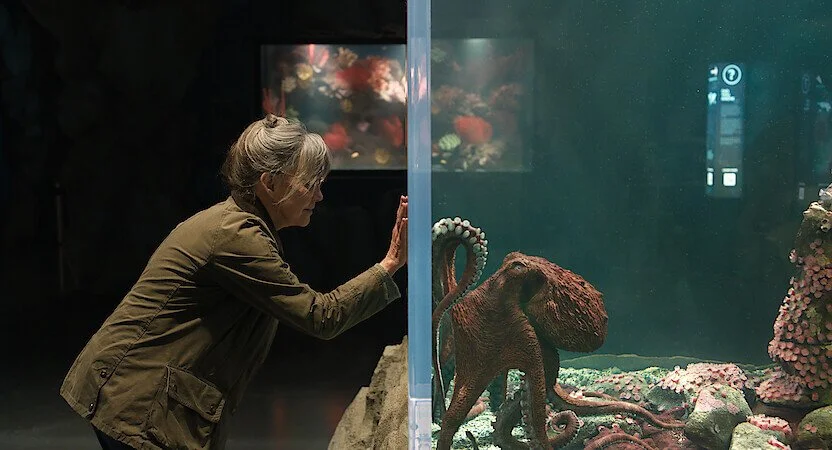
We don't hear that Tova is sad. We see the way she moves through the aquarium at night, saying a quiet hello to each animal. We feel the weight of the house she can't bring herself to leave. We understand, without being told, that this is a woman who has organized her entire life around the management of something unmanageable.
Readers respond to grief in fiction the same way they respond to it in life: not to the fact of it, but to the specific texture of it.
General sadness doesn't move people. Tova's particular sadness — the thirty-year-old wound, the unsolved mystery, the son whose photo still sits on the mantel grinning like a sea cowboy — moves people.
Because specificity is what makes fictional grief feel like real grief. And real grief is what everyone carries.
This is the lesson. Grief in fiction earns its power through detail, not through the magnitude of the loss.
A parent losing a child is devastating. A parent losing a child and never knowing why, for thirty years, in a small town where everyone still remembers him — that's a story that doesn't let go. (And it doesn't. Ask anyone who read this on a plane.)
What Marcellus Actually Does

Here's where the octopus earns his place in a way that goes beyond narrative gimmick. And I mean really earns it.
Marcellus knows what happened to Erik. He's observed, from his tank, more than any human character in the book. In the novel's climax, he retrieves Erik's class ring and places it where Tova will find it.
That ring is what connects Tova to Cameron, reveals that Cameron is Erik's son and therefore Tova's grandson, and allows Tova to finally, after thirty years, begin to understand what happened to her boy.
The octopus doesn't resolve the grief through sentiment or coincidence. He resolves it through action — through the specific, impossible-to-explain intelligence that Van Pelt has spent the entire novel establishing.
Marcellus earns the right to be the agent of Tova's healing because the book has made him real enough to deserve it.
The non-human narrator works in this book because he does something no human character could do without straining credibility.
He sees what grief has made Tova unable to see.
That's not a gimmick. That's architecture.
→ We dig into how Van Pelt built that architecture in How Shelby Van Pelt Hid a Mystery Inside a Literary Novel. (coming soon!)

The Distance That Makes the Grief Bearable
There's one more craft decision worth examining here, and it connects directly to why the octopus POV works emotionally rather than just structurally.
Grief in fiction can be overwhelming.

Too close, too raw, too unrelenting, and the reader starts to protect themselves from it.
They put the book down.
They skim.
They keep a little distance between themselves and the character's pain.
Van Pelt uses Marcellus to manage that distance precisely.
His chapters are dry, observational, often funny. He refers to humans with affectionate bewilderment. He notices Tova's grief from outside it, which gives the reader a place to breathe between Tova's chapters.
We can laugh at Marcellus's commentary on the humans around him, and then return to Tova's interior world and feel it more deeply because we've had a moment of relief.
Marcellus doesn't lighten the grief. He creates the space that makes it possible to stay inside the grief long enough for it to matter.
That's not a small thing. It’s what makes the entire book work.
This is the tonal control Van Pelt is praised for, and it's worth naming precisely: the whimsy isn't in tension with the darkness. It's in service of it.
The octopus chapters exist so the grief chapters can land harder.
What This Means for Your Writing

Every book has an engine. The question worth sitting with — before you've finished the manuscript, while you're still deep in revision — is whether you know what yours is.
Not the hook. Not the premise. Not the thing you'd put in the query letter. The engine:
The emotional truth underneath the plot that makes a reader feel something real.
For Remarkably Bright Creatures, that engine is thirty years of unresolved maternal grief and the desperate human need for closure. The octopus is how Van Pelt delivers it. The mystery structure is what keeps us moving toward it. The whimsy is what makes it bearable.
Remove the grief, and none of the rest works:
Marcellus without Tova's loss becomes a clever conceit.
The mystery without Tova's need for answers becomes a plot device.
The whimsy without the darkness underneath becomes just a pleasant read.
So find your engine. And build everything else around it.
Because we don't write viral books by being clever. We write them by being true.
Wondering if your author brand is built around the right engine?
Your brand, like your book, needs a true emotional center. Not a tagline. Not an aesthetic. The real thing that makes your work yours.

If You Liked This Article, You’ll Also Love…
The Magic of Subtle Worldbuilding: Why Less is More in Magical Realism
Multiple POV Done Right: Storytelling Techniques from Wild Dark Shore
Mastering Atmosphere: Writing Lessons from Robert Louis Stevenson's "The Body Snatcher"
Why Authors Should Study Folklore: 7 Lessons from Cat's Tales
How to Use Animal Symbolism in Your Fiction (5 Proven Techniques)
