The Poet Empress Masterclass: How a Debut Became a Bestseller
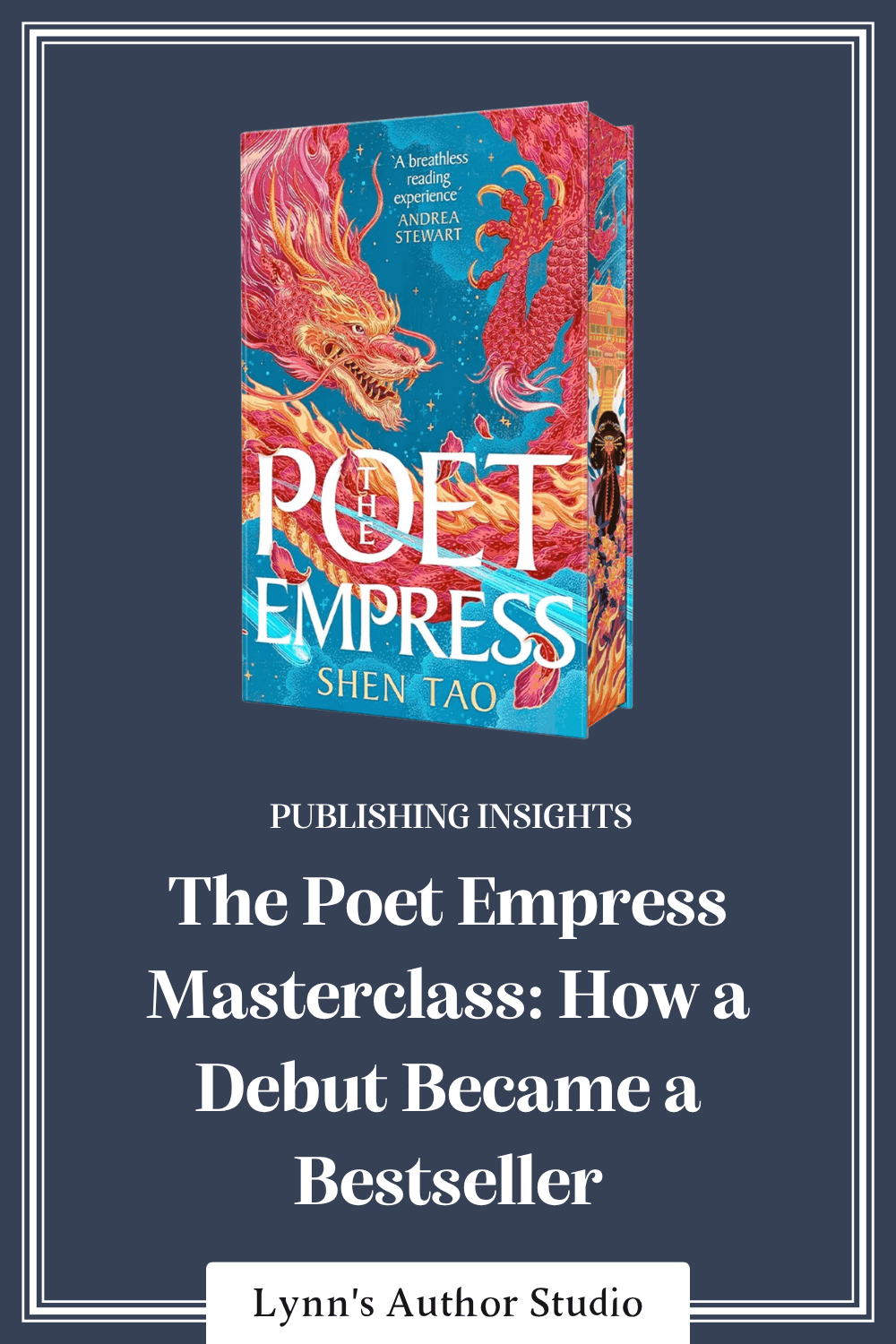
Part 1 of Poetry & Power: A Master Class with Shen Tao
Shen Tao wrote eight novels that never sold.
The ninth was The Poet Empress.
It went to a six-way auction. It hit the USA Today bestseller list in the US and the Sunday Times list in the UK.
It earned starred reviews from Library Journal, Publishers Weekly, and BookPage, and translation rights have sold in 17 languages.
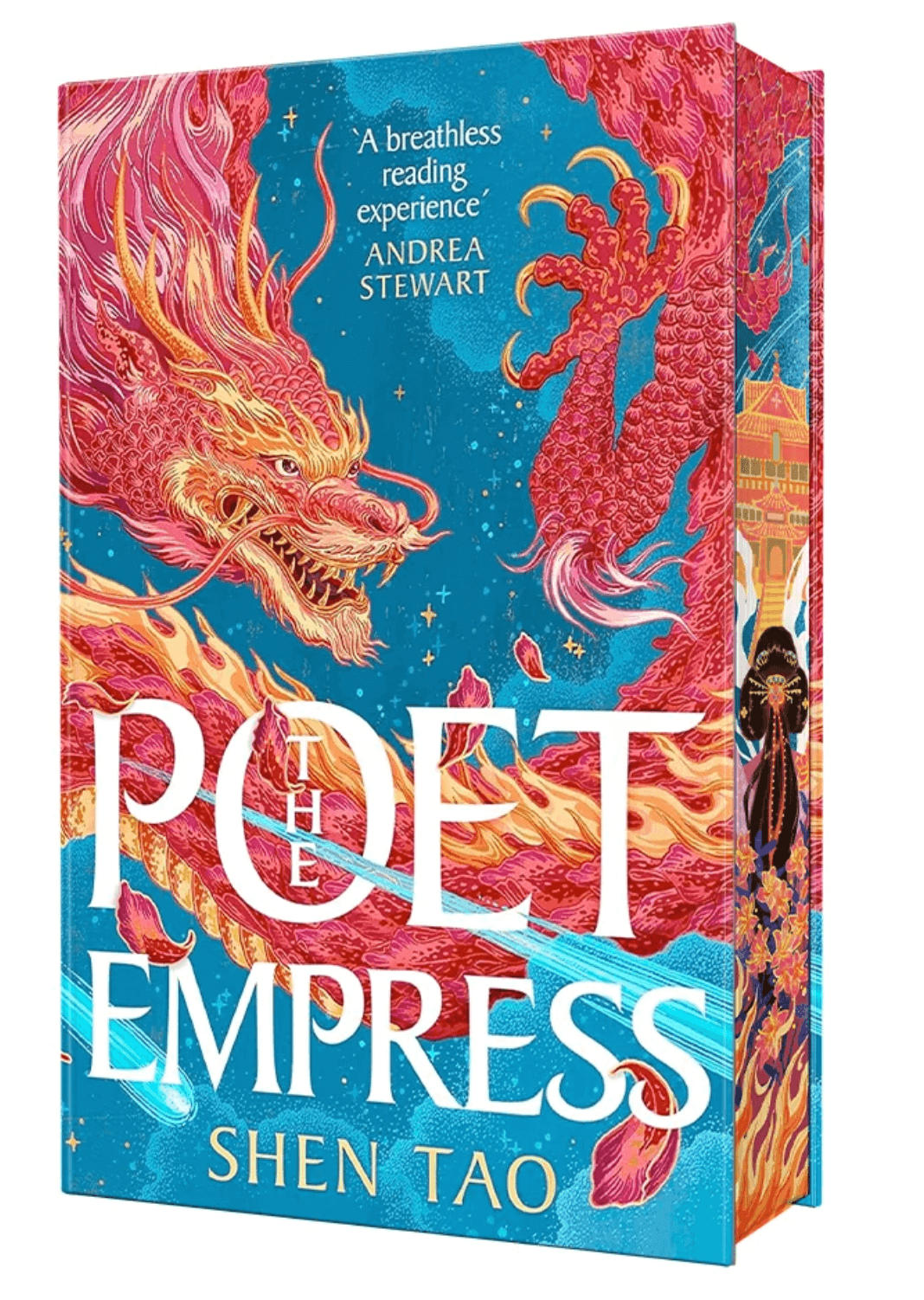
Within its first year there was already a deluxe edition with gilded edges. (Gilded edges. On a debut.)
So why did The Poet Empress become a bestseller?
Ask around and you'll hear about the magic system, the prince everyone has different feelings about, the romantasy boom, and good timing.
And yes, each of those played a part. None of them explains The Poet Empress’ success alone.
But a debut breaks out when the book and the strategy behind it are both working.
Most authors only study the book. This series studies both.
Over seven posts, we'll look at what Tao put on the page, and at what she needs to do now that the whole industry is watching.
The Receipts
Before we get to craft, look at how Shen Tao’s book arrived in the world, because it tells you a lot.

debut author Shen Tao
The Poet Empress was published on January 20, 2026, with Bramble in the US and Gollancz in the UK. Bramble is Tor's romance imprint. (Hold onto that detail, because it’ll matter later.)
Before release day, New York Times bestselling authors Chloe Gong, Vaishnavi Patel, and Amélie Wen Zhao had all blurbed it.
Then came the trade reviews: three starred, plus a Kirkus review praising its "page-turning suspense."
In the UK, it became a BBC Radio 2 Book Club pick. Amazon's editors named it one of the best books of the year so far.
None of that is luck.
A six-way auction means six publishers wanted this book badly enough to bid on it. The one that wins has paid dearly for the privilege and is darn well sure going to make sure the book gets seen.
So blurbs get requested. Review copies go out early. And book clubs get pitched.
In other words, the strategic engine starts running before the book is even on shelves.
Two Audiences, One Pitch
Now look at how the book was positioned, because this is where it gets clever.
The US copy calls it perfect for fans of The Serpent & the Wings of Night, The Song of Achilles, and She Who Became the Sun.
That's a romantasy comp, a literary mythology comp, and a literary historical fantasy comp, side by side.
The UK copy goes further. It pitches the book as The Poppy War meets The Song of Achilles, for readers of literary fiction "looking to make their first foray into fantasy."
In other words, the comp titles told two very different audiences that this book was for them.
Romantasy readers saw a dark court story with a dangerous prince. Literary fiction readers saw lyrical prose and tragedy. That's why the book traveled so far.
Your comp titles are a positioning decision, not an afterthought. They tell readers, booksellers, and reviewers who your book is for before anyone reads page one.
Two Engines, One Book
Here's the idea running through this whole series.
The first engine is the book itself. Tao spent a decade learning to write it, and it shows.
The second engine is everything around the book: how it's positioned, how the author shows up, and what she builds next.
Most author courses stop at the first engine. Why? Because the book is finished. It's sitting there, ready to study. But the career is still being built in real time, which makes it harder to see and easier to ignore.
The authors who last study both engines.
So let’s start with the book.
A Whole Empire in One Book
The Poet Empress is a standalone. One book, about 400 pages.

In that space, Tao built the Azalea Dynasty: an empire where heirs claim the throne by fighting a dragon into submission, where poetry is magic and women are forbidden to read, and where famine outside the palace walls runs alongside a succession war inside them. One reviewer summed it up as "Game of Thrones but with Chinese dragons."
That's a lot of world for one book.
Most fantasy at this scale gets a trilogy to spread out. Tao had to decide which details to show and which to trust the reader to fill in, and readers didn't feel shortchanged.
Pulling this off was important because there are a lot of readers out there who are hungry for a good book, but not excited to commit to a massive fantasy series
→ See exactly how Tao pulled it off in The Azalea Dynasty: World-Building in The Poet Empress. (coming soon!)
The Villain Readers Can't Stop Talking About
Then there's Terren.
The crown prince arrives with a reputation for killing servants over badly poured tea. He's cruel in public and worse in private, and Wei Yin has just offered herself as his concubine to keep her family from starving.
And yet, by the end, a huge number of readers find themselves grieving for him.
Tao gets there by revealing Terren in layers. Each glimpse into his past changes what you think you know about him. BUT none of them cancels out what he's done.
Because understanding a character is different from excusing him, and this book never confuses the two.
Balancing this delicate line created massive discourse online, which helped boost this book’s popularity and reach.
→ We break down exactly how that layering works in Loving Terren: The Poet Empress's Layered Villain. (coming soon!)
The Dynasty That Eats Its Own
The book opens with Wei burying her sibling.
The land is starving. But inside the palace, the same dynasty that let the villages starve is grinding up its own princes to protect the throne. Two brothers who once loved each other get turned into rivals, then into weapons.
It's the same machine working on both ends.
The Azalea Dynasty produces suffering to protect its power, and the people at the top end up as its casualties too.
That's what lifts the book above a villain story. it's not just about individual people. The cruelty has a deeper source, and the source is power itself.
That's something that anyone, from any time or place, can relate to.
→ We go deep on this in The Pain of Power: The Poet Empress's Broken Dynasty. (coming soon!)
Nine Manuscripts Later
Now back to where we started.
Tao told Publishers Weekly she'd been writing for ten years before The Poet Empress. This was her ninth completed book. When she started it, she was so frustrated that she wrote the first 7,000 words in a single day.
She calls that part a fluke. The rest came more slowly. She had a world and a magic system but no story, until the poem at the center of the plot finally came together.
The internet loves to call a book like this an overnight success. But nobody sees the eight manuscripts in the drawer.
And taking ten years to reach her debut, says otherwise.
→ Get the full story in Who Is Shen Tao? | 9 Manuscripts, 10 Years, 1 Debut. (coming soon!)
After the Breakout
Most "why did this book work" posts end here. But this is actually where the second engine matters most.
Right now, Tao has more readers, more industry attention, and more people searching her name than she's ever had. The paperback lands in March 2027, which means a whole new wave of readers. Book two is already under contract.
What she does over the next year will decide whether The Poet Empress launches a long-lasting career, or becomes a one-hit wonder.
I think about this a lot as an agented author myself. Getting the deal feels like the finish line. Then you realize it's the starting line, and the race has rules nobody explained.
For Tao, the work ahead falls into three areas: her craft, her online presence, and her mindset. Each one will protect—or destroy—the momentum this book has created.
→ We map that out in Beyond The Poet Empress: Avoiding the One-Hit-Wonder Trap. (coming soon!)
Remember that romance imprint? Tao has said she's pushing herself to write more romantically for book two, and she hopes it will be "as romantic as it is epic."
That means readers may meet a noticeably different book next time. And if her author brand is built entirely around The Poet Empress (its colors, its mood, its dragon), then it won't know what to do with book two.
This is exactly why your book is NOT your author brand. Your brand is you.
→ That's the whole subject of Beyond The Poet Empress: Building a Brand That Lasts. (coming soon!)

What This Debut Teaches Every Author
The auction. The starred reviews. The bestseller lists on two continents.
All of it got Shen Tao through the door, and the book earned every bit of it.
What keeps her in the room is the career she builds next. That part is harder to see, and far more authors skip it.
Over the next six posts, we'll study both: the world, the villain, the dynasty, the woman who wrote it, and the choices in front of her now.
We'll start with the woman.
→ Meet her in Who Is Shen Tao? | 9 Manuscripts, 10 Years, 1 Debut. (coming soon!)
Ready to build a brand that outlasts your first book?
The best time to build an author brand that grows with your career is before you need it. Whether you're querying, on submission, or holding your first deal, let's build the foundation together.