

Part 8 of Beyond the Octopus: A Remarkably Bright Creatures Masterclass
The first chapter of Remarkably Bright Creatures is less than 500 words long.
In those 500 words, Van Pelt introduces Marcellus McSquiddles, a giant Pacific octopus who does not care for the name a human child gave him.
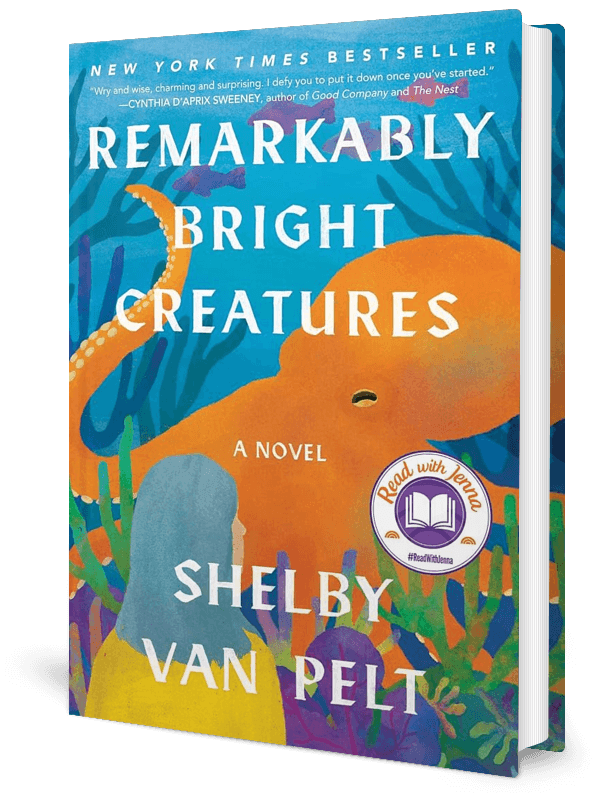
Marcellus is counting down the days until his death, can pick locks, read fingerprints, and escape from his tank when no one is looking.
By the end of page two, you trust him completely.
That's not an accident. That's craft. And it's replicable — not the octopus specifically (one per literary generation, please), but the principles underneath it.
The decisions Van Pelt made about how Marcellus thinks, speaks, observes, and acts are decisions any writer can make about any non-human narrator.
Here are the five that matter most.
→ Catch up on the whole story in Why Remarkably Bright Creatures Became a Bestselling Debut Novel (It Wasn't the Octopus).
Lesson 1: Give Your Non-Human Narrator a Distinct Relationship with Time
Marcellus opens the novel counting down.
"At the very most, one hundred and sixty days remain until my sentence is complete."
He knows how long giant Pacific octopuses live. He knows where he is in that lifespan.
He tracks his captivity in days and titles his chapters accordingly — "Day 1,299 of My Captivity," "Day 1,361 of My Captivity" — with the precision of someone for whom time is not an abstract concept but a physical, biological reality he carries in his body.
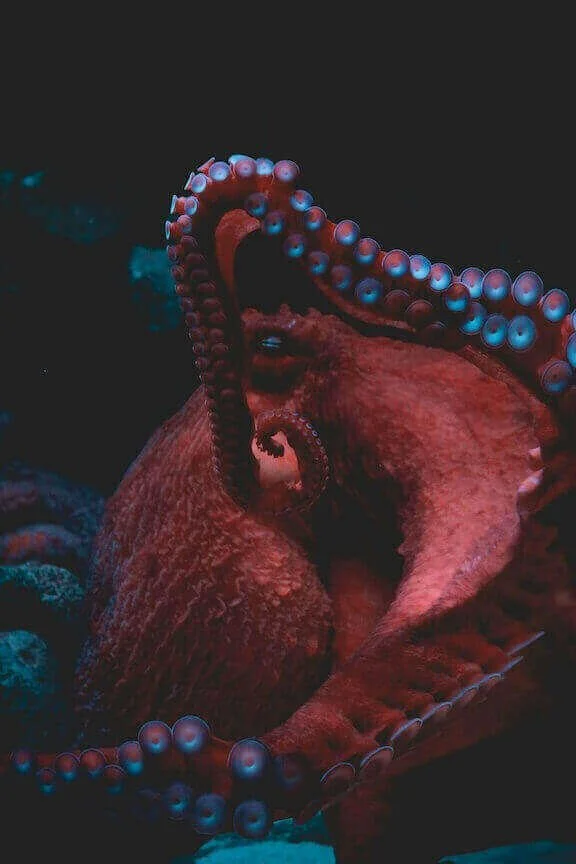
This is the first and most important thing Van Pelt does to make Marcellus feel real: she gives him a relationship with time that is both utterly alien and completely legible.
We understand counting down to death. We understand the particular consciousness that comes with knowing your end is near.
What we don't expect is an octopus to have that consciousness — and the gap between our expectation and the reality is where Marcellus comes alive.
A non-human narrator becomes real when they have a relationship with time that belongs specifically to them.
Not time in the abstract. Not "he was old."
The specific, biological, ticking-clock relationship with time that this creature, in this body, would actually have.
For Marcellus it's 160 days. What is it for yours?
Lesson 2: Use POV Contrast Deliberately
Here's a craft decision that often goes unremarked: Marcellus is written in first person. Tova and Cameron are written in third person limited.
That's not a default choice. It's a statement.
First person creates intimacy and authority. When Marcellus speaks in first person, he is addressing us directly — we are inside his intelligence, his observations, his particular brand of exasperated fondness for the humans around him. He is not being observed. He is speaking.
Third person limited creates a certain distance. Not coldness, but the sense of a life being witnessed rather than directly transmitted. We are close to Tova, but we are watching her. We are inside her feelings but slightly outside her consciousness.
The contrast between the two modes does something subtle and important.
Marcellus feels more present than the human characters, even though he is an octopus behind glass. He is the most direct voice in the book.
When you're writing multiple POVs, the grammatical person you choose for each narrator is a creative decision, not a default. Use the contrast.
Lesson 3: Let the Humor Protect the Tenderness
Marcellus's sarcasm is not his personality. It's his armor.
Underneath the dry observations about human intelligence, the exasperation at visitors who tap the glass (he hates the glass-tappers), the withering commentary on Cameron's general life choices — underneath all of it is a creature who loves Tova completely and is spending his last days trying to give her what she needs.
The humor protects the tenderness. Van Pelt understood that a straightforwardly sentimental octopus would be unbearable. The dry wit creates distance that makes the genuine emotion land harder when it arrives.
Look at the chapter title Van Pelt gives Marcellus at the novel's climax: "Day 1,361 of My Captiv— Oh, Let Us Cut the Shit, Shall We? We Have a Ring to Retrieve."
The formality drops. The countdown stops. The mission takes over.
And in that pivot — from the carefully maintained diary format to the sudden profanity and urgency — we see Marcellus drop his armor entirely.
He's not performing curmudgeonliness anymore. He's just an octopus who loves someone and is running out of time.
The humor was always protecting something. And when it drops, the reader feels everything it was holding back.
This is a technique available to any narrator, human or otherwise. The more carefully you construct the defense, the more powerful its removal.
Lesson 4: Ground the Non-Human in Specific, Real Biology
One of the reasons Marcellus works is that Van Pelt did her homework.
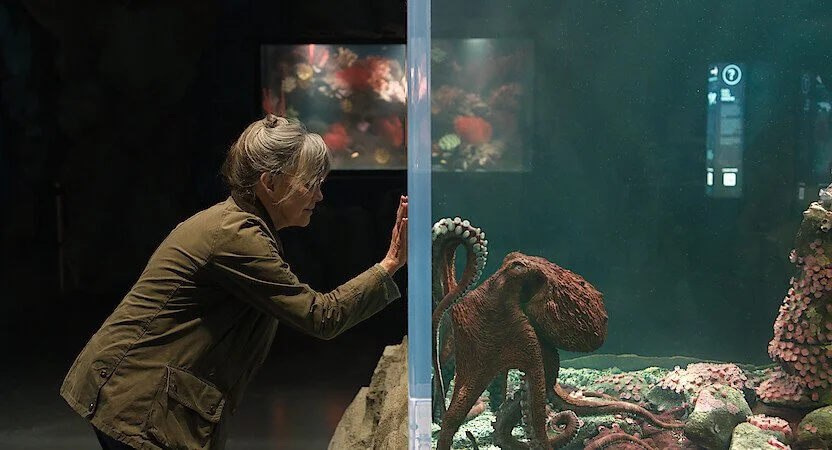
Giant Pacific octopuses are extraordinarily intelligent. They can pick locks. They can recognize individual human faces. They have approximately 500 million neurons — more than most mammals — distributed through their eight arms.
They escape from tanks. They have short lifespans relative to their intelligence. They are, genuinely, among the most remarkable creatures on the planet.

Van Pelt uses all of this. Marcellus's abilities are not fantasy.
They are real octopus behavior, slightly elevated, framed through a voice that makes them feel inevitable rather than convenient.
When Marcellus steals Cameron’s driver's license, it reads as plausible. When he navigates the aquarium at night, exploring other tanks for snacks, it reads as specific because it is — this is documented octopus behavior, not authorial invention.
The non-human narrator earns credibility through specificity.
Research what your creature actually does. Then give them a voice that makes those behaviors feel like character rather than biology.
The real and the invented should be indistinguishable by the time the reader is deep in the book. That seamlessness is the work.
Lesson 5: Make the Non-Human Narrator the Agent of Change
This is the lesson most writers miss when they attempt a non-human POV.
It's tempting to use a non-human narrator as an observer. Someone who watches the human drama from outside it and provides perspective or commentary. That can work.
But Remarkably Bright Creatures goes further. Marcellus doesn't just observe the story. He drives it.

He is the one who identifies that Cameron and Tova are connected. He is the one who retrieves the driver's license. He is the one who, when that fails, retrieves the class ring.
He is the one whose final act — placing the ring where Tova will find it — resolves thirty years of grief and creates a family where there wasn't one.
Without Marcellus's active intervention, nothing gets resolved. Not the mystery. Not the grief. Not Cameron's search for belonging.
The octopus is not a quirky narrative device. He is the protagonist of the plot, even if Tova is the emotional center.
If your non-human narrator is only watching, you're wasting them. Give them something only they can do. Make them the hinge the story turns on.
That's what Van Pelt does. That's why it works. An octopus who observes is interesting. An octopus who saves everyone is unforgettable.
The Lesson Underneath All Five Lessons

Every craft choice Van Pelt makes comes back to one thing: she takes Marcellus seriously.
Not as a gimmick. Not as a cute conceit.
As a character with a consciousness, a voice, a relationship with time and mortality and love that is entirely his own.
When we write non-human narrators as clever devices — a way to provide an outside perspective on the human story — they feel thin.
When we write them as full characters who happen to not be human, they become Marcellus.
He is funny and devastating and precisely observed and genuinely moving because Van Pelt committed to him completely.
She didn't hedge. She didn't let him be a metaphor. She let him be an octopus who loved a cleaning lady and spent his last days trying to give her peace.
That commitment is the whole lesson.
Whatever you're writing — commit to it completely. The reader will follow you anywhere if you believe in it first.
And on that note: go write your book.
Ready to find out if your author website is as distinctive as your work?
A great narrator has a voice you'd recognize anywhere. Your website should too. Find out if yours is doing the job.

