Where Does Wild Dark Shore Take Place? The Real Islands Behind Shearwater

Article 7 of the Wild Dark Shore series
If you've read Charlotte McConaghy's Wild Dark Shore, you know the setting is as much a character as the Salt family itself. Shearwater Island feels viscerally real—the brutal winds, the crashing waves, the seals and whales and relentless isolation.
So where exactly is this place? And is Shearwater Island real?
Let's start with the straightforward answer, then dig into what authors can learn from how McConaghy built this world.
Want to catch up? Read the first post in the blog series, “Wild Dark Shore by Charlotte McConaghy: A Complete Review & Analysis.”
Where Wild Dark Shore Takes Place

Wild Dark Shore is set on Shearwater Island, a fictional subantarctic island located somewhere near Antarctica.
The island is remote, windswept, and home to a lighthouse where the Salt family lives. It's surrounded by turbulent seas, populated by seals and whales, and isolated enough that supply ships only come occasionally.
Shearwater's climate is relentlessly harsh.
The wind never stops—it's a constant presence that shapes every aspect of life on the island. Temperatures hover just above freezing year-round, cold enough to be miserable but not cold enough for snow to accumulate permanently.
The lighthouse sits on the plateau, exposed to the full force of the weather. There's no escaping it—no trees for shelter, no buildings nearby, just grassland and the churning ocean on all sides.
The isolation is both physical and psychological.
Supply ships arrive irregularly, weather permitting. Sometimes they're delayed by storms. Sometimes they don't come at all for weeks longer than expected. This uncertainty adds another layer of tension—if something goes wrong, there's no guarantee help will arrive when needed.
The island supports massive populations of wildlife.
Seals haul out on the beaches. Whales breach offshore. Seabirds nest in the tussock grass.
But there's also a seed vault, a repository for plant species threatened by climate change—a detail that grounds the novel's environmental themes in concrete action.
The Real Island: Macquarie Island
McConaghy based Shearwater on Macquarie Island, a real subantarctic island about halfway between Tasmania and Antarctica.
Macquarie Island is Australian territory, though it sits over 900 miles southeast of Tasmania.
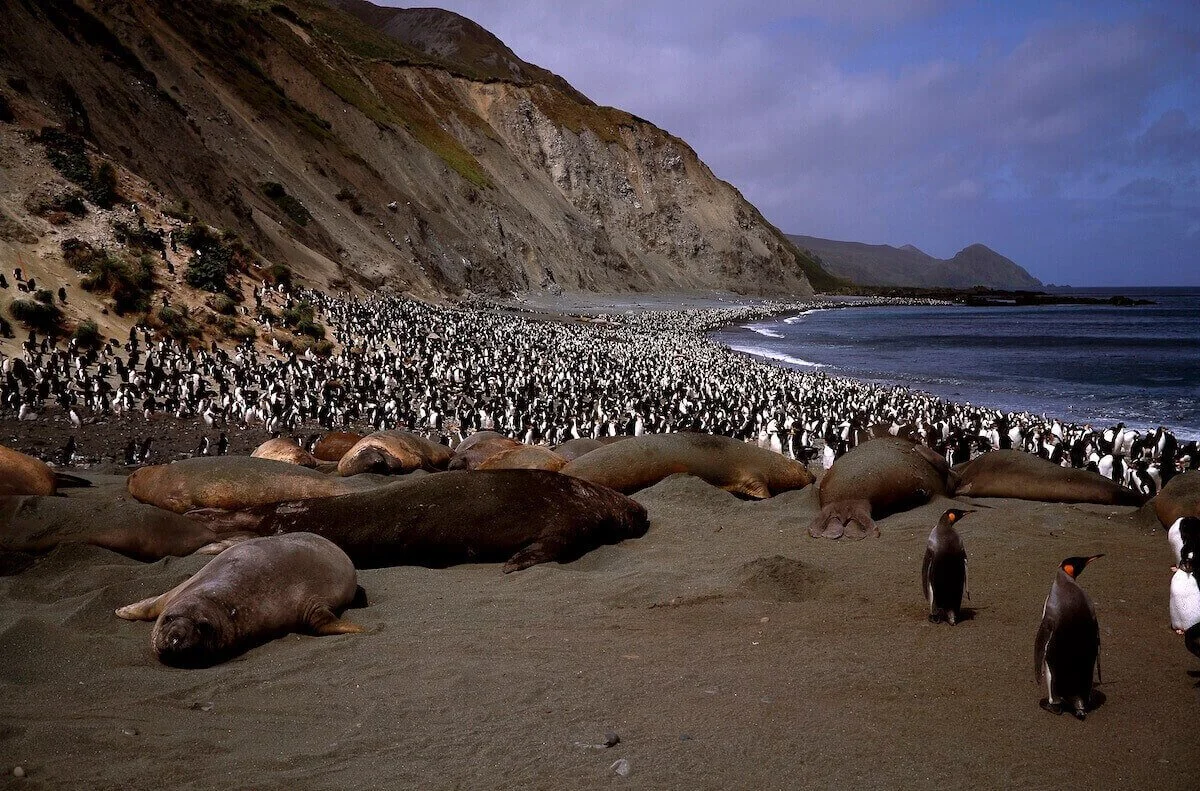
Macquarie Island
It's one of the most remote places on Earth.
The island is narrow—about 21 miles long and 3 miles wide at its widest point. It's a UNESCO World Heritage site known for its unique geology and wildlife, including elephant seals, fur seals, and multiple penguin species.
Macquarie has no permanent human population. The only people on the island are researchers at a small Australian research station—typically 20 to 40 scientists and support staff who stay for 6 to 12 months at a time.
The island's climate is extreme.
It's one of the cloudiest places on Earth, receiving only about 862 hours of sunshine per year. Rain or snow falls on approximately 316 days annually. It never gets extremely cold—temperatures stay above freezing most of the year—but the combination of wind, rain, and dampness creates a bone-chilling environment.
Wildlife congregates on Macquarie in staggering numbers.
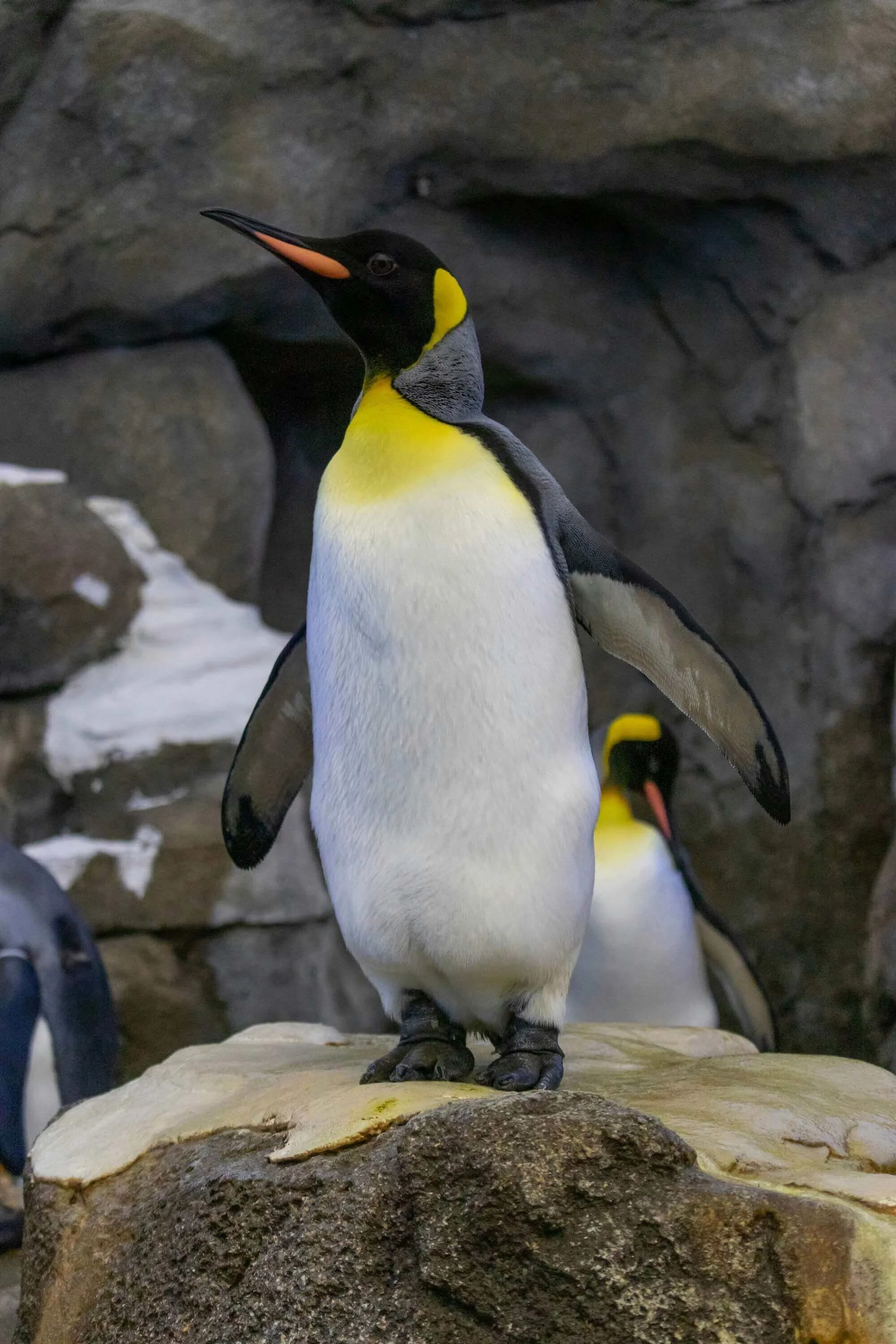
An estimated 1.7 million royal penguins breed there—it's the only place in the world where this species nests. About 400,000 to 500,000 king penguins arrive during breeding season. Roughly 80,000 elephant seals haul out on the beaches.
The island's geological significance is what earned it World Heritage status. Macquarie is the only place on Earth where rocks from the ocean floor (normally 6 kilometers below sea level) are actively exposed above water. These rocks come from Earth's mantle, pushed up where two tectonic plates meet.
Historically, the island was devastated by introduced species.
Sealers and whalers arrived in the early 1800s and nearly wiped out the seal and penguin populations. Rats, mice, rabbits, and cats introduced from ships wreaked havoc on native species for over a century. A massive eradication program finally declared the island pest-free in 2014.
How Shearwater Differs from Macquarie
While Shearwater is inspired by Macquarie, McConaghy didn't simply transplant the real island into her novel. She adapted it.
The lighthouse is fictional.
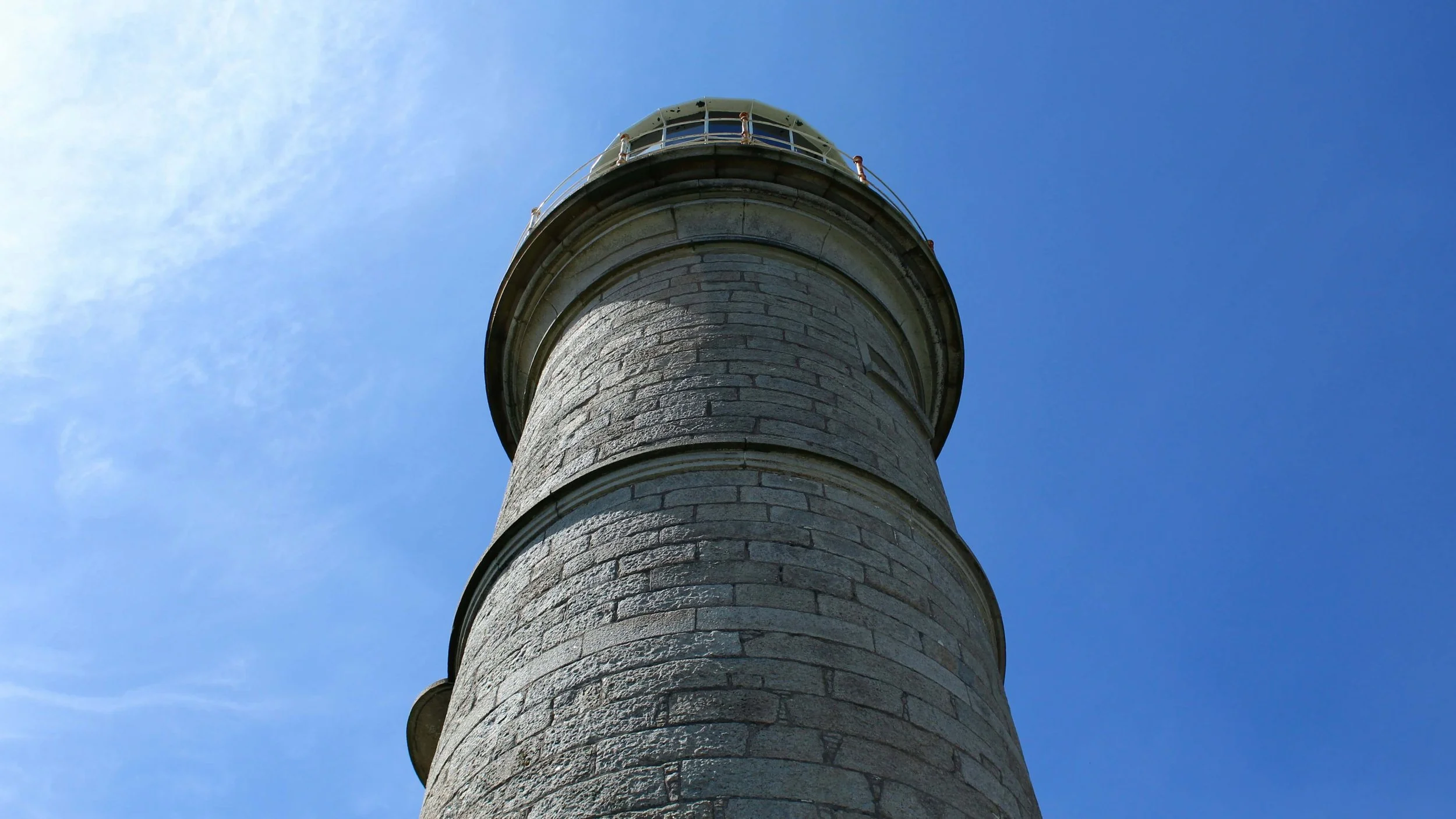
Macquarie Island has a research station, but no functioning lighthouse with a keeper's family living in it. That's McConaghy's invention, and it's crucial to the story's isolation and claustrophobia.
A research station implies community—multiple buildings, other people, scientific infrastructure. A lighthouse suggests solitude, duty, a single family separated from the world.
The lighthouse also carries symbolic weight: it's meant to warn ships away from danger, which mirrors the novel's themes about protection, secrets, and the costs of isolation.
The seed vault is fictional.
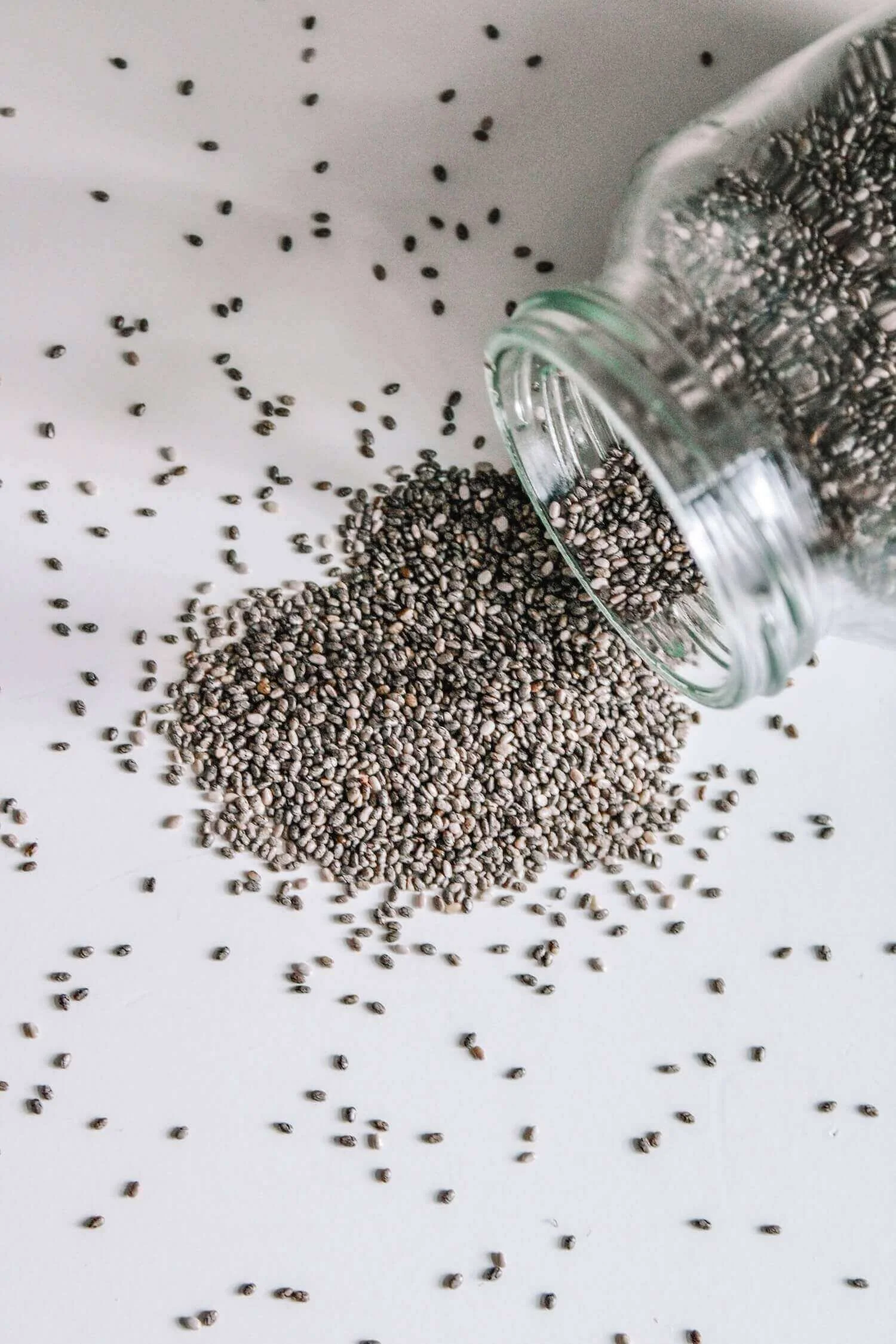
While seed vaults exist in other locations (the famous Svalbard Global Seed Vault in Norway, for example), Macquarie Island doesn't have one. McConaghy added this element to deepen the novel's climate themes.
The seed vault gives the characters—particularly Orly—a tangible connection to environmental collapse. It transforms abstract climate anxiety into something concrete: which species do we save when we can't save them all? The vault also provides a narrative reason for certain characters to be on the island beyond just the lighthouse.
Some wildlife details are adjusted.
Macquarie is famous for its penguins—particularly the 1.7 million royal penguins that breed nowhere else on Earth. But Wild Dark Shore focuses more on seals and whales.
This isn't an oversight. McConaghy chose the wildlife that served her story and her characters' emotional arcs. Fen's connection to seals, Raff's bond with whales—these relationships needed specific animals, not just "island wildlife" generically.
She selected creatures that could carry symbolic weight while remaining realistic to the setting.
The human presence is minimized.
Real Macquarie has a research station with 20-40 people, ships delivering supplies multiple times per season, and a robust support infrastructure managed by the Australian Antarctic Division.
Shearwater feels more isolated. The supply ships are less reliable. There's no broader community, just the Salt family and whoever else might arrive unexpectedly.
This narrative choice heightens the pressure-cooker atmosphere essential to the thriller elements.
This is smart worldbuilding. McConaghy grounded her setting in meticulous research, then shaped it to serve her narrative needs. Every departure from reality serves the story.
What Authors Can Learn About Research and Worldbuilding
Now let's talk craft. How can you use McConaghy's approach to setting in your own work?
Research Deeply, Then Adapt Boldly
Know when to use fiction vs reality.
Shearwater Island isn't real, but it feels real because it's based on meticulous research.
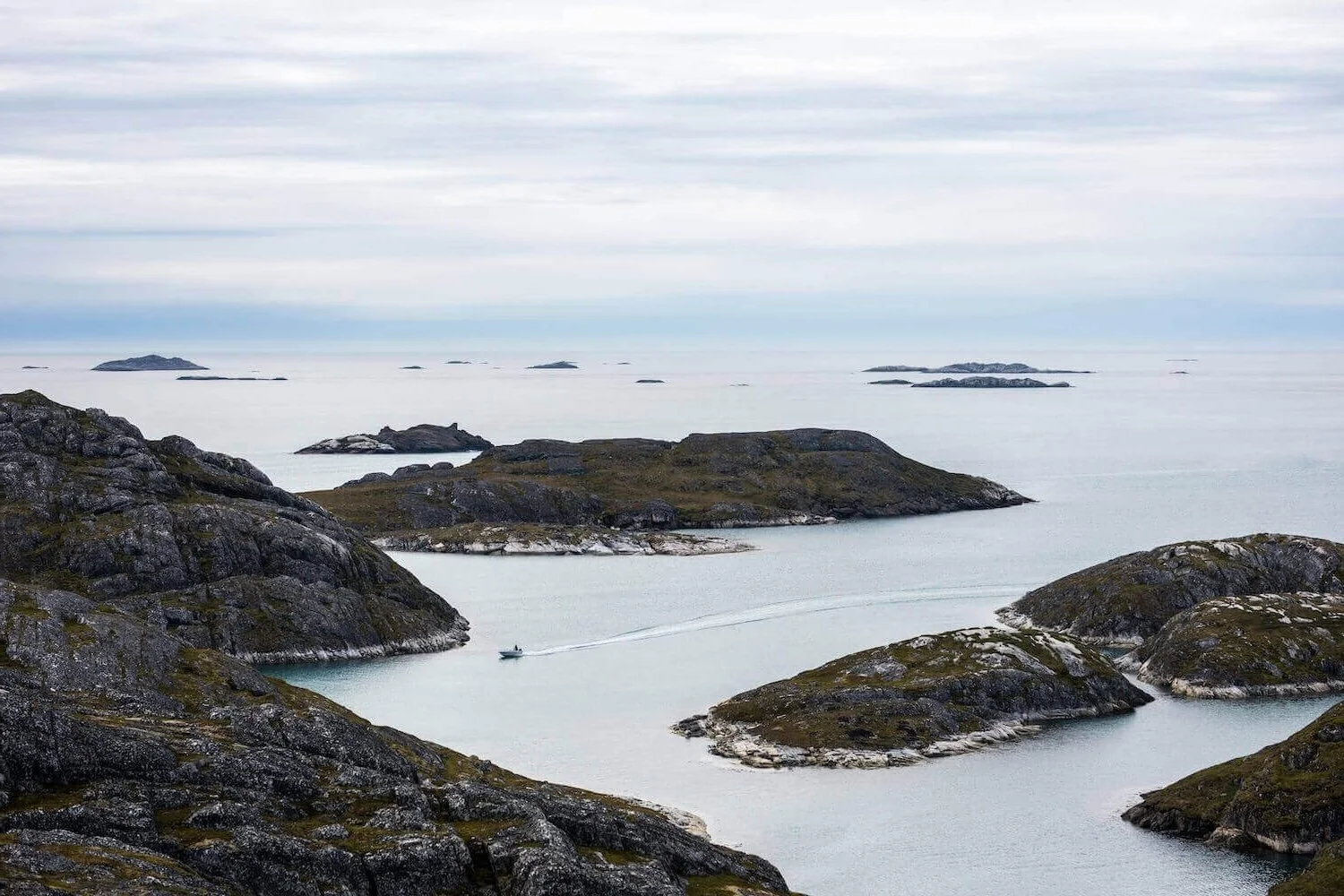
McConaghy clearly studied subantarctic islands—their weather patterns, their wildlife, their isolation, their role in climate research. That knowledge saturates every page and creates authenticity readers can feel, even if they've never been to a similar location.
But here's the key: research doesn't mean rigidity. Macquarie Island doesn't have a lighthouse family or a seed vault, but Shearwater does—because the story needs them.
Research provides your foundation, but your story determines what you build on it.
When you ground fictional places in real research, readers trust your world. When you adapt that research to serve your narrative, you maintain creative freedom.
Some authors set stories in real places—real cities, real landmarks, real addresses. Others, like McConaghy, create fictional places inspired by real ones. Both approaches work. The question is: which serves your story better?
Use a fictional location when you need narrative freedom without geographical constraints.
McConaghy needed control over Shearwater's layout, features, and logistics. If she'd set the story on actual Macquarie Island, she'd be bound by its real geography and existing research station—the 20-40 people who live there year-round, the regular supply schedule, the established infrastructure.
Creating Shearwater gave her freedom while maintaining authenticity through research. She could add a lighthouse, minimize human presence, adjust the supply ship schedule, and include a seed vault—all serving her story's needs.
The balance is making additions feel plausible within the world you've established.
McConaghy does this by maintaining consistency in everything else—the weather, the wildlife, the isolation patterns match real subantarctic conditions. The departures from reality serve clear narrative purposes while the foundation remains grounded.
If you need to bend geography to serve your plot, create a fictional place. If the real location's actual features enhance your story, use the real place. Just make sure you understand the real version deeply enough that your fiction rings true.
Setting as Character
One final thought: Shearwater Island works because McConaghy treats it as more than location.
The island has moods. It threatens and protects. It isolates and provides. It's beautiful and brutal.
When setting feels like a character, it elevates your entire story. That's exactly what McConaghy achieves—and if you want to dive deeper into how she uses Shearwater's remote setting to drive plot, tension, and theme throughout the novel, check out “The Power of Remote Settings: How Wild Dark Shore's Shearwater Island Drives the Story.”

Final Thoughts
Wild Dark Shore takes place on fictional Shearwater Island, inspired by real Macquarie Island in the subantarctic.
But the more important question isn't where it takes place—it's how McConaghy uses that setting to create an atmospheric, emotionally resonant thriller that wouldn't work anywhere else.
That's the lesson: research deeply, adapt boldly, and make your setting work as hard as your characters.
Ready to build an author brand as intentional as McConaghy's worldbuilding?
You've seen how McConaghy researched deeply, then adapted boldly to create a setting that serves her story. Your author brand deserves the same strategic foundation. This free guide shows you how to build a brand that feels authentic to you while leaving room to grow, pivot, and surprise your readers.