
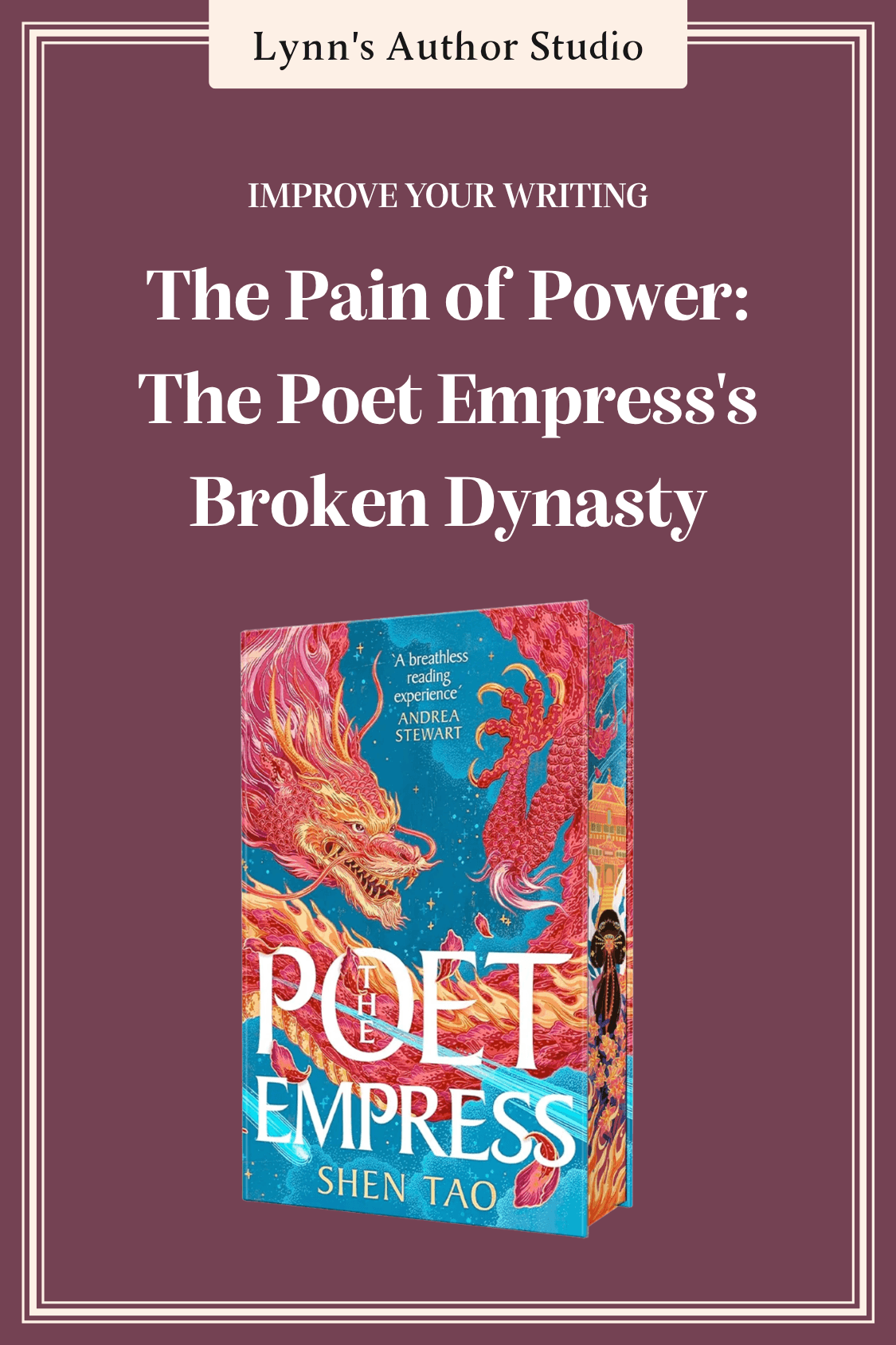
Part 5 of Poetry & Power: A Master Class with Shen Tao
The Poet Empress opens with a burial.
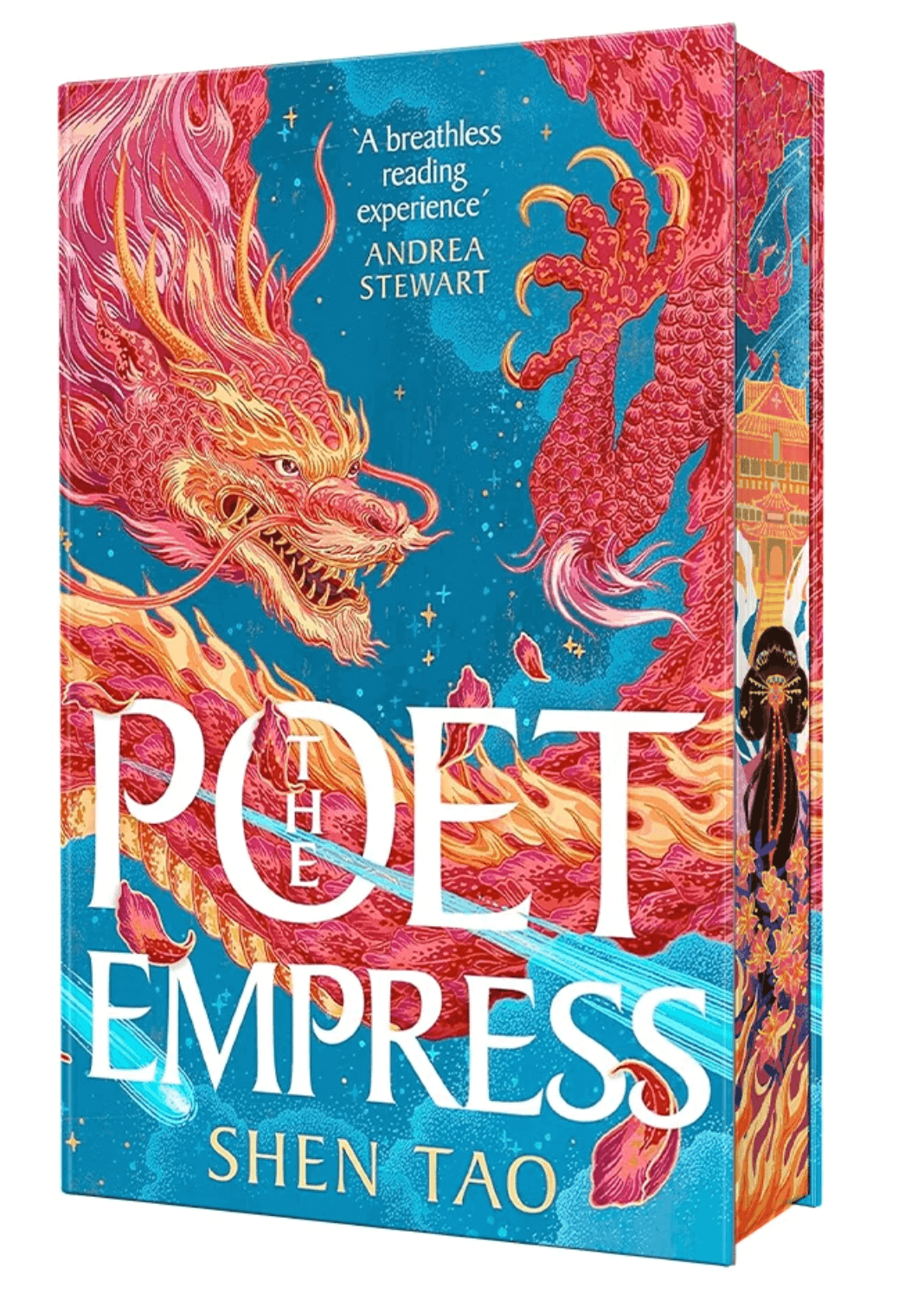
Wei Yin is helping her mother bury another child. It's the fifth sibling she's lost to the famine.
Far away, in the palace, the royal family is busy with other things. Who inherits the throne? Which prince wins? Which concubine becomes empress?
And so, nobody at the top is looking down.
Terren gets most of the attention from readers, and he's earned it. But the true antagonist of The Poet Empress is bigger than any one prince.
It's the dynasty itself, and the way it treats power as the only thing worth protecting.
→ Catch up on the whole story in The Poet Empress Masterclass | How a Debut Became a Bestseller.
The Villain Behind the Villain
Here's what makes the Azalea Dynasty so chilling. It doesn't need a grand plan to hurt people.
The villages are starving, and the people with power are too absorbed in their own fight to care. The emperor is dying. The heirs are circling. The court is consumed with who rises and who falls.
The famine barely registers.
That's a quieter kind of cruelty, and in some ways a more realistic one. Most real suffering caused by the powerful comes from people who simply stopped looking down.
Indifference at the top is enough to starve a village.
In Part 3, we looked at how every rule of the Azalea Dynasty (the reading ban, the dragon, the concubine rivalry) points in the same direction.
→ Revisit those systems in The Azalea Dynasty: Worldbuilding in The Poet Empress. (coming soon!)
This post goes one level deeper, into what those systems do to the people inside them. Including the people at the very top.
The Brothers It Broke
Terren and Maro weren't born rivals.
As boys, they were close. Terren adored his older brother and kept his secrets. By the time Wei arrives at the palace, they're locked in a succession war that could tear the empire apart.
What happened in between? The court did.
A dynasty needs one heir. So it turns brothers into competitors and love into a bargaining chip.
Maro, the older son and the "rightful heir," learns that his value depends on never faltering. When he falls ill, he refuses to rest. In a court like this one, an heir who rests can be replaced.
Terren, abused by his own mother and exploited by the court as a child, becomes exactly what the throne rewards: someone who rules through fear.
→ See how Tao reveals him layer by layer in Loving Terren: The Poet Empress's Layered Villain.
One reviewer put it simply: "all children are born kind." What changes them, the review argues, is "the weight of insidious expectations."
The throne demanded something from everyone near it, and its own heirs paid the most.
The brothers didn't escape the dynasty's cruelty by being born into it. They were its first victims.
The Cycle That Keeps It Running

Look closely and you'll see the pattern repeat.
Terren's mother hurts him. Terren grows up and hurts the people beneath him: servants, concubines, Wei. Each generation teaches the next what power looks like, and the lesson is always the same. Power means control, and control means someone else pays.
One reviewer described the book as a story about "cycles of abuse and violence perpetuated within families," in this case the royal family of the Azalea Dynasty.
That's what makes the dynasty feel so real. Nobody in the palace sits down and decides to become cruel. They inherit it, the same way they inherit their titles.
Systemic cruelty is believable when readers can watch it being passed down.
The Temptation Reaches Wei
Here's the part of the book that keeps it from being a simple story about evil royals.
Wei enters the palace for the most sympathetic reason imaginable. She wants to feed her family.
Then she learns to read. She learns how the court works. She starts winning. And somewhere along the way, she discovers that power feels good.
Tao told Publishers Weekly that what she was writing was "closer to a corruption arc." Wei doesn't stay the frightened farm girl from chapter one. The palace changes her, too.
That's a braver choice than it looks. The comforting version of this story says only villains want power. Tao refuses that version.
Wanting power doesn't make a character a villain. What they do with it decides that.
Spoiler Warning: How the Dynasty Ends
This section discusses the ending of The Poet Empress. If you haven't finished the book, skiiip ahead to the craft lessons below.
By the end, the succession war has cost both brothers their lives. Wei kills Terren herself.
And then comes the exchange at the heart of the book.
When Wei is told she may have killed a dynasty, she rejects the idea that a dynasty is anything grand. It's just people. People who did terrible things and justified every one of them as protecting the dynasty, when what they were really protecting was their own power.
That's the whole book in a single reframe.
The Azalea Dynasty was never a sacred institution. It was a group of people clinging to power, and by clinging to it, they made everyone suffer, themselves included. The starving villages. The concubines. Two brothers who once loved each other.
Then Wei does something interesting with the power she's gained. She doesn't walk away from it.
She bargains. In exchange for what she knows, she secures famine relief for the villages and the right for women and servants to learn to read. She stays inside the palace, marrying the new heir on her own terms, so she can keep steering power toward the people it ignored.
It isn't a clean victory. Wei has blood on her hands, and the book doesn't pretend otherwise. But she answers the question the whole dynasty failed to ask: what is power for?
The final image says the rest. The ghosts of Terren and Maro appear as boys again, together, the way they were before the throne came between them.
5 Lessons for Writing Power as the Antagonist
1. Put a system behind your villain.
Terren is terrifying, but he's a product. Remove him, and the Azalea Dynasty would simply produce someone else like him.
George R.R. Martin built A Song of Ice and Fire the same way. The Iron Throne destroys nearly everyone who reaches for it, and the throne outlasts them all.
When the true antagonist is a system, defeating one villain doesn't end the story's danger. That raises the stakes for your protagonist, because she can't simply win. She has to change something.
Try this: Ask what would happen in your story if your villain disappeared tomorrow. If the answer is "everything would be fine," your antagonist is a person. If the answer is "someone else would take their place," you're writing about a system. Decide which story you're telling on purpose.
2. Show the cost at the bottom and at the top.
Tao opens with a starving village and then spends most of the book inside the palace. We see the dynasty's damage from both ends.
That's what keeps the theme from turning into a lecture. If we only saw the villages, the court would be a cartoon. If we only saw the court, the stakes would feel abstract.
Try this: Write one scene that shows what your story's power structure costs the people with the least power. Then write one that shows what it costs the people with the most. If you can't write the second scene, your powerful characters may be too comfortable.
3. Let the enforcers become casualties.
The brothers are the dynasty's heirs, and they're also its victims. Neither one gets out of the succession war whole.
The HBO series Succession runs on the same engine. Logan Roy's children spend their lives fighting to inherit his power, and the fight hollows every one of them out.
When the people who benefit from a system are also broken by it, readers understand that the system itself is the problem, and that nobody is truly winning.
Try this: Pick the character who benefits most from your story's power structure and write down what that structure has taken from them. A relationship, a version of themselves, a choice they never got to make. Then find a way to show it on the page.
4. Tempt your hero with the same power.
Wei opposes the dynasty's power, and then she starts to want it.
If your hero is immune to the power your villain wields, your story is only saying "power is bad." If your hero is tempted, it's asking a much harder question.
Try this: Find the moment in your manuscript where your protagonist gains power for the first time. Write how it feels to them. If the honest answer is "good," let it be good, and let that scare them a little.
5. Answer "what is power for?"
Every character in the Azalea Dynasty uses power to protect power. Wei is the first to ask what it's actually for, and her answer is food, and reading, and protection for people who had none.
That's the question stories about power are really built around. The ending of your book is your answer to it, whether you mean it to be or not.

Why Stories About Power Matter
It would have been easy for Tao to write a story where the evil prince dies and everything is fine.
She wrote something truer.
The dynasty never needed a villain. It needed people willing to protect their own power at any cost, and it never ran short of them. The emperor. The empress. The princes. The court. Even Wei, for a while.
That's what makes this book matter beyond its genre. Most of us will never sit on a throne. But all of us live inside systems that ask us to protect our own comfort, and look away from whoever pays for it.
(As a dystopian writer, this is my favorite kind of story to read, and the hardest kind to write well, but Tao makes it look effortless.)
Power that exists only to protect itself destroys everyone it touches, including the people holding it.
Wei's answer is to point power at the people it forgot.
That's not a bad place to start.
Who holds the power over your author platform?
Social media platforms can change the rules on you overnight, but your website is the one corner of the internet you actually own. Find a website platform that’ll keep your author career in your hands.

If You Liked This Article, You’ll Also Love…
When Water Whispers Danger: Create Authentic Fantasy Creatures by Studying Scottish Water Mythology
Magical Realism Done Right: How to Blend Reality and Myth Without Losing Your Reader
Wild Dark Shore Characters: A Deep Dive into the Salt Family & What Authors Can Learn
Mastering Atmosphere: Writing Lessons from Robert Louis Stevenson's "The Body Snatcher"
