Magical Realism Done Right: How to Blend Reality and Myth Without Losing Your Reader
Part 2 of Wilderness & Wisdom: A Master Class with Eowyn Ivey
Magical Realism Done Right
Here's a writing challenge that terrifies most authors: How do you make readers believe that a man in our world might crawl into a bear skin and transform—without them rolling their eyes and closing your book?

Welcome to the delicate art of magical realism.
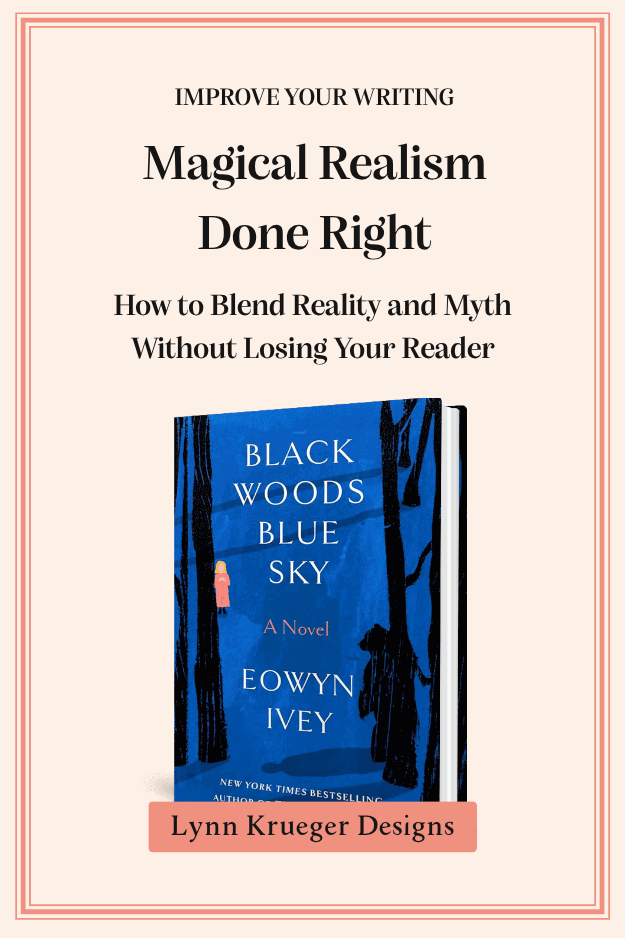
In Black Woods, Blue Sky, Eowyn Ivey walks this tightrope masterfully, creating a story where mystical elements feel as natural as breathing.
Arthur, her enigmatic male lead, speaks strangely ("I am loving you"), disappears for days into the wilderness, and carries an air of the supernatural that's both alluring and unsettling.
Yet readers don't question it—they're utterly captivated.
Why Most Writers Fail at Magical Realism
Let's address the elephant in the room: magical realism is notoriously difficult to execute well.
Most writers either go too subtle (readers miss the magic entirely) or too obvious (readers feel like they're being hit over the head with fantasy tropes).
The result? Stories that feel confusing or cheesy, losing readers in both cases.

But when done right, magical realism creates that perfect sweet spot where readers willingly suspend disbelief.
They want to believe in your otherworldly elements because you've made them feel possible, even inevitable.
How to Write Magical Realism: Ivey's Proven Techniques
Technique #1: Anchor the Extraordinary in the Ordinary
One reviewer noted that Ivey has "a light hand with the otherworldly, making it seem a natural extension of the everyday."
This is the golden rule of magical realism: your mystical elements should grow organically from a foundation of absolute realism.
In Black Woods, Blue Sky, Arthur's supernatural qualities emerge gradually from completely believable circumstances.

He's a reclusive mountain man who knows the wilderness intimately. He speaks with unusual syntax and has mysterious scars.
Before we even suspect anything otherworldly, we completely buy into Arthur as a realistic character.
When magical elements surface later, they feel like revelations about someone we already know and trust, not random fantasy insertions.
Technique #2: Use Character Perspective to Control the Magic
Here's a crucial magical realism writing technique: filter supernatural events through characters who might be unreliable observers.
At times, we’re not sure if what we’re seeing through Emaleen’s eyes is true. After all, she’s a child who believes in witches and her invisible pony. Even she isn’t sure sometimes if what she’s seen is a dream, her imagination, or reality.
Ivey offers enough clarity to captivate readers, but enough ambiguity to keep them wondering.
Technique #3: Ground Magic in Emotional Truth
The Wall Street Journal called this "a heartfelt new treatment" of the human-bear romance fairy tale genre. Notice that word: heartfelt.
Great magical realism isn't really about the magic—it's about using magical elements to explore deep emotional truths.

Arthur's possible supernatural nature isn't just cool world-building. It represents the wild, untamed part of love that can be both healing and dangerous.
His mysterious disappearances mirror how intimacy can make someone feel simultaneously close and unreachably distant.
When your magical elements serve the emotional core of your story, readers don't question them—they need them to understand the deeper truth you're telling.
Technique #4: Establish Rules (Then Follow Them)
Even in magical realism, consistency matters.
Arthur's otherworldly behavior follows patterns. He appears at seasonal changes. He disappears for predictable reasons. His strange speech patterns remain consistent.
Create your own internal logic, then stick to it religiously.
Readers will accept almost anything if you're consistent about it.
What they won't forgive is arbitrary magic that serves your plot's convenience rather than your story's internal rules.
Technique #5: Use Folklore as Foundation

Ivey doesn't invent her magical elements from scratch—she draws from established folklore about bear/human shapeshifters.
This gives readers a framework for understanding Arthur's character. We have cultural associations with bear-men, wild men of the woods, and transformative love stories.
Tap into existing mythologies and fairy tales that your readers already know subconsciously.
This creates instant resonance and makes your magical elements feel familiar rather than foreign.
The Secret to Believable Magical Realism
Here's what separates amateur magical realism from masterful magical realism: specificity.
Vague, generic magic feels fake.
But when Ivey describes Arthur's exact way of moving through the forest, his specific speech patterns, the particular way he interacts with the wilderness—these concrete details make everything feel real.
The more specific your magical elements, the more believable they become.
Don't just say your character has supernatural abilities. Show us exactly how those abilities manifest in tiny, observable details.
Common Magical Realism Mistakes to Avoid
The Kitchen Sink Error

Don't throw in multiple magical elements just because you can.
Ivey focuses on one central supernatural mystery (Arthur's nature) and explores it deeply rather than scattering magic everywhere.
This creates a depth that would be lost if other supernatural elements were thrown in.
The Explanation Trap
Resist the urge to explain exactly how your magic works. Your characters should uncover what’s happening organically, and it’s okay if they don’t understand every detail.
The moment the author starts detailing the mechanics, you've moved from magical realism into sci-fi/fantasy. Plus, chances are, your exposition will sound just like that—an author trying to explain themselves to their readers.
The Convenience Problem
Never use magical elements to solve plot problems. Magic should complicate your characters' lives, not simplify your plot pains.
Your Action Plan: Writing Believable Magical Realism
1. Start with 100% Reality

Write your first draft as pure literary fiction. Establish your characters, setting, and emotional core without any magical elements.
If your story doesn’t have emotional truth and believable characters without magic, it will only get worse once you add magical elements in.
Only after your realistic foundation is rock-solid should you layer in the otherworldly.
2. Choose One Magical Thread
Pick one supernatural element and explore it fully rather than adding multiple magical aspects.
And remember, what emotional truth does this element represent? That truth will remain your guiding star throughout the novel.

3. Filter Through Character Perspective
Decide which characters will experience or witness your magical elements, and to what degree.
How might their emotional state, stress level, or worldview affect what they perceive? Will they tell someone what they’ve seen, or remain quiet? If they try to tell people, will they be believed?
4. Test the Necessity
For each magical element, ask: "Does this serve my story's emotional core, or am I including it because it's cool?" If it's just there to be cool, cut it.
Magical Realism At Work
Magical realism works when readers forget they're reading about magic—they're simply reading about truth expressed in the most powerful way possible.
Eowyn Ivey understands that the best magical realism doesn't ask readers to believe in the impossible.
Instead, it reveals the magic that was hiding in the everyday world all along.
That's not magic—that's masterful storytelling.
Next in our Wilderness & Wisdom series, we'll dive into one of the most challenging aspects of character development: writing protagonists who make questionable choices while keeping readers invested in their journey—in “Writing the Unreliable Narrator: When Your Protagonist Makes Questionable Choices.”