5 Questions to Ask Before Sharing Your Author Story

Part 3 of Beyond the Icon: Author Authenticity in Public Life
Tom Felton didn't write Beyond the Wand in the middle of his struggle with alcohol. He wrote it years later, after therapy, after getting sober, after doing the hard private work of figuring out what it all meant.
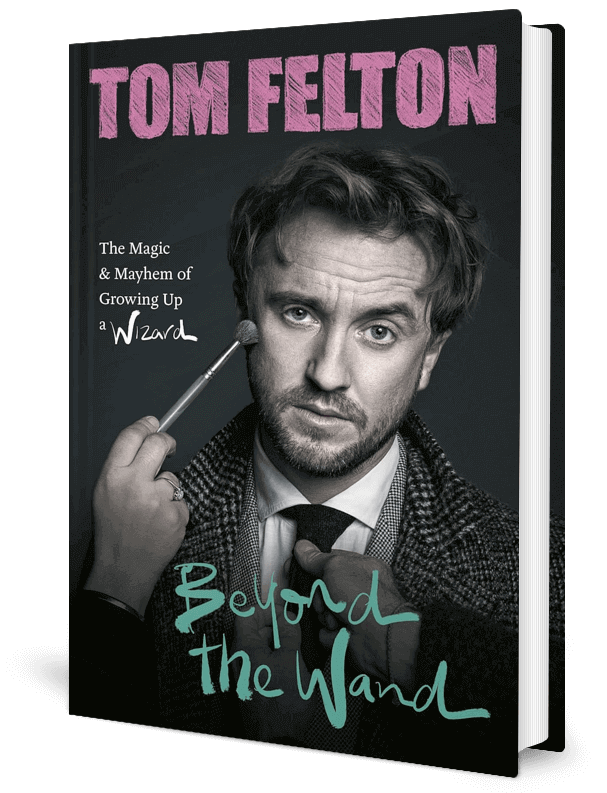
The timing matters.
If he'd written the book while still drinking, it would have read like a cry for help. Instead, it reads like wisdom offered from the other side.
That's the difference between sharing from strength and sharing from desperation.
But how do you know when you've crossed that line?
How do you know if you've processed something enough to share it publicly without sabotaging your author brand?
This article gives you five specific questions to ask yourself before you share any personal story.
These aren't abstract principles—they're practical checkpoints that tell you whether you're ready or whether you need more time.
→ New to the series? See the complete framework in What Tom Felton's Beyond the Wand Teaches About Author Vulnerability

The Processing Work Comes First
Here's what most authors get wrong: They think vulnerability means sharing everything as it happens, in real time, with complete transparency.
That's not vulnerability. That's live-blogging your breakdown.
Real vulnerability requires distance.
You need time to process what happened, understand what it means, and figure out what you learned before you can share it in a way that helps others rather than just exposing yourself.
Processing isn't optional. It's what makes the difference between vulnerability and oversharing.
Felton didn't share his struggles while he was in the thick of them. He did therapy. He got sober. He lived with his experiences long enough to understand them.
Then he wrote about them.
That processing work—the private work—is what gave him the clarity and self-possession that comes through in every page of his memoir.
Question 1: Have I Done the Private Work First?

This is the foundation. Before you share anything publicly, you need to have processed it privately.
What does processing look like?
It varies, but it usually includes some combination of therapy, journaling, talking it through with trusted friends, or simply giving yourself time and space to sit with an experience.
The test: Can you talk about this experience without becoming emotionally flooded?
If telling the story still makes you cry, still makes you angry, still sends you into a spiral—you're not ready to share it publicly yet. That's not a judgment. It just means the wound is still fresh.
When you've processed something, you can discuss it with emotional equilibrium. You feel things about it, but you're not overwhelmed by those feelings. You have perspective.
What Private Work Looks Like
Therapy or counseling: Working with a professional to understand patterns, process trauma, develop coping mechanisms.
Journaling: Writing about the experience for yourself, not for an audience. No performative language, no crafting for effect—just honest reflection.
Trusted conversations: Talking it through with people who know you well and won't judge you. Testing how it feels to say things out loud.
Time: Sometimes you just need months or years to live with something before you understand it well enough to share it.
The goal isn't to eliminate all emotion. The goal is to reach a place where you can share from clarity rather than chaos.
Question 2: Do I Know What I Learned?

This question separates vulnerability from trauma dumping.
Vulnerability offers insight. Trauma dumping shares pain without purpose.
Before you share a difficult experience, you should be able to articulate what you learned from it. Not what you wish you'd learned. Not what you think you should have learned.
What you actually learned.
If you can't answer "What did this teach me?" you're not ready to share it.
Felton doesn't just describe his drinking problem. He reflects on what it revealed about fame, loneliness, and self-medication.
He understands the patterns. He's extracted meaning from the experience.
That meaning is what makes his story useful to readers. Without it, he'd just be oversharing for sympathy or attention.
The Meaning Checklist
Ask yourself:
What did this experience teach me about myself?
What patterns did I recognize?
How did this change my perspective?
What would I do differently now?
What do I want readers to take away from this?
If you can't answer these questions clearly and specifically, you haven't finished processing yet. Keep doing the private work.
Question 3: Am I Sharing to Help Others or to Get Validation?

This is the hard one. This requires brutal honesty about your own motivations.
Why are you sharing this? Really. Strip away the justifications and the rationalizations.
What do you actually want from this disclosure?
The right answer: You're sharing because the insight might help someone else who's going through something similar.
The wrong answer: You're sharing because you need people to tell you you're okay, you're not alone, you did the right thing, you're not a bad person.
If you're looking for validation, reassurance, or emotional rescue from your audience—you're not ready. Do more private work. Get that validation from a therapist or trusted friends first.
When you're ready, sharing feels generous rather than needy.
You're offering something you've learned, not asking people to make you feel better about what you went through.
Motivation Red Flags
You're probably not ready if:
You need reassurance that what you did was okay
You're looking for sympathy or comfort
You want validation that you're not alone
You're seeking permission to feel what you feel
These aren't bad needs. They're just needs that should be met privately, not publicly.
Question 4: Would I Regret This Tomorrow?

Imagine yourself a week from now.
A month from now.
A year from now.
Your author career is progressing. You're getting more visibility. Aaand this post is still out there with your name on it.
How do you feel about it?
If there's any part of you that cringes at the thought of this being permanent—don't share it yet.
The internet is forever. What you share becomes part of your permanent author brand. You can't take it back. You can delete it, but screenshots exist. Google cache exists. Other people's memories exist.
This isn't about perfectionism. It's about protecting yourself from regret.
Felton clearly asked himself this question before publishing Beyond the Wand. He chose what to include carefully.
He doesn't share everything—he shares what serves the story and what he's comfortable having permanently associated with his name.
The Future Self Test
Ask yourself:
Will my future self thank me for sharing this?
If this gets quoted in a major publication, will I be comfortable with it?
If this becomes the thing I'm known for, how do I feel about that?
If someone reads this five years from now, will I still stand by it?
If any of these make you uncomfortable, wait. Give yourself more time. You can always share later. You can't unshare.
Question 5: Does This Serve My Audience?

This is the final filter.
Even if you've done the private work, extracted the meaning, and are sharing from strength—does this actually help your readers?
Or is it just you talking about yourself?
Strategic vulnerability serves the audience. It gives them something useful—insight, perspective, hope, or practical wisdom.
Felton's memoir serves readers because it offers a specific lens on fame, identity, and recovery.
It's not just "here's what happened to me."
It's "here's what I learned that might be useful to you."
Before you share anything personal, ask yourself: What does my audience gain from knowing this? How does this help them?
Audience Value Questions
What specific insight does this offer?
How does this connect to my readers' lives?
What can they learn or apply from this?
Does this deepen their understanding of something important?
Am I giving them tools they can use?
If you can clearly articulate the value to your audience, you're probably ready to share. If you can't, you're probably not.
Ready vs. Not Checklist

You're ready to share when:
You can discuss it without becoming emotionally overwhelmed
You know what you learned and can articulate it clearly
You're sharing to offer insight, not to get validation
You'd be comfortable with this being permanent
Your audience gains something specific from hearing it
You're on the other side of the experience
You're not ready to share when:
You're still in the middle of the crisis
Telling the story makes you cry or feel flooded
You're looking for your audience to make you feel better
You haven't identified what you learned yet
You're not sure how you feel about it yourself
Part of you hopes this will go away or doesn't want it to be permanent
The difference isn't about time—it's about processing. Some people need months. Some need years. Some need decades.
There's no rush. Your story will still be there when you're ready.
→ See the four-point framework in action in 4 Things Tom Felton Didn't Do (And Why Authors Should Pay Attention) (Coming Soon!)
How to Use These Questions
These five questions aren't a checklist you tick off once. They're ongoing checkpoints you return to whenever you're considering sharing something personal.
The process:
Write about the experience privately first (journal, therapy, trusted conversations)
Let it sit for at least a few weeks
Come back and ask yourself these five questions
If you get a "no" or "I'm not sure" on any of them, wait longer
When you get clear "yes" answers to all five, you're probably ready
Some experiences you'll be ready to share in a few months. Some will take years. Some you'll never share publicly, and that's okay too.
Not everything needs to be public. Not every lesson needs to be taught. Some things are just for you.
Bottom Line

Tom Felton's memoir works because he waited. He did the private work. He processed. He found the meaning. He shared from strength, not desperation.
You can do the same thing. You just need to be patient with yourself and honest about your readiness.
These five questions protect you from sharing too soon, from oversharing, from sabotaging your author brand with unprocessed vulnerability.
Use them. Return to them. Let them guide you toward sharing that strengthens rather than undermines your professional credibility.
The right story shared at the right time builds trust, demonstrates self-awareness, and positions you as someone who has wisdom to offer.
The same story shared too soon creates distance, raises concerns about your judgment, and makes people wonder if you're okay.
The difference is processing. And processing takes time.
Give yourself that time. Your story will still be there when you're ready.
And when you finally share it—from strength, from clarity, from the other side—it will be so much more powerful than anything you could have written in the middle of the chaos.
That's what makes vulnerability strategic rather than destructive. That's what separates authors who share wisely from authors who overshare and regret it.
Ask yourself these five questions. Be honest about the answers. And share when you're ready—not a moment before.
Ready to build an author brand rooted in strategic authenticity?
You've learned how to assess your readiness to share—now apply that same intentionality to your author brand. This free guide shows you how to create a foundation flexible enough to grow with your entire journey, not just the polished chapters.