
Life After Draco Malfoy: What Authors Can Learn About Post-Debut Pressure

Part 4 of Beyond the Icon: Author Authenticity in Public Life
Tom Felton spent a decade playing Draco Malfoy.

When the Harry Potter films ended, he wasn't just starting a new chapter in his career—he was fighting to prove he had more than one character in him.
He auditioned for roles where directors saw only the blonde Slytherin sneering back at them.
He took parts in indie films and TV shows that most people never saw.
He worked harder after his breakthrough than he did before it, just to convince the industry he could play someone other than the boy who chose the wrong side.
Sound familiar? Because this is exactly what happens to debut authors after their first book.
You spend years writing, revising, querying, and finally selling your debut. You think the hard part is over.
Then your book comes out, and suddenly you're expected to do it again—faster, better, with higher sales—while everyone watches to see if you were a fluke.
The pressure after success can feel heavier than the pressure before it.
In this article, you'll learn what Tom Felton's post-Potter career can teach you about navigating post-debut pressure, building a sustainable author career, and proving you have more than one book in you.
→ New to the series? See the complete vulnerability framework in “What Tom Felton's Beyond the Wand Teaches About Author Vulnerability.”

The "Known for One Thing" Trap
In Beyond the Wand, Felton writes about the peculiar prison of being famous for exactly one role.
Directors wanted Draco. Casting agents wanted Draco. Fans wanted Draco.
The more successful Draco became, the harder it was for anyone to see Tom Felton as anybody else.
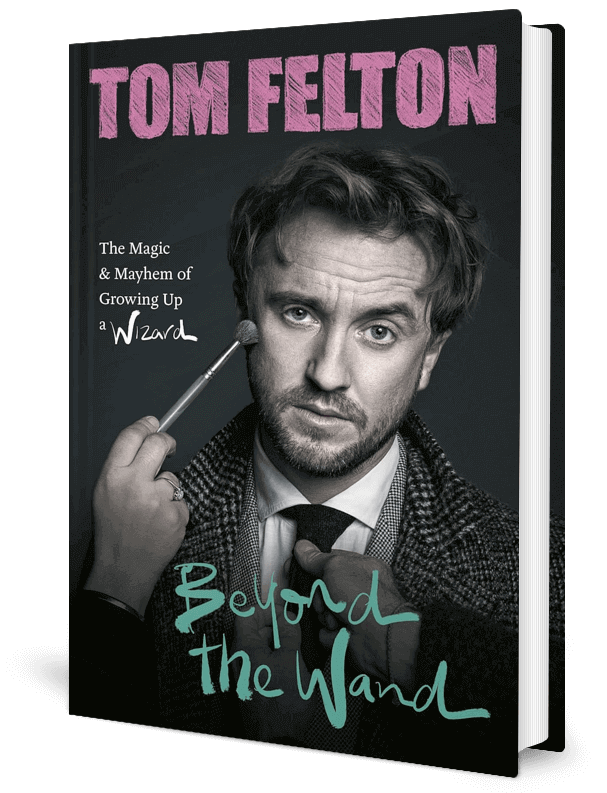
Authors face the same trap after a successful debut.
Your first book creates expectations.
Readers want more of what they loved.
Publishers want you to "write to your brand."
Even you start wondering if deviating from your debut is a mistake.
This creates a specific kind of pressure.
You're not just writing a second book—you're either trying to replicate what worked or fighting to prove you can do something different.
Either choice feels like a test you might fail.
The fear isn't just that your second book won't succeed. It's that success with your first book will become a ceiling instead of a foundation.
What Felton Did Differently
Felton didn't try to run from Draco. He acknowledged it.
He talked about it. He made peace with the fact that Draco would always be part of his story.
But he also kept working.
He took smaller roles in different genres. He tried things that scared him.
He accepted that building a career beyond his most famous role would take years, not months.
The parallel for authors: You don't have to reject your debut to move forward. You just have to keep writing.
The Fear of Being a Fluke
Here's what Felton doesn't explicitly say in Beyond the Wand, but what you can read between the lines: After Harry Potter ended, he probably wondered if he'd just gotten lucky.
The Potter films were a phenomenon. Millions of people saw his work.
But was he actually good, or was he just in the right place at the right time?

This is the nightmare that haunts debut authors.
Your first book sold. Maybe it even did well.
But can you do it again? Or was it a fluke—the right book at the right time, and now you'll spend the rest of your career trying to recapture lightning in a bottle?
Publishing knows this fear and weaponizes it.
Agents drop authors whose debuts don't hit certain sales numbers.
Publishers pass on second books from writers they were excited about just eighteen months earlier.
The industry treats your debut like a referendum on your entire career.
One book doesn't prove you're an author. It proves you wrote a book.
The Impossible Standard
The publishing industry expects debut authors to produce bestsellers immediately, then improve on that success with every subsequent book.
This is statistically absurd, but the pressure is real.
Authors describe this as "one strike and you're out" mentality.
If your debut doesn't hit, publishers assume your second book won't either.
You're back to querying, but now you're carrying the weight of underperformance.
Even if your debut does well, the pressure shifts. Now you have to maintain or exceed those numbers.
Second book syndrome isn't just about craft—it's about proving you weren't a fluke.
When Success Feels Like Pressure

Felton achieved massive success young. Then he spent years trying to prove he deserved it.
Authors report the same pattern.
Over half of debut authors in a recent Bookseller survey said the publishing process negatively affected their mental health.
They described anxiety, depression, and imposter syndrome—not from failure, but from the pressure that came after their books launched.
The cruelest part: You feel like you're not allowed to struggle. You "won the literary lottery." You got published. How dare you complain?
But winning doesn't make the pressure disappear. It just changes the stakes.
The Gratitude Trap
One author in that survey said, "Everyone I know was filled with admiration and envy, and yet here I was dying inside. I couldn't tell my loved ones how I really felt because I knew I had won the literary lottery and was living their dream."
This is the gratitude trap.
You're supposed to be grateful for publication. You are grateful.
But you're also exhausted, anxious, and terrified you won't be able to do it again.
Those feelings aren't mutually exclusive.
You can be grateful for the opportunity and still struggling with the pressure. Acknowledging the difficulty doesn't make you ungrateful—it makes you human.
Building Beyond Your Debut

Felton's strategy for building a career beyond Draco was simple: Keep working. Take different roles. Don't wait for permission to try something new.
He didn't get cast in major Hollywood films right away.
He did indie projects. He tried TV. He took parts that paid less and got less attention.
He built his career brick by brick, not with one big break.
Authors need the same long-term approach. Your career isn't made or broken by your debut. It's built over multiple books, across years.
What Actually Helps
Here's what helps authors navigate post-debut pressure, based on advice from authors who've survived it:
1. Start your second book before your debut releases.
Get a rough draft down before the debut chaos hits. You don't need it to be good. You just need something to return to when the promotional exhaustion fades.
2. Remember that most debuts don't break out.
The industry wants instant bestsellers, but most successful authors build their careers slowly. Your second book isn't your last chance. It's your next step.
3. Share the struggle selectively.
Find other authors who understand. Don't bottle it up, but don't perform your anxiety for your whole audience either. You need support, not public spectacle.
→ Learn when you're ready to share in “5 Questions to Ask Before Sharing Your Author Story.”

4. Give yourself more time than you think you need.
The pressure to deliver your second book quickly is real. But rushing produces work that feels forced. If your contract allows it, take the time you need to write something you're proud of.
5. Define success for yourself.
The publishing industry will tell you success means hitting lists, earning out advances, getting optioned for film. That's one version of success.
Another version: You wrote a second book. You kept going. You built your craft. You didn't quit.
Both are real. Choose which one you're measuring yourself against.
The Long Game
Tom Felton is still acting. He's not a household name outside of Harry Potter, but he's built a sustainable career doing work he cares about.
That's not settling—that's success.
Most authors won't be literary celebrities. Most of us will build careers that look less like meteoric rise and more like steady, unglamorous progress.

The question isn't whether your debut makes you famous. It's whether you keep writing after it comes out.
Felton kept working after the films ended. He tried things that didn't pan out. He took roles that didn't get attention.
He showed up anyway.
That's the model. Not overnight success. Not instant validation.
Just showing up, doing the work, and refusing to let one role—or one book—define your entire career.
What This Means for Your Author Career
Your debut isn't your entire career. It's the first chapter.
Some debuts are massive successes that create impossible expectations. Some are quiet launches that leave you wondering if anyone noticed. Most are somewhere in between.
All of them are just the beginning.
The real work is what comes after—the second book, the third, the decision to keep showing up even when it's hard.
Felton writes about learning to separate his worth from Draco Malfoy's success. He had to figure out who Tom Felton was beyond the role that made him famous.
Authors have to do the same thing. Your debut doesn't define you.
The career you build afterward does.
Bottom Line

Post-debut pressure is real. The fear of being a fluke is real. The "one strike and you're out" mentality is real.
But here's what's also real: Every successful author you admire has felt this pressure.
Every long-term career was built one book at a time, through anxiety and doubt and the fear that they'd never write anything good again.
Tom Felton spent years proving he was more than Draco Malfoy. He's still proving it. That's not failure—that's what building a career looks like.
Your debut doesn't have to be perfect. Your second book doesn't have to break records. You just have to keep writing.
The pressure after your debut can feel crushing. But it's also proof that you did something worth building on.
So build on it. One book at a time. One chapter at a time. One page at a time.
That's how careers are made—not with one perfect debut, but with the decision to keep going after it.
Ready to build an author platform that supports your long-term career?
You've navigated the pressure of your debut—now make sure your online presence positions you as a serious professional, not a one-book wonder. Your author website should signal that you're building a sustainable career, not just promoting a single title.

