
Let Them Think You're Not a 'Real' Author
The Most Dreaded Question
You're at a neighborhood barbecue, making small talk with someone you've just met.

The conversation flows easily until they ask the inevitable question: "So, what do you do for work?"
"I'm a writer," you say, feeling a little flutter of pride. You've been working on your craft for three years now, have completed two novels, and you're deep into the querying process with agents.
Their face lights up with interest. "Oh wow, a writer! That's so cool. What have you published?"
Your stomach drops. Here comes the moment of truth.
"Well, I'm currently working with agents to get my work published, and I'm also exploring some indie publishing options for—"
"Oh," they interrupt, their enthusiasm visibly dimming. "So you're not a real author yet. But that's great that you're trying! My neighbor's cousin got published once. You should talk to her—maybe she can give you some tips on how to become a real writer."
The words hit like a punch to the gut.
Not a real author yet.
As if the years you've spent honing your craft, the stories you've poured your heart into, and the professional approach you've taken to developing your career somehow don't count until someone else gives you official permission to use the title "author."

Later that week, you mention this interaction to a fellow writer—someone who's been traditionally published but whose books haven't achieved bestseller status. They shake their head sympathetically.
"I know exactly how you feel. Someone told me last month that I'm not a 'real' author because I'm not with one of the Big Five publishers. Apparently, small press doesn't count either."
How did "author" become such a gatekept identity?
And why do the goalposts keep moving every time you think you've reached "real" author status?
This is where the Let Them Theory becomes essential for protecting your creative identity.
Just as we explored with professional legitimacy, the pressure to prove you're a "real" author often comes from people who need external validation systems to make sense of creative careers they don't understand.
The "Real Author" Gatekeeping That Never Ends
The concept of "real author" is one of publishing's most toxic myths because it creates arbitrary hierarchies designed to exclude rather than include.
What's particularly insidious is how the definition constantly shifts depending on who's doing the defining and where you are in your career journey.
Family and friends often operate with the most basic definition: you're not a "real" author until you're published.
But once you achieve publication, the goalposts immediately move.

Self-publishing doesn't count because it's "too easy."
Small press doesn't count because it's "not selective enough."
Traditional publishing doesn't count unless it's with a "big" publisher.
Big publisher success doesn't count unless you hit bestseller lists.
Bestseller status doesn't count unless it's sustained success.
Industry insiders have their own gatekeeping hierarchies.
Some agents dismiss authors who've self-published as writers who couldn't make it in "real" publishing.
Some traditionally published authors look down on indie authors as amateurs who took shortcuts.
Some literary fiction authors dismiss genre fiction writers as commercial sell-outs.
Some established authors treat debut authors as not quite legitimate yet.
Even within specific communities, the definitions multiply.
You're not a "real" romance author unless you're making six figures.
You're not a "real" literary author unless you've won awards.
You're not a "real" author unless writing is your full-time income.
You're not a "real" author unless you have an MFA.
The most damaging aspect of this gatekeeping is how it affects authors' confidence and decision-making.

When you're constantly seeking external validation of your "real author" status, you start making creative and business decisions based on what will earn you legitimacy points rather than what serves your actual goals and values.
You might turn down a lucrative self-publishing opportunity because you're afraid it will hurt your chances of being seen as a "real" author.
You might stay in an unhappy relationship with a traditional publisher because leaving would mean giving up your "legitimate" author status.
You might write in genres you don't love because they're more "respected" than the genres that actually excite you.
The Moving Goalposts That Keep Authors Chasing Validation
Understanding how the "real author" goalposts constantly move helps you recognize the futility of chasing external validation for your creative identity.

The pattern is always the same: as soon as you achieve one level of "legitimacy," someone redefines what "real" means to exclude your current position.
Before publication, the message is clear: "You're not a real author until you're published."
So you work toward publication, whether traditional or indie, believing that crossing this threshold will finally earn you the right to call yourself an author without qualification.
But as soon as you publish, the narrative shifts: "Well, anyone can self-publish these days, so that doesn't really count." Or: "Small presses will publish anything—you need a big publisher."

The achievement you worked so hard for suddenly becomes inadequate proof of your author status.
If you achieve traditional publication, new criteria emerge: "You need to be with a reputable publisher, not just any publisher."
If you land with a well-known publisher, it becomes: "You need to actually sell books, not just get published."
If your books sell well, it becomes: "You need sustained success, not just one lucky break."
The goalposts move because the people doing the moving need to maintain their sense of superiority or exclusivity.
If everyone who writes and publishes books gets to be a "real" author, then their own author identity feels less special and their ego feels threatened.
So they constantly redefine the criteria to ensure that most people remain outside the "real author" circle.
This moving goalpost phenomenon reveals the fundamental flaw in seeking external validation for your creative identity: there will always be someone ready to explain why your current achievements don't quite qualify you for "real" author status.
The game is rigged to keep you chasing validation rather than focusing on your actual creative and professional development.
Let Them Gatekeep an Identity That Belongs to Anyone Who Writes
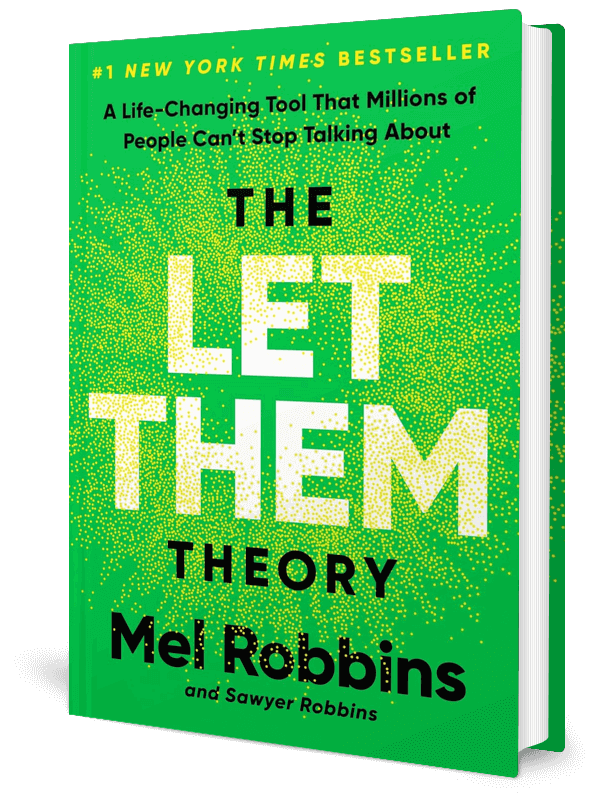
Here's where the Let Them Theory liberates you from the exhausting pursuit of "real author" validation: You stop trying to earn approval from people who are determined to maintain exclusive definitions of creative identity.
Let them create arbitrary hierarchies that make them feel superior to other writers.
Let them not understand that writing consistently and seriously makes you a writer, regardless of publication status, sales numbers, or industry recognition.
Let them miss the irony that, by their narrow definitions, many "real authors" can't make a living from their writing, while many “not real” authors have built sustainable careers.
Let them not grasp that some of the most influential and beloved books in history were initially rejected by traditional publishers or dismissed by literary establishments.
Let them waste energy policing who gets to use the title "author" instead of focusing on their own creative development.
Let them think that external validation is more important than the internal satisfaction that comes from creating meaningful work.
Most importantly, let them limit their own sense of creative legitimacy by constantly looking over their shoulders to see if they measure up to someone else's standards.
Their need to exclude others from the "real author" club reveals their own insecurity about their place in the creative world.
Let Me Define My Author Identity by My Actions and Commitment
While you're letting them gatekeep meaningless categories, you get to build your creative identity on foundations that actually matter and that no one can take away from you.

Let me identify as a writer because I write consistently and take my craft seriously. My author identity doesn't depend on external permission or industry gatekeepers—it comes from my commitment to the creative process and my dedication to improving my skills.
Whether I'm published or unpublished, traditionally or independently published, bestselling or building my audience, I am a writer because I write.
Let me own my author identity regardless of where I am in my publishing journey. Every author started as an unpublished writer. Every bestselling author was once someone whose work was rejected. Every "real" author by any definition was once exactly where I am now.
My current position in the publishing world doesn't determine my legitimacy as a creative person.
Let me value my creative development over external markers of industry approval. The skills I'm building, the stories I'm crafting, and the voice I'm developing are valuable regardless of whether they've been validated by agents, publishers, or other industry professionals.
My growth as a writer is happening right now, not waiting for some future moment of external recognition.
Let me build my identity on creative commitment rather than industry validation. "Real" authorship comes from showing up to the page consistently, pushing through creative challenges, developing discipline around the craft, and treating the work with respect. These are qualities I can embody starting today, not achievements I have to wait for permission to claim.

The stories of successful authors prove that creative identity comes from within, not from external validation.
Many now-famous authors were told they would never be "real" writers when a traditional gatekeeper looked down on their stories as not “real” literature.
Stephen King's first novel was rejected 30 times.
J.K. Rowling was rejected by 12 publishers.
Agatha Christie was told she'd never succeed as a writer.
These authors became "real" not when the industry finally accepted them, but when they decided to take their creative work seriously regardless of external recognition.
More recently, authors like Hugh Howey and Andy Weir built devoted readerships through self-publishing before traditional publishers recognized their success.
They were "real" authors from the moment they committed to their craft and started serving readers, not from the moment the industry validated their work.
Practical Strategies for Owning Your Author Identity
Building confidence in your creative identity requires both internal work and practical strategies for handling the inevitable identity challenges from others.

When someone asks "what have you published" in that tone that suggests unpublished writers don't count, try: "I'm working on my second novel while querying agents for my first."
This positions you as an active, professional writer regardless of publication status.
When people use qualifiers like "aspiring" or "wannabe" writer, gently correct them: "I'm a writer working toward publication" or simply "I'm a writer."
You don't need to accept language that diminishes your current creative identity.
When faced with moving goalposts about what makes a "real" author, remember: "I define my author identity by my commitment to the craft, not by external achievements."
This helps you stay grounded in what you can control rather than chasing validation you can't control.
Building internal validation systems is crucial for maintaining creative confidence.
Create rituals that reinforce your author identity: a dedicated writing space, regular writing schedule, professional development activities, or connections with other writers who take the craft seriously.
These actions reinforce your identity as a serious writer regardless of external recognition.
Surrounding yourself with supportive creative communities also helps maintain perspective on what really matters.
Join writing groups, attend conferences, and connect with authors at all stages of their careers who understand that creative identity comes from commitment to the work, not from external validation.
Your Creative Identity Doesn't Need External Permission
The most empowering realization for writers struggling with "real author" gatekeeping is this: Your creative identity is yours to claim based on your actions and commitment, not based on other people's approval or industry recognition.

If you write regularly and take your craft seriously, you are an author.
If you've completed manuscripts and are working toward publication, you are an author.
If you've published work and are building a readership, you are an author.
The qualifier "real" is meaningless because it's always defined by people trying to exclude rather than include.
Your creative development doesn't pause while you wait for external validation.
Your skills are growing, your voice is developing, and your understanding of craft is deepening right now, regardless of whether the publishing industry has recognized your work yet.
The work itself makes you a writer; everything else is just business details.
The publishing industry will continue to evolve, and the definitions of "real" authorship will continue to shift.
The people gatekeeping creative identity will eventually have to confront a reality where the most successful authors often ignore traditional hierarchies and build careers on their own terms.
Your job is not to prove you're a "real" author to people who are determined to maintain exclusive definitions. Your job is to write, to grow, and to build the creative career that serves your goals and values.
Let them think you're not a "real" author while you do the real work of writing, creating, and building something meaningful with your words.
Next time, we'll explore another validation challenge that affects authors at every level: "Let Them Question Your Success Metrics"—because even when people accept that you're a "real" author, they often have strong opinions about how you should measure your success.
Ready to Stop Defending Your Creative Identity?
If you're tired of justifying your author status to people who keep moving the goalposts—you're not alone. The Let Them Theory for Authors series addresses the specific validation challenges that drain your creative energy and shows you how to reclaim your power by focusing on what you can actually control.

