
Let Them Say Writing Isn't a Real Job

You're at Sunday dinner with your extended family.

You’re feeling pretty good about the progress you've made on your writing career this year.
You've published two books, built an email list of devoted readers, and you're finally earning enough from your writing to cut your day job hours from full-time to part-time. When your cousin asks what you've been up to, you're excited to share your wins.
"I've been focusing more on my writing career," you begin, explaining how you've been building your author business. "I'm actually planning to go full-time with it next year."
Uncle Bob, who's been half-listening while scrolling through his phone, looks up with a patronizing smile. "That's nice, dear, but when are you going to get a real job? You can't pay bills with book sales forever."
Your excitement deflates instantly. Here you are, explaining legitimate business growth and professional development, and he's treating it like a cute hobby that you'll eventually outgrow.
Before you can respond, your aunt chimes in: "Writing is such a lovely creative outlet! But you'll want something stable to fall back on."
The next day, you're at a networking event where someone asks what you do for work.
"I'm a full-time author," you say, trying to sound confident.

Their response: "Must be nice to not work for a living! I wish I could just stay home and write all day."
How many times can your legitimate career be dismissed as "not real work" before you start believing it yourself?
How often can people suggest you need a "real job" before you start doubting your professional choices?
The fact is, some people will never understand or respect creative fields.
Writing, acting, film making…there are so many creative jobs that somehow get dismissed as “less than” or are perpetually described as “hobbies” no matter how successful you become.
The constant invalidation of writing as legitimate work can undermine your confidence, affect your business decisions, and prevent you from treating your career with the seriousness it deserves.
This is where the Let Them Theory becomes essential for authors.

The "Real Job" Dismissal That Undermines Professional Confidence
The phrase "real job" is one of the most damaging things people say to creative professionals, because it immediately positions your career choice as illegitimate, temporary, or less valuable than traditional employment.
This dismissal shows up constantly in authors' lives, from well-meaning family members who worry about your financial security to strangers who assume that flexible work means no work.

The underlying assumption is that "real jobs" require bosses, offices, set schedules, and traditional employment structures.
If you don't punch a time clock, report to a manager, or work in a corporate environment, then what you're doing must be a hobby, a phase, or at best a side hustle that will eventually need to be replaced by "real" employment.
This dismissive attitude affects authors' ability to set professional boundaries and make strategic business decisions.
When your own family doesn't take your career seriously, it becomes harder to invest in professional development, decline social obligations that conflict with work deadlines, or make financial choices that support your business growth.
You find yourself over-explaining your career choice, justifying your schedule, or apologizing for treating your work as actual work.
The internalized doubt that comes from constantly hearing "get a real job" can sabotage your business decisions.
You might hesitate to invest in professional editing, book cover design, or marketing because part of you still thinks this isn't "real" enough to warrant serious financial investment.
You might accept low-paying or exploitative opportunities because you're grateful for any external validation of your work's value.

Creative careers are particularly vulnerable to this dismissal because the work is often invisible and the income can be irregular.
People don't see the hours you spend writing, editing, marketing, and managing the business side of your career.
They only see the flexible schedule and assume that means you're not working hard or producing valuable output.
The struggling artist stereotype perpetuates these assumptions.
Popular culture has conditioned people to believe that creative work is inherently unstable, poorly paid, and unsustainable long-term.
They've internalized the myth that if you're not struggling, you're not a real artist, and if you're making money, you must have "sold out" or gotten lucky rather than developed professional skills.
Let Them Cling to Outdated Employment Models
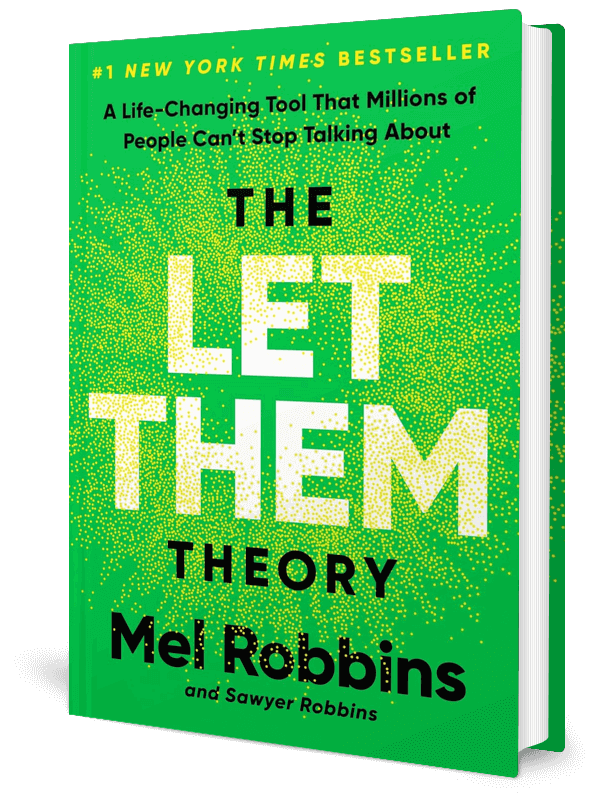
Here's where the Let Them Theory protects your professional confidence: You stop trying to convince people that your career choice is legitimate when they're determined to see it as less than "real" work.
Let them cling to outdated definitions of legitimate employment.
Let them think that "real jobs" require traditional corporate structures, even as the economy increasingly moves toward freelance, remote, and entrepreneurial work models.
Let them not understand that the gig economy, creator economy, and digital marketplace have fundamentally changed what professional careers look like.
Let them not grasp the entrepreneurial skills required for author success.
Let them think that because you enjoy your work, it's somehow not as valuable or challenging as work that makes people miserable.
Let them assume that flexible work means no work.

Let them not understand that self-employed professionals often work longer hours and carry more responsibility than traditionally employed people.
Let them think that because you can set your own schedule, you're somehow not as productive or dedicated as people who sit in offices all day.
Let them miss the economic reality of the creative economy.
Let them think traditional employment is more secure than it actually is in an era of layoffs, automation, and economic uncertainty.
Most importantly, let them limit their own career possibilities by refusing to recognize legitimate alternatives to traditional employment.
Their narrow definition of "real work" is their limitation, not your problem.
Let Me Own My Professional Identity
While you're letting them cling to outdated employment models, you get to embrace the full scope of your professional identity and capabilities.

Let me treat my writing career with the seriousness it deserves. When I own my identity as a professional author, I make business decisions based on strategic thinking rather than external validation. I invest in my career development, set appropriate boundaries around my time and energy, and present myself professionally in all my business interactions.
Let me recognize the diverse skills I've developed as an author-entrepreneur. Building a successful writing career requires mastering multiple professional competencies: creative development, project management, market research, brand development, financial planning, customer relations, and strategic planning. These aren't just "writing skills"—they're valuable business skills that transfer across industries and demonstrate professional capability.
Let me set professional boundaries that protect my work and well-being. When I own my professional identity, I can decline social obligations that conflict with work deadlines, charge appropriate rates for my services, and communicate my schedule needs without apologizing. I don't have to justify my work hours or explain why writing time is protected time.
Let me value the freedom and fulfillment that comes with building my own career. Traditional employment often involves trading time for money, following other people's creative vision, and having limited control over your professional development. As an author-entrepreneur, I get to build something that reflects my values, serves my creative goals, and provides both financial and personal satisfaction.
The success stories prove that writing careers are not only legitimate but can be more stable and lucrative than traditional employment.

Authors like Hugh Howey, Bella Andre, and Mark Dawson have built seven-figure businesses from their writing.
Joanna Penn has created multiple income streams around her author brand.
Successful authors often have more financial security than traditionally employed people because they've diversified their revenue sources and built assets that generate ongoing income.
These authors succeeded not by apologizing for their career choice, but by treating their writing as a serious business from the beginning.
They invested in professional development, built strategic business plans, and approached their careers with the same seriousness that traditional professionals bring to their work.
Building Unshakeable Professional Confidence
Developing confidence in your writing career as legitimate work requires both mindset shifts and practical strategies for handling the inevitable pushback from people who don't understand creative careers.
When family members ask when you're getting a "real job," try: "I have a real job. I'm a professional author, and my business is growing steadily."
This positions your work as an established fact rather than a future aspiration, regardless of your current income level.
When people suggest you need something "stable to fall back on," consider: "I'm building multiple revenue streams through my writing business. Diversification is actually more stable than depending on a single employer."
This reframes creative career building as a smart business strategy rather than risky behavior.

When someone says writing isn't "real work," you might respond: "I run a publishing business that requires skills in content creation, marketing, project management, and customer relations. It's definitely real work."
This highlights the professional skills involved without getting defensive about the creative aspects.
The key is speaking about your career with confidence and specificity rather than apologizing for your choices or over-explaining your decision-making process.
You're not trying to convert anyone to creative careers—you're simply refusing to accept their dismissive framing of your professional choices.
Building support networks that understand creative careers is crucial for maintaining professional confidence.
Join author organizations, attend writing conferences, and connect with other creative entrepreneurs who face similar challenges.
When you're surrounded by people who understand the realities of creative careers, the outside dismissal loses much of its power.
Investing in your career like the business it is also builds professional confidence.
When you have a professional website, business cards, and marketing materials that reflect your author brand, you're reinforcing your own identity as a serious professional.
When you set up proper business structures, track your finances professionally, and approach your work strategically, you're building evidence that this is legitimate business activity.
Your Career Doesn't Need Their Approval
The most liberating realization for authors dealing with "real job" pressure is this: Your career success is not dependent on other people's understanding or approval of your professional choices.
Your income doesn't become less real because it comes from creative work rather than traditional employment.

Your professional skills aren't less valuable because they're applied to writing and publishing rather than corporate projects.
Your business success isn't less legitimate because you built it around creative work rather than traditional services.
When you stop seeking validation from people who are determined to see creative work as "not real," you can focus your energy on what actually builds your career: developing your craft, serving your readers, and growing your business strategically.
The economy will continue to evolve toward more flexible, entrepreneurial, and creative work models.
The people insisting that traditional employment is the only "real" work will eventually have to confront a reality where creative professionals, freelancers, and entrepreneurs represent an increasingly large portion of the workforce.
But you don't need to wait for their recognition to succeed in your career.
Your job is to build the professional life that serves your goals and values, using whatever business model works best for your skills and circumstances.
Let them say writing isn't a real job while you build something that's entirely, professionally, and successfully yours.
Next time, we'll explore another identity challenge that affects authors at every level: "Let Them Think You're Not a 'Real' Author"—because even when people accept that writing is work, they often have strong opinions about who gets to claim the title of "author."
This post is part of the Let Them Theory for Authors series. Explore the complete series for more insights on building creative confidence and professional boundaries.

