
The Reciprocity Loop: Why Authors Who Give Freely Become More Successful (Not Less)

Article 3 in The Serviceberry Quartet
Everything I'd been taught about building a successful author career was backwards.
I was on a call with a client—a talented fantasy author with a gorgeous debut coming out—and she'd just shared a brilliant marketing insight with me. Something genuinely useful that other authors would benefit from knowing.
"Should I... blog about this?" she asked hesitantly. "Or would that give away my competitive advantage?"
I recognized that fear immediately because I'd felt it myself countless times. That moment of panic when you're about to share something valuable and a voice in your head screams: Wait! If you give this away, won't you lose out?
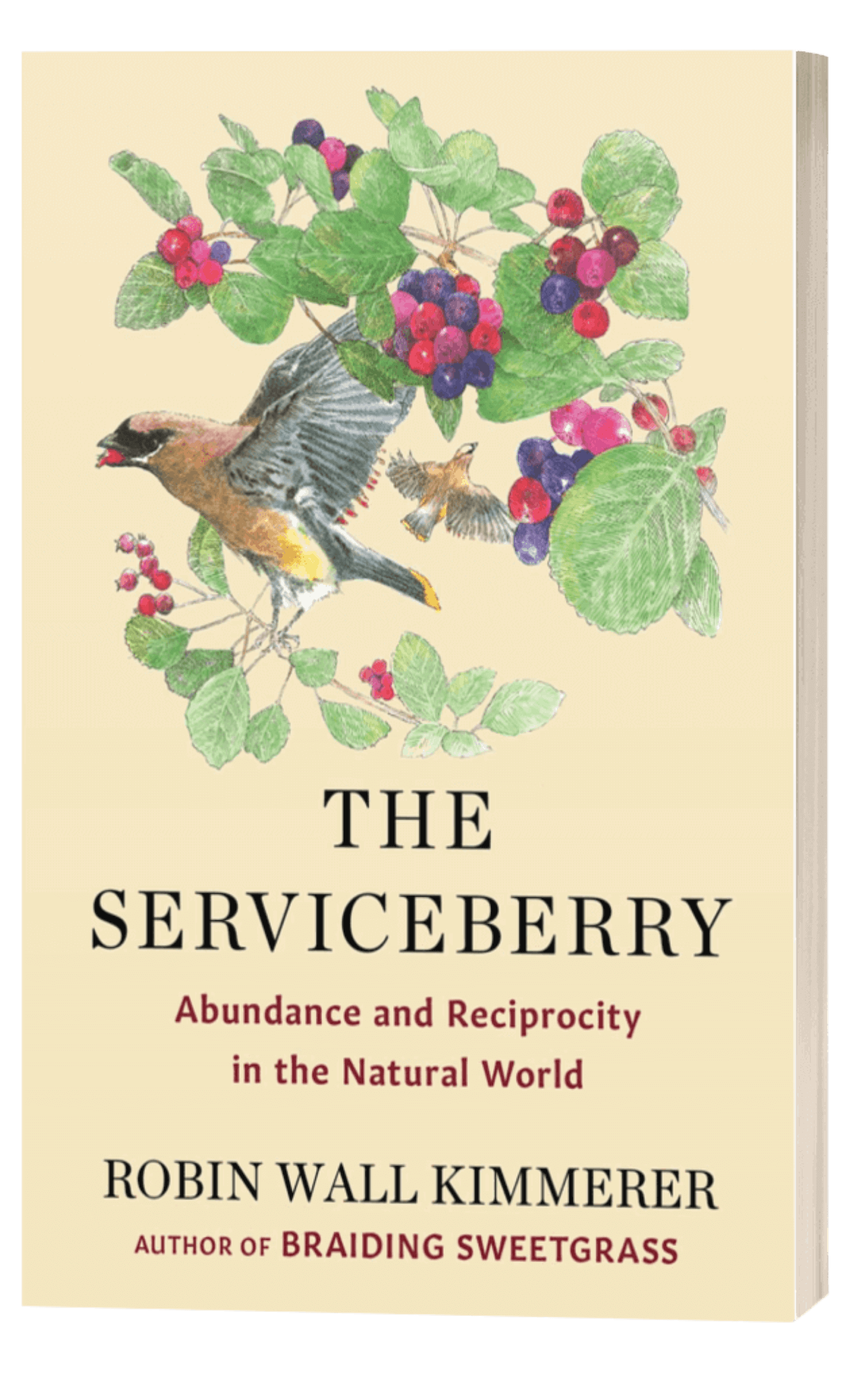
It's the question that stops almost everyone when they first encounter the gift economy principles described in Robin Wall Kimmerer’s The Serviceberry.
The concept sounds beautiful in theory, but when you're about to actually give away your best idea, your hard-won contact, your insider knowledge...suddenly it feels terrifying.
Here's what I told her, and what I've discovered through years of watching authors navigate this exact dilemma:
The fear is real, legitimate, and completely backwards.
Authors who give freely—who share their resources, promote other writers' work, and build genuinely generous practices—consistently outperform those who hoard and compete. Not just in sales or followers, but in career sustainability, creative fulfillment, and the kind of success that actually matters.
I know that sounds counterintuitive. It definitely sounded impossible to me at first. But once you understand how reciprocity actually works in author communities—the way Robin Wall Kimmerer describes in The Serviceberry—you can't unsee it.
New to the blog? Catch up on Article 1 of The Serviceberry Quartet: “What ‘The Serviceberry’ Teaches Us About Supporting Authors.”

The Fear Is Real (And That's Okay)
Let's start by acknowledging that your hesitation about gift economy thinking isn't naive or silly.
You're not wrong to feel protective of what you've built.
The fear comes from somewhere real.
What We're Actually Afraid Of
When I work with authors who are considering being more generous with their knowledge and support, the fears tend to cluster around a few core anxieties:
Being taken advantage of.
We've all encountered people who take but never give back. The thought of becoming someone's unpaid resource while they succeed at our expense? Absolutely not.
Giving away our competitive advantage.
In an industry where it feels like there are only so many agent slots, reader attention spans, and bestseller list positions, sharing what makes us unique feels like strategic suicide.
Running out.
What if generosity depletes us? What if we give so much that we have nothing left for our own work, our own launches, our own creative energy?
Looking foolish.
There's a vulnerability to generosity that market economy thinking has trained us to see as weakness. Nobody wants to be the naive writer who gets played while everyone else plays smart.

I've felt every single one of these fears.
When I started my web design business for authors, my first instinct was to guard my knowledge carefully.
After all, why would I teach authors my methods if I wanted them to work with me?
But here's what I've learned from watching the author community: those fears operate on market-economy assumptions that simply don't hold true in creative ecosystems.
Why Market Economy Training Makes Us Suspicious
We've been marinating in market economy thinking since childhood. We were told that:
Value equals scarcity (if everyone knows your secret, it's worthless)
Sharing diminishes what we have (like cutting a pie into more pieces)
Success is zero-sum (someone else's win means your loss)
Relationships are essentially transactional (always calculate the return on investment)

These lessons run deep. They're not wrong in a market economy contexts—they're just completely inadequate for understanding how creative communities actually work.
The validation I want to offer you is this: your protective instincts aren't bad. They're just calibrated for the wrong economic system.
When we apply market economy thinking to author communities, we miss the fundamental difference: creative work doesn't follow scarcity logic:
Stories aren't a finite resource.
Reader love doesn't get used up.
And the most thriving author communities operate on principles that look nothing like competition.
Learn more about the inner workings of market economy versus the gift economy, and what drives them both, in Article 2, “Understanding Market vs. Gift Economy Through Robin Wall Kimmerer's Eyes.”

The Paradox in Action: Generous Authors Who Won
Okay, theory is nice, but let's talk about what actually happens when authors embrace generosity. Because I've seen this pattern so many times that it's impossible to dismiss as coincidence.
The Author Who Shared Everything
One of my clients—let's call her Sarah—writes literary fiction with magical realism elements. Beautiful, lyrical work, but not "high concept" in the commercial sense.
When I first started working with Sarah, she was hesitant to connect with other authors. She worried that her style was too niche and she'd be asking for support she couldn't reciprocate.
Then something shifted.
She decided to experiment with generosity without expectations. She started genuinely, enthusiastically promoting other literary fiction authors whose work she loved.
Not strategic posts where she tagged them, hoping for reciprocation—actual thoughtful recommendations because she believed in their books.
She shared her hard-won knowledge about connecting with independent bookstores. She created a resource list for debut authors and gave it away freely. She showed up for other writers' launches with the same energy she hoped people would bring to hers.
Here's what happened:
Within six months, Sarah had built genuine relationships with a dozen authors in her genre.

When her book launched, five of them enthusiastically promoted it without her asking.
Two invited her to be part of online events.
One connected her with their agent for a potential anthology.
But more surprisingly, her generous, thoughtful presence in the literary fiction community made her visible to readers who were hungry for exactly the kind of authentic engagement she was offering.
Her newsletter grew organically.
Bookstores reached out to her.
Literary blogs wanted to interview her.
Was it because she "earned" this support by giving first? Not exactly.
It was because generosity had positioned her as someone who cares about the literary community, not just her own success.
And people—both writers and readers—want to support people like that.
The Pattern Recognition
I've watched this pattern repeat with enough authors now that I can predict it:
Generous authors become known and remembered.
In a sea of writers shouting "buy my book," the person genuinely celebrating others' work stands out. They become associated with positive energy rather than desperate self-promotion.
Giving establishes expertise better than claiming it.
When you teach openly—sharing craft tips, marketing insights, industry knowledge—you demonstrate mastery without having to announce it. The author who creates a free resource about query letters is immediately positioned as someone who knows what they're doing.

Support creates reciprocal support, but not transactionally.
This is the key insight: Sarah didn't promote five authors and then get exactly five promotions back from those same five people. Instead, her generosity created ripples through the community.
Author B (who she'd never directly helped) invited her to an event. Author C included her in a newsletter feature.
The ecosystem supported her because she'd contributed to the ecosystem first.
Generosity builds trust, which is the foundation of everything.
Readers buy from authors they trust. Publishers invest in authors they trust. Other writers collaborate with authors they trust.
Trust can't be bought or manufactured—it has to be earned through consistent, genuine actions over time.
The Unexpected Finding
But here's what really struck me about Sarah and other generous authors I've worked with: they're not just more successful by external metrics.
They're also more fulfilled and less burned out.
The authors grinding away in competitive isolation tend to hit walls.
They get exhausted from the constant positioning and self-promotion.
They feel resentful when other writers succeed.
They begin to experience their craft as a burden rather than a joy.
Meanwhile, the generous authors are having more fun.
They genuinely celebrate other writers' wins.
They feel connected to a community that energizes rather than depletes them.
Their creativity is sustained by relationships rather than consumed by competition.
This isn't just a nice side effect—it's proof that gift economy principles align with what actually sustains creative work over the long term.
How Reciprocity Actually Works (The Real Mechanics)
Alright, so generous authors tend to do better. But how does this actually work? Because it's definitely not what we've been taught to expect.
It's Not Tit-for-Tat Transactions
First, let's clear up the biggest misunderstanding about reciprocity in gift economy thinking.
It's not a transaction where you give something and then get an equivalent thing back from the same person.
That's still market economy thinking disguised as generosity.

Real gift economy reciprocity looks like organic growth. Consider it like planting seeds:
Ecological systems, not banking transactions. You give to the system, and the system supports you—but not necessarily through the same channels you gave to.
Networks, not bilateral exchanges. You help Author A, and somehow Author F ends up helping you. The connections are diffuse and organic.
Culture, not contracts. There's no ledger, no scorecard, no "you owe me." Instead, there's a shared understanding that people who contribute to the community will be supported by the community.
Long-term patterns, not immediate returns. The timeline is measured in seasons and years, not days and weeks.
When I promote another web designer's work, I'm not expecting them to promote mine in return. I'm contributing to a professional ecosystem where people are generous with each other.
Sometimes that same designer refers a client to me. Sometimes a completely different designer I've never met does.
Sometimes the "return" shows up as an invitation to speak at a conference, or a collaboration opportunity, or just the satisfaction of knowing I helped someone.
The point isn't tracking individual returns. The point is participating in a culture of mutual support.
The Mycelial Network Metaphor: Robin Wall Kimmerer's Forest Ecology Lesson
Robin Wall Kimmerer's serviceberry tree in The Serviceberry is brilliant, but let me add another layer from forest ecology that really drove this home for me: the mycelial networks that connect trees underground.

Scientists have discovered that forests are networked through vast fungal systems.
When one tree has excess sugars from photosynthesis, it shares through the network. When that tree later becomes shaded and needs resources, the network provides.
Mother trees support saplings. Healthy trees support sick ones.
No individual tree tracks who gave what. The system just works.
The entire forest becomes more resilient because resources flow where they're needed.
Now imagine author communities working the same way:
You enthusiastically promote Author A's debut because you genuinely love their book. Author B, who you barely know, sees your generous engagement with the community and invites you to contribute to an anthology. Author C includes you in their newsletter recommendations. The local bookstore owner, noticing your supportive presence in the literary community, reaches out about an event.
Your "return" doesn't come from Author A specifically—it comes from being a contributing member of a healthy ecosystem.
The Time Lag (And Why It's Actually Good)
Here's the part that trips people up: gift economy reciprocity isn't instant.
You might promote another author's book today and not see any direct benefit for six months. A year. Sometimes longer.
This freaks out people trained in market economy thinking. Where's my return on investment? Did I waste my time?

But the delay isn't a bug—it's a feature.
The time lag serves several important purposes:
It filters out transactional thinkers. People who are "being generous" just to get immediate payback don't have the patience to stick with it. They try it for a month, don't see results, and go back to hoarding. The time lag naturally selects for people who are genuinely committed to gift economy principles.
It builds sustainable patterns, not quick wins. Instant reciprocity creates transaction-based relationships. Delayed reciprocity creates culture-based relationships. The former is fragile; the latter is resilient.
It creates lasting relationships, not one-off exchanges. When you're generous over months and years rather than days and weeks, you're not just completing transactions—you're building actual relationships with depth and staying power.
I've noticed this in my own practice: the authors who stick with generosity long enough to see the reciprocity loop activate are the ones who were genuine about it in the first place.
The Evidence: Why Generous Authors Win
Let me get specific about the concrete advantages generous authors have over hoarders.
The Visibility Advantage
In the relentless noise of author marketing, generous authors become known and remembered for something other than self-promotion.
Think about your own experience on social media. How many "buy my book" posts do you scroll past without registering? How many desperate marketing tactics have you become immune to?

Now think about the authors who've actually stuck in your mind. I'd bet at least some of them are people who:
Consistently celebrate other writers' successes
Share useful resources and information freely
Show up thoughtfully in communities
Offer help without obviously angling for something in return
These authors become visible not through shouting louder, but through being genuinely valuable to the people around them.
The Network Advantage
Transactional networkers build wide but shallow connections. Generous authors build narrower but much deeper relationships.
And in the author world, depth beats width every single time.
The author with 10,000 followers who don't really care about them will get crushed by the author with 500 readers who feel genuinely connected to their work.
The writer with a business card from everyone at the conference doesn't have the same access as the author who built three real friendships there.
Generous authors develop networks with actual substance:
Stronger, more supportive relationships than transactional networkers ever achieve
Access to opportunities that never get publicly posted (because they come through genuine relationships)
Collaborations that emerge organically rather than through cold pitching
Community support when launches happen or challenges arise
Relationships that start transactionally are fine. But the relationships built on genuine mutual support, shared values, and reciprocal generosity?
Those are the ones that lead to referrals, testimonials, collaborations, and long-term success.
The Expertise Advantage
Teaching your knowledge is the fastest way to be recognized as an expert.

Way more effective than hoarding information and hoping people will somehow intuit your expertise. When you openly share what you know—craft tips, marketing strategies, industry insights—you're demonstrating mastery rather than just claiming it. This positions you as:
Secure in your expertise. Hoarding information signals insecurity (worried someone will steal your advantage). Sharing freely signals confidence (you have more where that came from).
Valuable to the community. People want to support creators who've helped them. The author who taught them something useful becomes someone they root for.
Generous with your success. In an industry where successful authors often pull up the ladder behind them, being the one who helps others creates tremendous goodwill and loyalty.
I've watched authors build entire platforms on their generosity with knowledge. The romance author who teaches plotting techniques. The fantasy writer who shares worldbuilding resources. The memoirist who offers craft essays.
Their expertise becomes recognized not despite their generosity, but because of it.
The Fulfillment Advantage
This might be the most important advantage, even if it's harder to quantify: generous authors are more fulfilled by their creative work.

I've seen too many authors burn out from competitive thinking. They exhaust themselves:
Constantly comparing their success to others'
Feeling threatened by other writers' achievements
Experiencing every opportunity as something to fight for
Treating their work as a commodity to be optimized rather than art to be shared
Meanwhile, generous authors report:
Less competitive anxiety and comparison spiraling
Genuine joy in others' successes instead of feeling threatened
Stronger sense of purpose beyond individual sales numbers
Protection against burnout that comes from extraction-based thinking
As Robin Wall Kimmerer writes in The Serviceberry, giving itself is inherently fulfilling. Kimmerer shows us that humans are not built for constant competition and hoarding—we're built for reciprocity and mutual support, just like the serviceberry tree that gives freely to its forest ecosystem.
We're not built for constant competition and hoarding. We're built for reciprocity and mutual support.
The market economy has trained us to believe that success means accumulating more than others have. But the gift economy reveals that success means contributing to something larger than ourselves.
And honestly? The second version is way more sustainable and satisfying.
Trust the Pattern (Even When It Feels Impossible)
Look, I get it if you're reading this and thinking: "This all sounds great, but I'm not convinced it'll work for ME in MY specific situation."
That skepticism is valid. You shouldn't just blindly adopt any economic philosophy without testing it against your own experience.
So here's what I'm actually suggesting:
You don't have to believe in gift economy reciprocity. You just have to be willing to try it and watch what happens.
Start With One Generous Act

Find one author whose work you genuinely love and promote it. Not strategically, not because you think they'll return the favor, but because you authentically want more people to discover their writing.
Share one piece of hard-won knowledge openly. Create one resource that helps other authors. Show up for one launch with genuine enthusiasm.
Then pay attention.
Notice how it feels different from strategic networking. Notice whether the act of giving creates any unexpected connections or opportunities. Notice whether your relationship with your own creative work shifts even slightly.
If it feels good, follow it with another generous act. Be mindful to give your support, your knowledge, your encouragement, or even your attention to someone in your community. This can be once a day, once a week, even once a month — whatever feels right to you.
You might not see reciprocity immediately. That's okay—remember the time lag.
But within six months to a year of consistent generosity, you'll start noticing the pattern I've described.
Connections being made. People remembering and mentioning you. Your network deepening in ways that feel organic rather than manufactured. A sense of being embedded in a supportive community rather than competing in an hostile market.
The Invitation
You don't have to take my word for it. The pattern is there, waiting for you to discover it yourself.
In my next article, “How to Be Generous Without Burning Out: Boundaries for Authors in a Gift Economy”, we'll tackle the practical question: how do you give freely without burning out?
Because gift economy principles don't mean being a martyr or letting yourself be taken advantage of. There's an art to sustainable generosity, and we'll explore exactly how to practice it.
For now, though, consider this: What if the fear that stops you from being generous is actually the thing keeping you from the success you want?
What if, as Robin Wall Kimmerer demonstrates in The Serviceberry, abundance through generosity is the more sophisticated economic model?"
The reciprocity loop is waiting. The only question is whether you're willing to step into it.
Ready to show up generously?
You've learned how generosity builds lasting success—now make sure your website reflects that same level of care and professionalism. This free audit reveals the 5 critical mistakes that make debut authors look amateur, so you can fix them before readers land on your site.

