

Welcome to Lynn’s Design Blog


Author Tips Published Every Monday & Thursday
Read by Topic

When Water Whispers Danger: Create Authentic Fantasy Creatures by Studying Scottish Water Mythology
If you've ever struggled to make your fantasy creatures feel authentic rather than borrowed, you're not alone. We see this challenge constantly when reading fantasy novels that aren’t juuuust quite there. A frequent culprit? Their magical elements feel generic, like they could exist anywhere, in any story. But here's the thing—Scottish water mythology shows us exactly how to fix this common fantasy writing problem.

Why Author Branding Isn't Vanity—It's Survival: Professional Design in the Age of Digital Censorship
When Lauren Roberts built her massive social media following before landing her traditional publishing deal with Simon & Schuster, she wasn't just marketing—she was surviving.
Roberts understood something that many authors miss: in an era where voices are systematically silenced and stories are under attack, professional author branding isn't about vanity or ego.
It's about ensuring your voice can't be erased.

Let Them Expect You to Follow Trends
The Terror of Trends. You're at your local bookstore café, laptop open, working on the fantasy novel you've been passionate about for the past year. A fellow writer slides into the chair across from you—someone you know from the regional writers' group who always seems to have their finger on the pulse of the industry. "Still working on that dragon book?" they ask, glancing at your screen. "You know fantasy is kind of over, right? Everyone's writing BookTok romance now. Have you seen how much money those authors are making? You should pivot to enemies-to-lovers contemporary romance. That's where the readers are."

The Author's Guide to The Miracle Morning
The Author's Daily Struggle: When There's Never Enough Time "I don't have time to write." "I'm too exhausted to be creative after work." "By the time I sit down to write, my brain is fried from everything else." Sound familiar? In today's fast-paced world, authors face an impossible juggling act. Between day jobs, family obligations, social media marketing, and the endless demands of daily life, finding time to actually write feels like searching for a unicorn.

Daydreaming Your Way to Better Books
I have a confession: Some of my best writing happens when I'm not writing at all. Last month, I was stuck on a blog post. I'd been staring at my screen for an hour, typing and deleting the same paragraph over and over. Finally, I gave up and went to wash dishes—something I usually consider a chore, a distraction, something I wish I didn’t have to do. But as I stood at the sink, watching soap bubbles swirl down the drain, my mind began to wander. I started thinking about how those bubbles were like the tiny, iridescent ideas. Then I imagined an author whose ideas literally appeared as soap bubbles around her head, and how she'd have to catch them before they popped...

Let Them Rush Your Timeline: Take Back Control of Your Publishing Schedule
Sound Familiar? You're at Sunday dinner with your family, feeling pretty good about the progress you've made on your novel this week. The revision is coming along nicely, and you finally solved that plot hole that's been nagging you for months. When Uncle Bob asks about your book, you're happy to share that you're working on making your manuscript the best it can be.

Authors, You Have Too Many Pages In Your Website Header Navigation
Your website header design might seem like prime real estate for showcasing everything you have to offer, but cramming it full of navigation links is actually doing the opposite of what you want. Instead of guiding readers deeper into your world, you're overwhelming them right out the door.

The Long Game: What 30+ Years of Publishing Can Teach Debut Authors
Tamora Pierce published her first novel in 1983. Think about that for a moment—when many of today's debut authors were being born, Pierce was already building the foundation of a career that would span decades. What can her marathon approach teach authors just starting their sprint?

Alice Guy-Blaché: A Masterclass in How Erasing Our Stories is the First Step to Eliminating Our Rights
Want to see how the historical erasure that Jason Stanley writes about in “Erasing History” actually works? Meet Alice Guy-Blaché, the woman who invented narrative cinema and then was systematically written out of film history.

When 'Gentle Death' Becomes Genocide
The words we use to describe policies, people, and practices shape how we think about them—and ultimately, how we act. No one should understand this fact more than authors.

What Tamora Pierce's 30-Year Career Teaches Us About Author Brand Evolution
Pierce has been publishing for over 30 years, and her author brand has evolved while staying completely true to its core. This is the challenge every author faces when building their brand: How do you create something consistent enough that readers recognize you, but flexible enough to grow with your career?

Sister Wives and Found Family: How Lauren DeStefano Creates Authentic Relationships in “Wither”
Most dystopian novels focus on the big, dramatic stuff—the oppressive government, the rebellion, the life-or-death action sequences. But what about the quieter challenge of writing believable relationships between characters who are thrown together by circumstances beyond their control?
Lauren DeStefano's Wither excels at something many authors struggle with: creating authentic bonds between strangers under the worst possible conditions.

Why Your Writing Process Needs Sacred Pauses
My friend used to be the queen of writing productivity hacks. She had apps that tracked her daily word count, spreadsheets that calculated her "words per minute" efficiency, and a color-coded calendar that scheduled her creative time down to fifteen-minute increments. She treated her writing process like a machine that needed optimal tuning to run at peak performance. Then she hit a wall. Not writer's block—something deeper.

Discover The Art of Authentic Advocacy
"Tempests and Slaughter" tackles slavery, abuse of power, and LGBTQ+ representation—heavy topics that could easily feel forced or preachy in the wrong hands. But Pierce has been seamlessly weaving social justice into her fantasy worlds for decades. How does she make it feel so natural?
The Top 10 Typography Mistakes That Make An Author Website Look Unprofessional
A literary agent lands on your website, ready to be impressed by your professionalism. Instead, they're immediately put off by typography choices that scream "amateur hour." Before they've even read about your latest manuscript, they've mentally moved on to the next author.

The World of Tamora Pierce: Why Authors Should Study Their Literary Heroes' Websites
And while reading "Tempests and Slaughter," I dove into Tamora Pierce's online presence and realized — there’s a masterclass in author branding hiding in plain sight on her site. But here's the thing—most authors are missing this goldmine of inspiration sitting right under their noses.
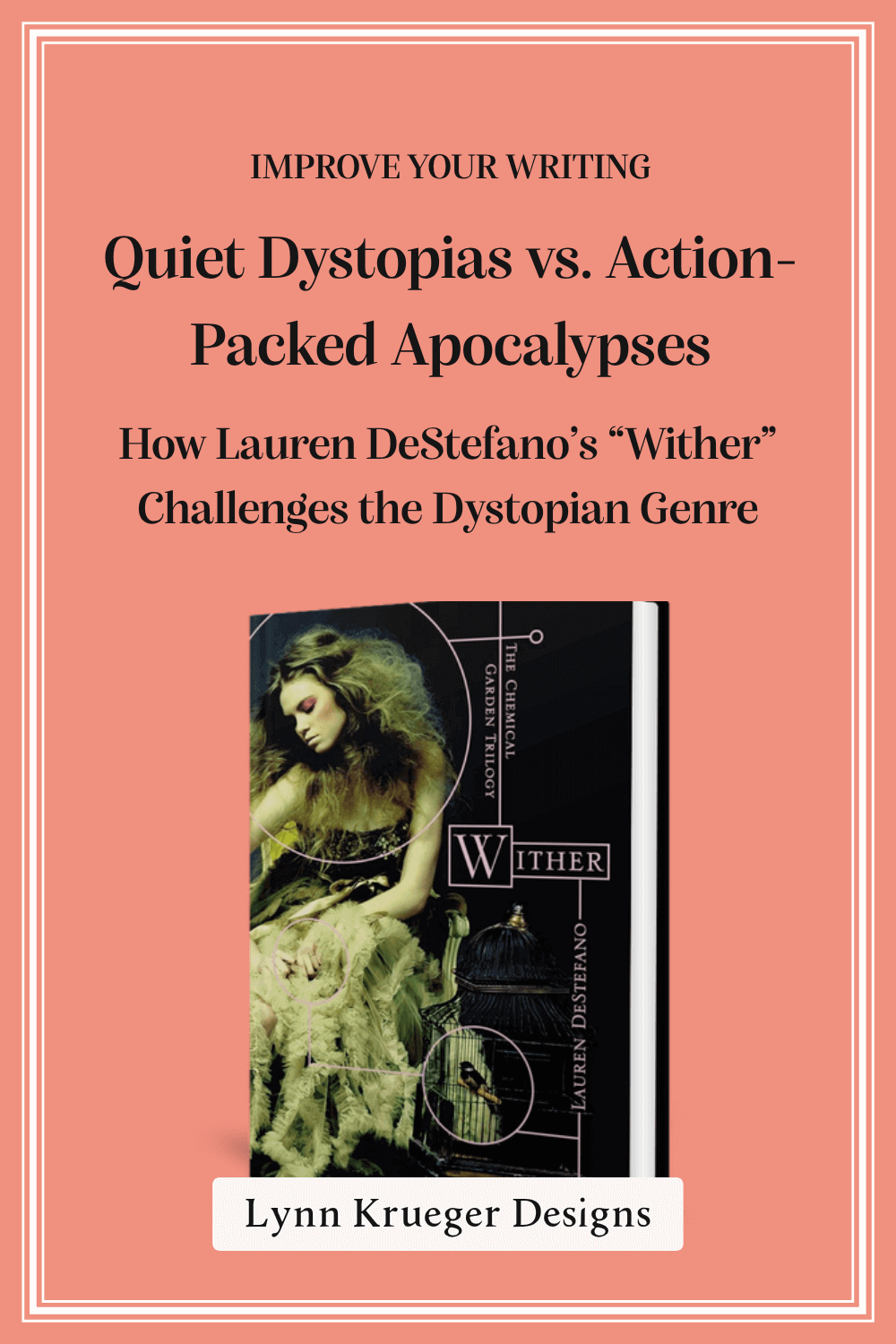
Quiet Dystopias vs. Action-Packed Apocalypses
Lauren DeStefano's Wither proves that some of the most chilling dystopias whisper instead of scream. Her debut novel divides readers precisely because it takes the quieter approach—atmospheric dread over explosive action, psychological horror over physical danger, character development over plot momentum.

The Power of Professional Resistance
While history tends to focus on the perpetrators of Nazi medical crimes, the stories of those who demonstrated moral courage deserve equal attention—not just because they maintained their professional integrity in impossible circumstances, but because their workplace resistance actually worked. Just as authors today must decide whether to bow to censorship or defend creative freedom, these medical heroes faced a choice between career safety and professional ethics.

How to Write a Gender-Flipped Retelling That Actually Works
Gender-flipped retellings are everywhere these days. Pick up any YA fantasy section and you'll find female King Arthurs, girl pirates, and warrior princesses reimagining classic tales. But here's the thing—a lot of them feel forced, gimmicky, or like the author just did a find-and-replace on pronouns and called it a day.

Let Them Question Your Hybrid Approach
Picture This: You're at a writing conference. That familiar buzz of excitement fills the hotel conference room as authors swap business cards and publishing war stories. You've just struck up a conversation with a fellow novelist, and she asks about your publishing journey. You light up—this is exactly the kind of conversation you'd hoped to have here.
